Creative Biolabs is offering the most comprehensive services for antibody development projects. With strict regulation and effective execution, we are dedicated to providing the most valuable solutions to complete your projects.
HighlightsCreative Biolabs is offering the most comprehensive services for antibody development projects. With strict regulation and effective execution, we are dedicated to providing the most valuable solutions to complete your projects.
HighlightsCreative Biolabs has established a broad range of platforms for developing novel antibodies or equivalents. These cutting-edge technologies enable our scientists to meet your demands from different aspects and tailor the most appropriate solution that contributes to the success of your projects.
HighlightsWith deep understanding in antibody-related realms and extensive project experience, Creative Biolabs offers a variety of references to help you learn more about our capacities and achievements, including infographic, flyer, case study, peer-reviewed publications, and all kinds of knowledge that can assist your projects. You are also welcome to contact us directly for more specific solutions.
HighlightsGet a real taste of Creative Biolabs, one of the most professional custom service providers in the world. We are committed to providing highly customized comprehensive solutions with the best quality to advance your projects.
HighlightsSingle-chain variable fragments (ScFvs) have become a widely adopted antibody format in research settings due to their compact size, high specificity, and flexible engineering potential. In the context of acidic microenvironments, pH-sensitive ScFvs offer an additional layer of functionality, allowing researchers to investigate phenomena such as pH-dependent protein interactions, vesicular transport, and endosomal dynamics with enhanced resolution.
At Creative Biolabs, we specialize in the discovery and development of pH-sensitive ScFv fragments for non-therapeutic, research-oriented applications. Our service delivers tailored scFvs engineered to respond to pH shifts with changes in structure or binding affinity, supporting the exploration of pH-sensitive biological pathways.
Creative Biolabs' pH-Sensitive ScFv Discovery Service is built on methodological flexibility and scientific precision. Each project is adapted to the research context and optimized for the identification of pH-responsive binders that meet your analytical needs. Our core offerings include:
In addition to ScFv discovery, Creative Biolabs provides a suite of synergistic services to support your broader antibody research objectives:
| Fab Repertoire Analysis Service | pH-Sensitive Fab Discovery Service |
| pH-Sensitive Single Domain Antibody (SdAb) Discovery Service | pH-Sensitive Peptide Discovery Services |
By selecting Creative Biolabs, you gain access to a modular framework of services that can be seamlessly integrated into your project lifecycle.
At Creative Biolabs, our discovery process for pH-sensitive ScFvs is designed to maximize both functional relevance and molecular precision. Central to this framework is our phage display-based selection platform, which enables high-throughput interrogation of single-chain variants under controlled pH gradients. Each project is structured to transition seamlessly from conceptual design to functionally validated candidates:
We work with you to define the target antigen and specify the physiological or pathophysiological pH range of interest (e.g., pH 4.5–6.5), ensuring that the screening conditions reflect your biological system.
Structural analysis, conformational modeling, or experimental mapping are employed to identify potential pH-labile epitopes and assess their accessibility in acidic environments.
We generate immune-derived, semi-synthetic, or fully synthetic ScFv libraries that incorporate optimized VH/VL orientations and linker lengths. All libraries are cloned into phage display vectors, ensuring compatibility with downstream selection.
Multi-round biopanning is carried out under low and neutral pH conditions. Our protocol is engineered to selectively enrich clones with pH-dependent binding gain or loss, using stringent acidic washes or elution steps to identify conformationally sensitive binders.
Candidate ScFvs are screened via dual-pH assays to confirm reversible, pH-responsive binding behaviors and evaluate on/off rates in distinct pH conditions.
Top clones undergo rational optimization at the sequence or structural level, including fine-tuning of linker flexibility, framework region mutations, or reformatting if needed for your downstream assay platform.
Final ScFvs are expressed and purified in bacterial or mammalian systems to deliver research-grade materials suitable for immediate use in in vitro or ex vivo systems.
This structured yet flexible workflow places phage display at the heart of pH-sensitive ScFv discovery, combining evolutionary screening power with rigorous biochemical validation to ensure delivery of high-quality, functional binders tailored to your research goals.
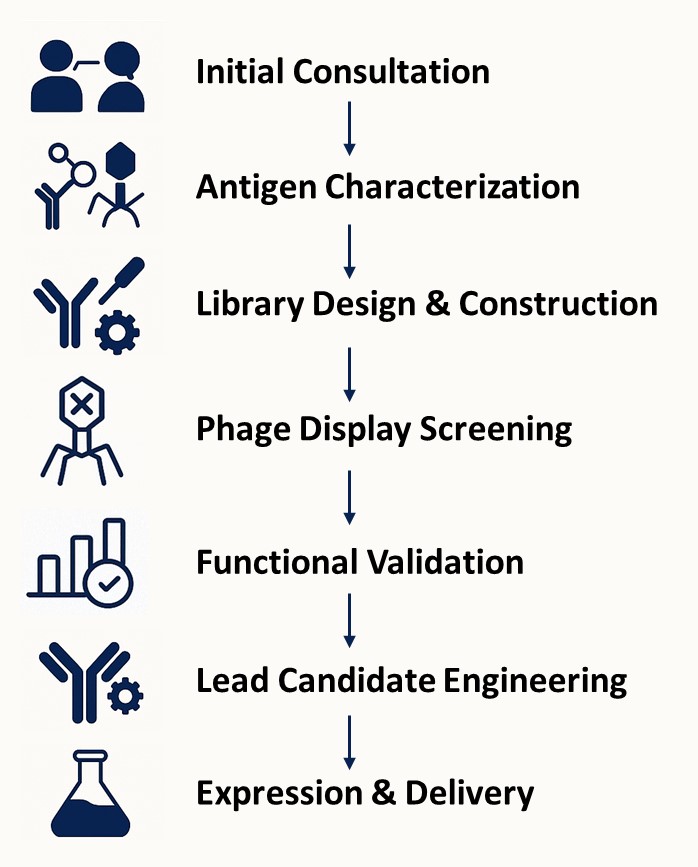 Fig.1 pH-Sensitive Single-Chain Variable Fragment Discovery Workflow.
Creative Biolabs combines deep antibody engineering knowledge with advanced tools for molecular discovery:
These platforms allow us to characterize pH sensitivity quantitatively and iteratively refine molecular designs.

Creative Biolabs exclusively serves research clients, ensuring fit-for-purpose design

Deep experience with pH-responsive molecules across multiple formats

Premade, immune, semi-synthetic, and fully synthetic options tailored to ScFv discovery

Regular milestone updates and open scientific dialogue throughout the project

ScFv discovery can be complemented by Fab, SdAb, or peptide programs
Our team brings scientific rigor, engineering creativity, and strong communication to every collaboration.
At the end of each project, Creative Biolabs provides a comprehensive data and reagent package:
If your research involves probing molecular events under changing pH conditions, Creative Biolabs' pH-Sensitive ScFv Discovery Service can help unlock actionable insights. Contact our scientific team to get started today.
All listed services and products are For Research Use Only. Do Not use in any diagnostic or therapeutic applications.