Ferritin Nanocage Development Service for Targeted Drug Delivery
Overcoming biological barriers remains one of the most formidable bottlenecks in modern therapeutic development. Whether targeting deep-seated tumors or delivering delicate payloads across the blood-brain barrier (BBB), researchers require delivery vehicles that are highly specific, stable, and inherently safe. Ferritin nanocages offer an elegant, biomimetic solution to these challenges, acting as a modular platform for precision medicine. At Creative Biolabs, our deep biochemical and engineering expertise ensures the seamless development and optimization of your custom ferritin nanoparticles as a targeted delivery system service.
Understanding Ferritin Delivery Systems
Structural Biology of Ferritin Nanocage
Ferritin is a ubiquitous intracellular protein conserved across species, primarily responsible for iron storage and detoxification. Structurally, it is an architectural marvel. The protein spontaneously self-assembles from 24 polypeptide subunits—comprising heavy chains (H-chains) and light chains (L-chains)—into a highly symmetrical, hollow spherical nanocage.
This robust architecture features an outer diameter of approximately 12 nm and an inner cavity diameter of 8 nm. When the endogenous iron core is removed to create "apoferritin," this 8 nm inner vault provides a perfect, protective environment for encapsulating exogenous therapeutic payloads, shielding them from enzymatic degradation during systemic circulation.
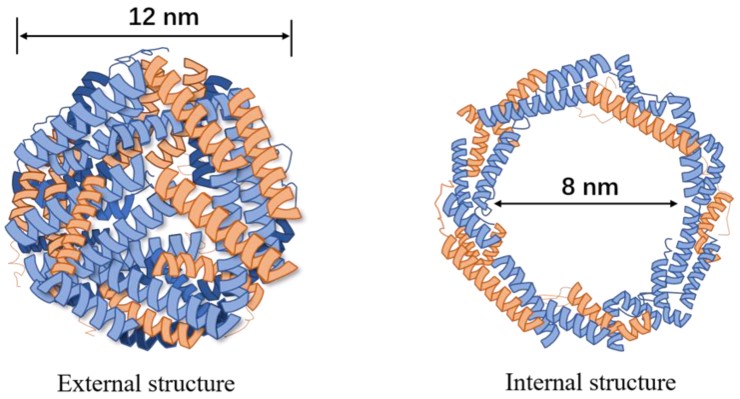 Fig. 1 External and internal structure of ferritin.1,3
Ferritin as a Natural Drug Carrier: Reversible Encapsulation & Inherent Tropism
The true potential of ferritin as a targeted delivery system lies in its dynamic dual functionality: it serves as both a highly efficient, responsive cargo hold and an active, homing navigation system.
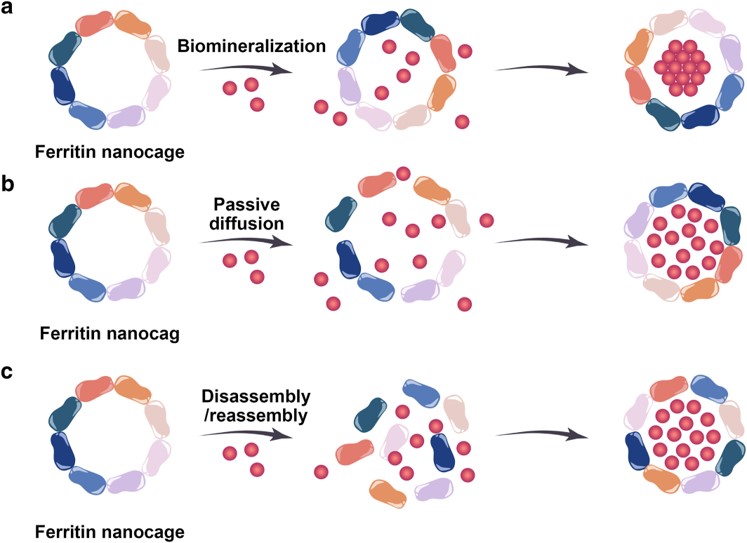 Fig. 2 Ferritin-based cargo loading methods.2,4
Reversible Assembly for Payload Encapsulation
The unique physiochemical properties of the ferritin cage allow for highly efficient drug loading without damaging the carrier or the payload. The 24-subunit architecture is remarkably responsive to environmental triggers. Under specific acidic conditions (pH 2.0–2.5) or in the presence of denaturants like urea, the nanocage predictably disassembles into individual monomers. When physiological conditions (pH 7.4) are restored, these monomers spontaneously reassemble. If this reassembly is orchestrated in a solution containing the desired therapeutic agent, the payload is securely trapped within the inner cavity. Additionally, small molecules or metal-based contrast agents can be loaded via passive diffusion through the intrinsic pores of the cage.
Below is a representative overview of diverse therapeutic payloads successfully encapsulated within ferritin-based platforms:
| Nanocarrier Platform | Encapsulated Payload | Therapeutic Modality | Target Indication |
|---|---|---|---|
| Recombinant Human HFn | Cisplatin (Platin-based agent) | Targeted Chemotherapy | Malignant Melanoma |
| Apoferritin Nanocage | Doxorubicin (DOX) | Anthracycline Chemotherapy | Gastric Cancer |
| Recombinant Human HFn | Paclitaxel (PTX) | Antimitotic Chemotherapy | Breast Cancer |
| Apoferritin Core | Vincristine (VCR) | Microtubule Inhibitor | Neurological Malignancies |
| Equine Apoferritin | Gold-based Therapeutics | Metallodrug Therapy | Broad-Spectrum Oncology |
| Recombinant Human HFn | Copper Sulfide (CuS) Nanoparticles | Photothermal Therapy (PTT) | Glioblastoma Multiforme (GBM) |
| RGD-Functionalized Apoferritin | Zinc Phthalocyanine (ZnF16Pc) | Photodynamic Therapy (PDT) | Breast Cancer |
| Apoferritin Nanocage | Epirubicin + DBN (Co-delivery) | Synergistic Chemo-PTT | Breast Cancer |
| MSH/PEG-Modified HFn | Cobalt(II) Ions | Magnetic Hyperthermia | Malignant Melanoma |
Inherent Tropism & Receptor-Mediated Transcytosis
Once the payload is secured, the carrier must reach its destination. One of the most profound advantages of human-derived heavy-chain ferritin (HFn) is its intrinsic biological targeting capability. HFn binds with high affinity to Transferrin receptor 1 (TfR1). Because TfR1 is abundantly expressed on the endothelial cells of the blood-brain barrier (BBB) and aggressively overexpressed on many solid tumor cells, ferritin naturally functions as a biological "Trojan Horse." It actively exploits receptor-mediated transcytosis to deliver its encapsulated payload across the BBB and directly into the cytosol of malignant cells, bypassing the need for complex, synthetic targeting ligands in many oncological and neurological applications.
Engineered Surface Modifications for Precision Targeting
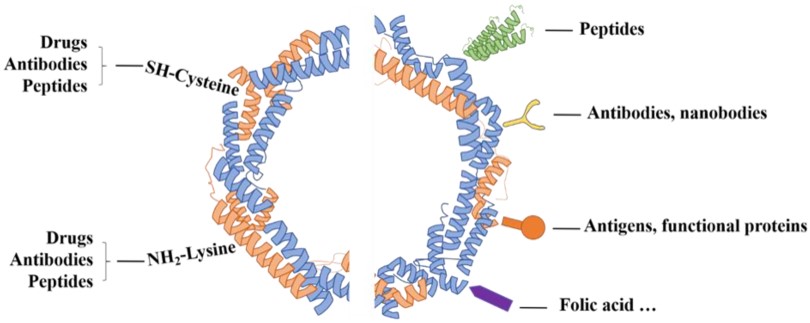 Fig. 3 Strategies for surface functionalization of ferritin.1,3
Below is a snapshot of various successful surface modifications and their corresponding targeting applications:
| Ferritin | Surface Functionalization | Targeting Receptor / Mechanism | Application |
|---|---|---|---|
| Human HFn | RGD Peptide | Integrin αvβ3 | Broad-Spectrum Cancers |
| Human HFn | PASE Masking Peptide | Immune Evasion / Stealth | Broad-Spectrum Cancers |
| Human HFn | EGF / GE11 Peptide | EGFR | Breast Cancer |
| P. furiosus Ferritin | SP94 Peptide | GRP78 | Hepatocellular Carcinoma (Liver) |
| Apoferritin | GKRK Peptide | HSPG | Glioma / Brain Tumors |
| Human HFn | Angiopep-2 Peptide | LRP1 | Glioma / BBB Penetration |
| Human HFn | PEGylation (PEG) | Prolonged Circulation | Lung Cancer |
| Human HFn | Folate | Folate Receptor | Various Solid Tumors |
| Human HFn | Ep1 Antibody / MSH | CSPG4 / Melanocortin Receptor | Melanoma |
Advanced Solutions for Ferritin-Mediated Therapeutics
Creative Biolabs provides a comprehensive, end-to-end suite of engineering and manufacturing solutions to support your targeted drug delivery pipelines. We go beyond basic encapsulation to fully architect the nanocage around your specific payload and therapeutic goals.
Custom Recombinant Ferritin Synthesis
The foundation of a successful nanocarrier system is a high-purity, structurally sound protein scaffold. We offer robust recombinant synthesis of various ferritin variants to serve as your base delivery platform.
Recombinant Human HFn & LFn Expression
High-yield production of pure heavy-chain or light-chain human ferritin, minimizing the risk of immunogenicity for translational applications.
Non-Human & Extremophile Variants
Synthesis of ferritin from other species (e.g., murine models for pre-clinical compatibility) or extremophiles (e.g., Pyrococcus furiosus) for applications requiring extreme thermal or pH resilience.
Endotoxin-Free Purification
Rigorous downstream processing utilizing advanced chromatography to ensure all synthesized nanocages meet strict endotoxin limits required for in vitro and in vivo efficacy studies.
Workflow

Diverse Applications of Ferritin-Based Delivery
While deeply rooted in human therapeutics, the modular nature of our ferritin targeted drug delivery systems allows for broad application across multiple scientific disciplines.
- Oncology & Neurological Therapeutics: Overcoming the BBB to deliver chemotherapeutics to glioblastomas, or directing therapeutic RNAs to specific tumor microenvironments, drastically enhancing therapeutic efficacy while sparing healthy tissue.
- Theranostics & Molecular Imaging: Encapsulating magnetic contrast agents alongside therapeutic drugs, allowing for real-time MRI tracking of disease progression and simultaneous targeted treatment.
- Agricultural Biotechnology: Delivering targeted RNAi payloads to specific plant tissues or insect pests, offering a biodegradable, highly specific alternative to broad-spectrum chemical pesticides.
- Veterinary Medicine & Animal Health: Adapting human-derived nanocarrier principles to treat complex feline and canine oncological conditions, improving pet survival rates with reduced systemic toxicity.
- Cosmeceuticals & Advanced Dermatology: Facilitating the deep transdermal delivery of potent anti-aging peptides or antioxidants directly to the basal layer of the epidermis without invasive procedures.
Why Choose Creative Biolabs?
At Creative Biolabs, our mission is to eliminate the bottlenecks of targeted drug delivery, transforming your promising therapeutic agents into precise, translational successes. Whether you require custom subunit engineering or need ready-to-use ferritin nanoparticles as a targeted delivery system service, our team is ready to accelerate your research.
Proprietary Encapsulation Methodologies
We utilize highly refined disassembly/reassembly protocols that ensure industry-leading encapsulation efficiency without degrading sensitive payloads like mRNA or complex proteins.
Unmatched Biochemical Expertise
Our team consists of seasoned structural biologists and pharmacokinetic experts who deeply understand the nuances of monomer assembly and receptor-mediated endocytosis.
Turnkey, Modular Solutions
From the initial genetic design of the nanocage to final in vivo validation and scale-up, we provide end-to-end support customized to your specific target.
Rigorous Quality Control
Every batch undergoes strict multi-parameter characterization to ensure batch-to-batch consistency, monodispersity, and structural integrity.
Related Services & Products
Related Services
Chemical Synthesis Services
Nucleic Acid Synthesis Services
FAQs
What is the fundamental difference between heavy-chain (H-chain) and light-chain (L-chain) ferritin?
H-chains possess ferroxidase activity and naturally bind to TfR1, driving cellular uptake and BBB penetration. L-chains lack this receptor affinity but provide superior structural stability to the nanocage. We can customize the H/L ratio to balance targeting and stability for your specific project.
What types of payloads can be encapsulated within ferritin nanoparticles?
The 8 nm interior cavity is highly versatile. We routinely encapsulate small molecule chemotherapeutics (e.g., Doxorubicin), nucleic acids (siRNA, mRNA, DNA plasmids), imaging agents, and specific therapeutic peptides.
Will the pH-induced loading process damage my sensitive payload?
It depends on the payload's specific acid tolerance. For highly sensitive molecules like certain mRNAs or proteins, we bypass the extreme low-pH method and utilize optimized urea-induced disassembly or precisely calibrated high-pH protocols to ensure payload integrity during loading.
How does ferritin cross the blood-brain barrier (BBB)?
HFn naturally binds to TfR1, which is highly expressed on the endothelial cells of the BBB. This triggers receptor-mediated transcytosis, actively transporting the intact nanoparticle into the central nervous system.
References
- Sun, Xuanrong, et al. "Bioengineered ferritin nanocarriers for cancer therapy." International Journal of Molecular Sciences 22.13 (2021): 7023. https://doi.org/10.3390/ijms22137023
- Tu, Zaiqian, et al. "Ferritin‐based drug delivery system for tumor therapy." BMEMat 1.2 (2023): e12022. https://doi.org/10.1002/bmm2.12022
- Distributed under Open Access license CC BY 4.0, without modification.
- Distributed under Open Access license CC BY, without modification.