Fibrin Nanoparticle Development Service for Targeted Drug Delivery
At Creative Biolabs, we revolutionize precision therapeutics through our industry-leading Fibrin Nanoparticles Development Service. Modern therapeutics often fail not from a lack of potency, but due to severe delivery inefficiencies and rapid biological clearance. Our customized fibrin-based targeted drug delivery systems are meticulously engineered to encapsulate your active pharmaceutical ingredients (APIs), shield them from systemic degradation, and precisely navigate complex biological barriers. As a trusted biotechnology partner, Creative Biolabs' unparalleled expertise in biomaterial engineering and targeted nanocarriers empowers your research to overcome the toughest translational delivery hurdles.
Decoding Fibrin Nanoparticles: The Biological Edge in Drug Delivery
To successfully achieve high-affinity cellular targeting and minimize off-target toxicity, the choice of your nanocarrier is as critical as the therapeutic payload itself. We leverage the natural physiological properties of fibrin to create superior delivery vehicles.
Clinical Urgency & Preclinical Fibrin Solutions
Unprotected APIs, ranging from small molecules to complex nucleic acids, face formidable anatomical barricades in systemic circulation. Conventional systemic administration often results in:
- Premature Degradation: Enzymes and varied pH environments destroy fragile therapeutic payloads before they reach the target site.
- Severe Off-Target Toxicity: High doses required for efficacy cause significant damage to healthy tissues.
- Poor Membrane Penetration: Hydrophilic macromolecules struggle to cross dense lipid bilayers or the restrictive blood-brain barrier (BBB).
Addressing these severe clinical roadblocks requires robust, data-backed delivery systems. Recent in vitro and in vivo studies underscore the translational potential of fibrin nanoplatforms across various oncological and systemic models. The following table highlights key preclinical evidence demonstrating how customized fibrin vectors successfully overcome these biological barriers, prevent off-target toxicity, and enhance therapeutic outcomes:
| Engineered Nanocarrier System | Target Disease Model | Experimental Platform | Key Therapeutic Outcomes |
|---|---|---|---|
| Targeted Fibrin NPs (Bevacizumab & Erlotinib-conjugated) | Lung Carcinoma | In vitro (A549 human alveolar basal epithelial cells) | Induced robust cell cycle arrest and significantly diminished overall cancer cell viability. |
| Fibrinolytic Nanocages | Melanoma | In vivo (Syngeneic mouse melanoma model) | Actively disrupted tumor-associated fibrin stroma; dramatically enhanced the spatial distribution and efficacy of co-delivered anticancer agents. |
| Radiopaque Fibrin Nanocomplexes (RFN) | Lung & Breast Carcinoma | In vitro (A549, MCF-7) & In vivo (Murine models) | Enabled precise theranostic tracking with excellent CT visibility; demonstrated rapid, targeted therapeutic accumulation within 45 minutes post-administration. |
| Anti-CD47 Antibody-Loaded Fibrin/CaCO3 Hybrids | Melanoma | In vitro (B16F10) & In vivo (Murine models) | Successfully reversed the immunosuppressive tumor microenvironment (TME); triggered robust systemic immune responses to inhibit local recurrence. |
Mechanism of Action: Navigating the Microenvironment
Fibrin-based targeted drug delivery systems operate through a sophisticated, bio-responsive mechanism. Once administered, these nanocarriers exploit the distinct pathological conditions of disease sites, such as the tumor microenvironment (TME) or areas of acute inflammation.
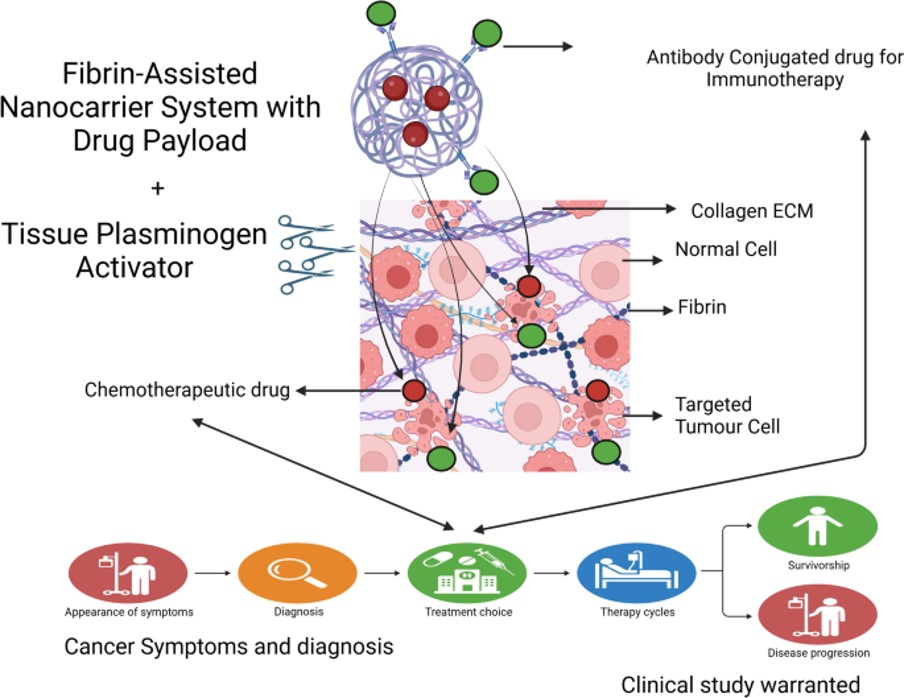 Fig. 1 Fibrin nanoparticle mechanism of action.1
Because fibrin networks are naturally degraded by plasmin, these nanoparticles facilitate protease-mediated, stimuli-responsive release. The nanocarriers remain stable in systemic circulation but rapidly break down to release their payload upon encountering specific overexpressed enzymes at the target site. Furthermore, surface-functionalized fibrin can actively modulate the immune landscape. For instance, incorporating specific antibodies can reverse immunosuppressive environments, activating antitumor macrophages and significantly increasing T-cell infiltration.
Versatile Fibrin Nanoplatforms & Pharmacokinetic Profiles
To address diverse therapeutic requirements, Creative Biolabs engineers various fibrin-based nanocarrier architectures. The table below, supported by recent nanomedicine literature, outlines the core properties of distinct fibrin formulations:
| Nanocarrier Formulation | Payload Loading Capacity | Release Kinetics Profile | Targeting Mechanism & Tumor Penetration |
|---|---|---|---|
| Standard Fibrin Nanoparticles (FNPs) | High Encapsulation Efficiency | Sustained, enzyme-dependent (plasmin-mediated) over hours to days | High passive accumulation; specific active targeting via surface conjugation |
| Fibrinolytic Nanocages | High Capacity | Improved spatial distribution | Intratumoral penetration and stroma disruption |
| Radiopaque Fibrin Nanocomplexes (RFN) | High Capacity | Protease-triggered, sustained release | Targeted therapeutic deposition with high visibility |
| Antibody-Loaded Fibrin/CaCO3 Hybrids | Moderate (Concentration-dependent) | Controlled and sustained release | Suppresses local recurrence; activates macrophages & T-cell infiltration |
| Fibrin Nanogels | Moderate (~46–51%, cargo-dependent) | pH- and enzyme-responsive controlled release | Customizable active targeting based on cross-linking density |
| PEGylated Fibrin Nanocarriers | Moderate (Slightly reduced by PEGylation) | Prolonged, slower diffusion-controlled release | Enhanced circulation half-life; improved stealth properties |
| Fibrin-Coated Polymeric NPs (e.g., PLGA-Fibrin) | Core-dependent (Moderate) | Biphasic: Initial burst followed by sustained polymer degradation | Leverages fibrin surface for superior biocompatibility |
| Peptide-Targeted Nanocarriers (e.g., CREKA-modified) | Core-dependent (Liposomes/Polymeric) | Stimuli-responsive localized release | Active homing to clotted plasma and tumor stroma |
Comprehensive Fibrin Nanoparticles Development Solutions
Creative Biolabs offers end-to-end, highly customizable services to synthesize Fibrin Nanoparticles that perfectly match your experimental design.
1. Custom Fibrin Nanoparticle Synthesis
We engineer fibrin nanoparticles with precise physicochemical properties tailored to your project. By modulating cross-linking density and formulation conditions, our scientists strictly control particle size (typically 50-200 nm), morphology, and surface charge to optimize biodistribution and cellular uptake.
2. Precision Payload Encapsulation
We utilize proprietary mild encapsulation techniques that guarantee the structural integrity of your therapeutics. Our protocols achieve industry-leading encapsulation efficiency for diverse payloads, including hydrophobic small molecules, proteins, peptides, and sensitive nucleic acids (siRNA, mRNA, CRISPR-Cas9 plasmids).
3. Surface Functionalization & Ligand Conjugation
To convert passive carriers into highly specific homing devices, we seamlessly functionalize the fibrin surface. We expertly conjugate targeting moieties—such as monoclonal antibodies, aptamers, or specific peptides—enabling active, receptor-mediated endocytosis into your specific target cells.
4. Physicochemical Characterization & Validation
Every batch undergoes rigorous quality control. We provide comprehensive, data-driven analytical reports detailing dynamic light scattering (DLS) size distribution, zeta potential, encapsulation efficiency, and in vitro release kinetics profiles.
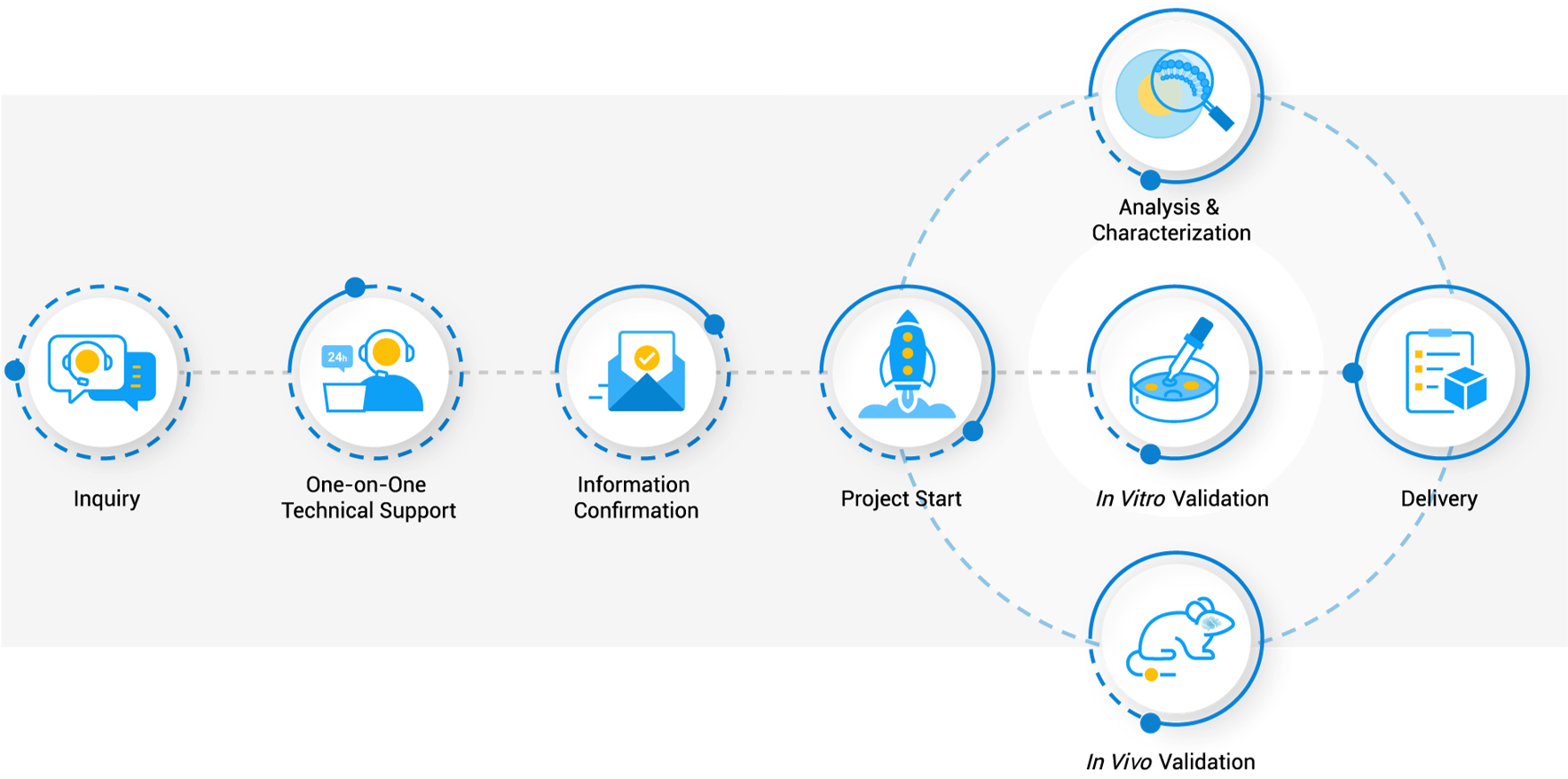
Engineering Fibrin Nanoparticles for Precision Targeted Delivery →Workflow
Translational Applications of Fibrin Nanocarriers
Our targeted delivery systems are highly versatile, empowering breakthroughs across a multitude of specialized research disciplines and disease models.
- Oncology & Tumor Microenvironment Penetration: Fibrin nanoparticles exhibit a natural affinity for the leaky vasculature of solid tumors. By functionalizing them with tumor-specific ligands, we significantly enhance the intracellular concentration of chemotherapeutics, inducing localized apoptosis while sparing healthy tissues.
- Neurological Research & BBB Crossing: Overcoming the blood-brain barrier is notoriously difficult. Our finely tuned, surface-modified fibrin nanocarriers can facilitate receptor-mediated transcytosis, successfully delivering neuroprotective agents or genetic material directly to the central nervous system.
- Gene Therapy & Intracellular Delivery: Protecting nucleic acids from serum nucleases is paramount. Our fibrin matrix safely shields siRNA and CRISPR components, facilitating robust cellular internalization and efficient endosomal escape to achieve high transfection benchmarks.
- Cardiovascular & Thrombosis Targeting: Leveraging fibrin's native role in the coagulation cascade allows for the highly specific delivery of thrombolytic drugs directly to the site of blood clots, minimizing the risk of systemic hemorrhage.
Why Choose Creative Biolabs?
Creative Biolabs remains at the forefront of nanomedicine, providing highly customized Fibrin Nanoparticles Development Services to conquer biological barriers and achieve true targeted drug delivery. By partnering with us, you secure a data-driven, scalable, and innovative path forward for your most challenging therapeutic payloads.
Unmatched Biocompatibility Expertise
Over 20 years of dedicated experience in engineering protein-based biomaterials for advanced drug delivery.
High Encapsulation Efficiency
Proprietary methodologies that maximize payload retention without compromising therapeutic bioactivity.
Reproducible Scale-Up
Robust, standardized protocols ensuring absolute consistency from early-stage in vitro screening to large-scale in vivo animal studies.
Collaborative Customization
We operate as an extension of your R&D lab, iteratively optimizing the formulation based on your specific disease targets and PK/PD data.
Related Services & Products
Related Services
Chemical Synthesis Services
Nucleic Acid Synthesis Services
FAQs
What is the typical size range of your customized fibrin nanoparticles?
We typically synthesize nanoparticles between 50 nm and 200 nm, tunable via cross-linking density and specific formulation parameters to precisely suit your cellular uptake requirements.
How do you ensure the stability of encapsulated siRNA during in vitro assays?
We optimize the fibrin matrix density to protect siRNA from RNase degradation in serum, while ensuring efficient intracellular release upon enzymatic breakdown within the target cells.
Can these nanocarriers be sterilized for sterile cell culture work?
Yes, our fibrin nanoparticles are formulated under sterile conditions and can be passed through 0.22 μm syringe filters without losing their structural integrity or payload bioactivity.
What is the standard turnaround time for a custom Fibrin NP synthesis project?
For research-grade custom synthesis, the initial formulation design and comprehensive physicochemical characterization are generally completed within 4 to 6 weeks.
How do you measure encapsulation efficiency for small hydrophobic molecules?
We utilize ultrafiltration followed by high-performance liquid chromatography (HPLC) or UV-Vis spectroscopy to accurately quantify the ratio of encapsulated drug versus free API.
Reference
- Chirakara, Dipti Sukumaran, et al. "Fibrin-assisted nanocarrier systems: innovations and challenges in targeted carcinoma drug delivery." Future Journal of Pharmaceutical Sciences 12.1 (2026): 32. https://doi.org/10.1186/s43094-026-00947-2. Distributed under Open Access license CC BY 4.0, without modification.