Synthesized using high-precision single- or two-step desolvation techniques. These carriers preserve the natural polypeptide backbone of gelatin, offering an ultra-gentle formulation environment ideal for encapsulating fragile small-molecule chemotherapeutics and lipophilic compounds.
Gelatin Nanoparticle Development Service for Targeted Drug Delivery
At the vanguard of modern biopharmaceutics, achieving precise tissue-specific localization of therapeutic payloads remains a critical bottleneck. Creative Biolabs leverages over 20 years of expertise in macromolecular engineering and bioconjugate chemistry to deliver a comprehensive Gelatin Development Service for Targeted Drug Delivery. We specialize in tailoring biocompatible, biodegradable gelatin nanocarriers that overcome physiological barriers, optimize pharmacokinetics, and maximize the therapeutic window of your active compounds. Creative Biolabs is your trusted partner in translating complex drug delivery concepts into highly effective, research-grade preclinical solutions.
Technical Foundations of Gelatin-Based Carriers
Mechanisms of Action: Enzymatic, Swelling, & Endosomal Release Dynamics
Gelatin is a versatile hydrophilic macromolecule derived from the controlled partial hydrolysis of native collagen. As an FDA-approved "Generally Recognized as Safe" (GRAS) biomaterial, gelatin possesses unparalleled biocompatibility, complete biodegradability, and a non-immunogenic profile.
When addressing the question: Why use gelatin as a targeted drug delivery system? the answer lies in its sophisticated, multi-modal release mechanisms that can be engineered at the molecular level:
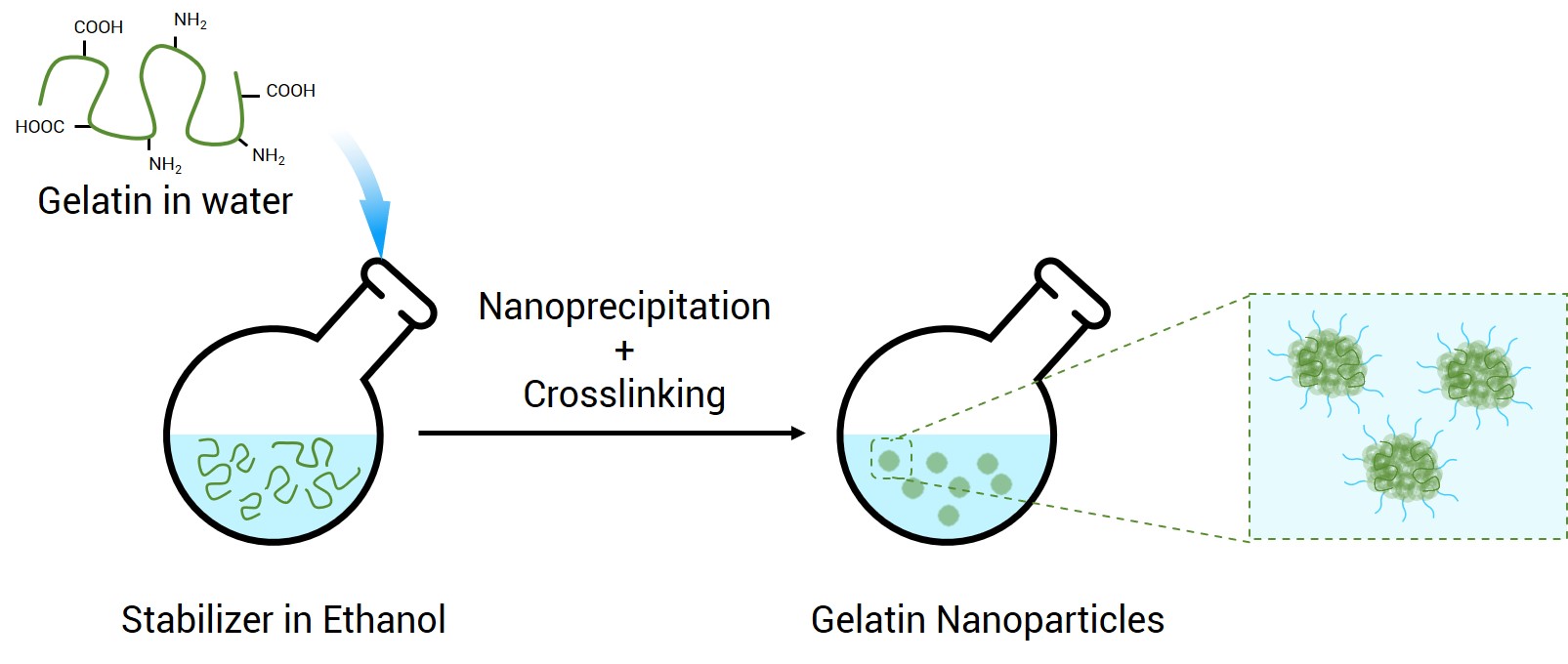 Fig. 1 The preparation of gelatin nanoparticles by the nanoprecipitation method.
Enzymatic Degradation
Gelatin retains the primary peptide sequences of collagen, rendering it highly sensitive to zinc-dependent endopeptidases—specifically Matrix Metalloproteinases (MMP-2 and MMP-9). Because the tumor microenvironment (TME), inflammatory tissues, and ischemic zones exhibit marked upregulation of MMP expression, gelatin nanocarriers undergo site-specific biocatalytic degradation at these target loci, triggering spatial-specific payload release.
Responsive Release
Gelatin nanocarriers can be chemically functionalized to respond dynamically to intracellular and extracellular physiological cues. By incorporating redox-sensitive disulfide linkages (which cleave rapidly in glutathione-rich intracellular environments) or temperature-responsive polymer segments, the gelatin matrix transitions from a stable, locked state in systemic circulation to a highly permeable, drug-releasing state at the target site. This responsive release ensures precise spatial-temporal control and prevents premature payload leakage.
Endosomal Acidification Triggering
Through strategic carboxyl or amine modification, gelatin nanoparticles can be engineered to exhibit pH-responsive behaviors. Upon cellular internalization via endocytosis, the transition from extracellular physiological pH (pH ~ 7.4) to the acidic environment of endosomes (pH ~ 5.5 - 6.0) and lysosomes (pH ~4.8 - 5.0) destabilizes the gelatin matrix, promoting rapid cargo release and subsequent endosomal escape.
Classification of Gelatin-Based Nanocarriers
To accommodate diverse therapeutic payloads and targeting strategies, Creative Biolabs has established four specialized formulation platforms.
Classic Gelatin Nanoparticles
Cationically Modified Gelatin Nanoparticles
Engineered via the covalent grafting of ethylenediamine or low-molecular-weight polyethyleneimine (PEI) to the carboxyl side chains of gelatin. This imparts a strong net positive charge at physiological pH, facilitating high-efficiency electrostatic condensation for custom gelatin formulation for nucleic acid delivery (RNA/DNA payloads).
Smart Stimuli-Responsive Gelatin Nanoparticles
Formulated by incorporating reversible disulfide linkages (redox-responsive) or azo-benzene moieties (light-responsive). These smart carriers undergo rapid physical-chemical transitions only when exposed to specific intracellular or external stimuli, ensuring spatial-temporal control.
Hybrid & Composite Gelatin Nanoparticles
Engineered by integrating gelatin with inorganic cores (e.g., mesoporous silica, superparamagnetic iron oxide nanoparticles) or lipid bilayers. These hybrid systems combine the mechanical resilience of inorganic scaffolds with the biocompatibility of gelatin for advanced theranostic applications.
Critical Parameters Influencing Gelatin Nanoparticle Physicochemical Attributes
In gelatin carrier system design, the in vivo biodistribution and cellular internalization rates are governed by key physicochemical properties. We control these parameters through precise manipulation of four critical process variables:
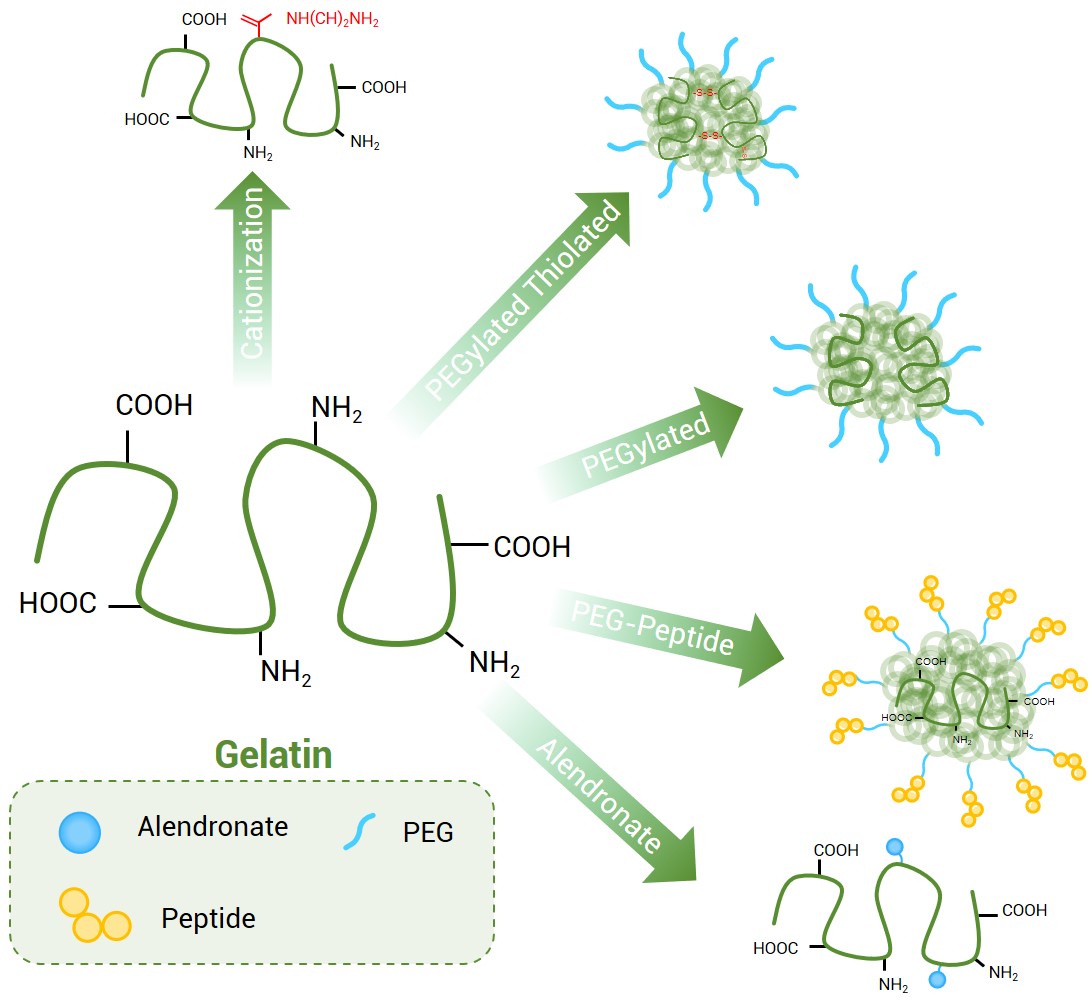 Fig. 2 Modified Gelatin Nanoparticles.
Isoelectric Point (IEP) & Source Raw Materials
The extraction process of gelatin dictates its molecular net charge. We select raw materials based on the electrostatic requirements of your therapeutic payload:
- Type A Gelatin: Features an IEP of 7.0 - 9.0. It remains positively charged at physiological pH, making it ideal for the complexation of anionic payloads like nucleic acids.
- Type B Gelatin: Features an IEP of 4.7 - 5.2. It carries a net negative charge at physiological pH, which is highly suited for encapsulating cationic small molecules and basic proteins.
Crosslinker Selection & Crosslinking Density
Uncrosslinked gelatin nanoparticles rapidly dissolve at physiological body temperature (37 °C). To ensure structural stability in systemic circulation:
- Biocompatible Crosslinkers: We replace toxic glutaraldehyde with highly cytocompatible, plant-derived Genipin or microbial transglutaminase (mTG).
- Tuning the Degradation Rate: By adjusting the crosslinking degree (20% - 90%), we can precisely program the in vivo degradation rate, extending payload release from a few hours to several weeks.
Desolvation Kinetics & Temperature Control
During coacervation, the addition rate of the desolvating agent (ethanol or acetone), system temperature, and phase pH dictate the nucleation process:
- Size Customization: We control phase transition parameters to yield highly uniform nanoparticles across a narrow target size range (50 nm – 300 nm).
- Monodispersity: A rigorous two-step desolvation process is employed to eliminate low-molecular-weight fractions, resulting in a narrow polydispersity index.
Surface Charge & Zeta Potential
The surface charge dictates colloidal stability and blood clearance kinetics:
- High absolute values prevent nanoparticle aggregation via electrostatic repulsion.
- For prolonged blood circulation, we employ surface PEGylation to mask excess charge, preventing rapid clearance by the reticuloendothelial system (RES).
Specialized Gelatin Platform Engineering
Creative Biolabs provides a comprehensive suite of development services spanning target design, formulation optimization, characterization, and scale-up, custom-tailored to your unique therapeutic goals.
Precision Nanoparticle Synthesis Design
We utilize high-precision desolvation protocols and microfluidic technologies to generate monodisperse gelatin nanoparticles:
Strict Size and PDI Control
We consistently yield particles within the 100 nm - 200 nm range.
Aqueous Phase Assembly
Our processes avoid harsh organic solvents, ensuring that sensitive macromolecular payloads preserve their native conformations and bioactivities.
Batch-to-Batch Reproducibility
Microfluidic-assisted assembly ensures highly reproducible hydrodynamic diameters and surface charge profiles across different formulation runs.
Workflow

Multi-Disciplinary Applications
-
Oncology & Targeted Chemotherapy
Systemic chemotherapeutics often suffer from poor water solubility and severe off-target toxicities. By encapsulating hydrophobic agents (such as Paclitaxel or Doxorubicin) within our engineered gelatin carriers, we exploit both passive EPR effects and active ligand-mediated internalization to dramatically increase intra-tumoral accumulation while minimizing cardiotoxicity and nephrotoxicity. -
Gene Therapy & High-Stability Nucleic Acid Delivery
Unprotected nucleic acids (siRNA, mRNA, plasmid DNA, and CRISPR-Cas9 ribonucleoproteins) are highly susceptible to enzymatic degradation in systemic circulation. Our cationic gelatin platforms securely condense these fragile payloads, protecting them from serum nucleases and facilitating receptor-mediated endocytosis followed by proton-sponge-mediated endosomal escape. -
Regenerative Medicine, Tissue Engineering, & Growth Factor Release
In tissue engineering, growth factors (such as VEGF or bFGF) suffer from short biological half-lives. We utilize photocrosslinked GelMA hydrogels and porous microparticles as biomimetic extracellular matrices (ECM). These scaffolds preserve protein stability and enable sustained, localized growth factor release synchronized with cell infiltration and scaffold remodeling. -
Veterinary Medicine & Precision Agriculture
Beyond human therapeutics, gelatin's biodegradability makes it an excellent candidate for veterinary pharmacology and agricultural biotechnology. We formulate custom gelatin microcapsules for veterinary therapeutics, feed additives, and eco-friendly biopesticides. These formulations shield active agents from environmental stressors (such as UV radiation and moisture) and release their cargo in response to specific gastrointestinal pH profiles or soil conditions.
Why Choose Creative Biolabs?
Creative Biolabs is dedicated to bridging the gap between innovative materials science and preclinical success. Whether you are seeking to enhance the solubility of a small-molecule drug, stabilize a fragile nucleic acid therapeutic, or engineer a localized sustained-release hydrogel, our scientific team is ready to design a custom gelatin carrier tailored to your specific application.
Exceptional Encapsulation Efficiency (EE)
Our proprietary desolvation and coacervation protocols regularly achieve encapsulation efficiencies exceeding 85% for both hydrophobic small molecules and charged macromolecular payloads.
State-of-the-Art Analytical Characterization
Every delivery system is accompanied by a comprehensive analytical certificate containing Dynamic Light Scattering (DLS) profiles, Transmission Electron Microscopy (TEM) micrographs, zeta-potential readouts, and in vitro release curves.
Transparent Intellectual Property & Milestone Reporting
We provide fully documented Standard Operating Procedures (SOPs) and batch records, giving you complete peace of mind for future regulatory filings and academic publications.
Related Services & Products
Related Services
Chemical Synthesis Services


Nucleic Acid Synthesis Services
FAQs
Why is Genipin preferred over glutaraldehyde for crosslinking gelatin carriers?
Glutaraldehyde can release free aldehyde monomers, which cause significant cell toxicity. Genipin is a natural, low-toxicity alternative that forms stable, biocompatible, blue-pigmented adducts that also exhibit helpful intrinsic fluorescence for tracking.
What is the typical clearance and biodistribution profile of these nanoparticles in vivo?
Unmodified gelatin nanoparticles are cleared by the mononuclear phagocyte system within hours. Our PEGylated formulations resist opsonization, extending circulation half-lives and enhancing passive accumulation at target tumor sites via the EPR effect.
Our services are For Research Use Only. We do not provide services to individuals.
Online Inquiry