Protects highly lipophilic and photolabile polyphenols from oxidative and thermal degradation, improving their apparent aqueous solubility and oral bioavailability.
e.g., Resveratrol, Curcumin, Honokiol, Quercetin, Pterostilbene, and Naringin.

In the rapidly evolving biopharmaceutical landscape, achieving precision-targeted therapeutic delivery remains a critical bottleneck. Creative Biolabs addresses this challenge with our industry-leading Gliadin Nanoparticle Development Service, a specialized platform engineered to overcome complex biological barriers. By harnessing the unique amphiphilic chemistry of gluten-derived prolamins, we design and optimize robust, biocompatible carriers for a diverse range of payloads. Backed by state-of-the-art interfacial engineering capabilities, Creative Biolabs possesses deep, unmatched expertise in translating raw plant proteins into high-performance, programmable drug delivery vehicles tailored to your research objectives.
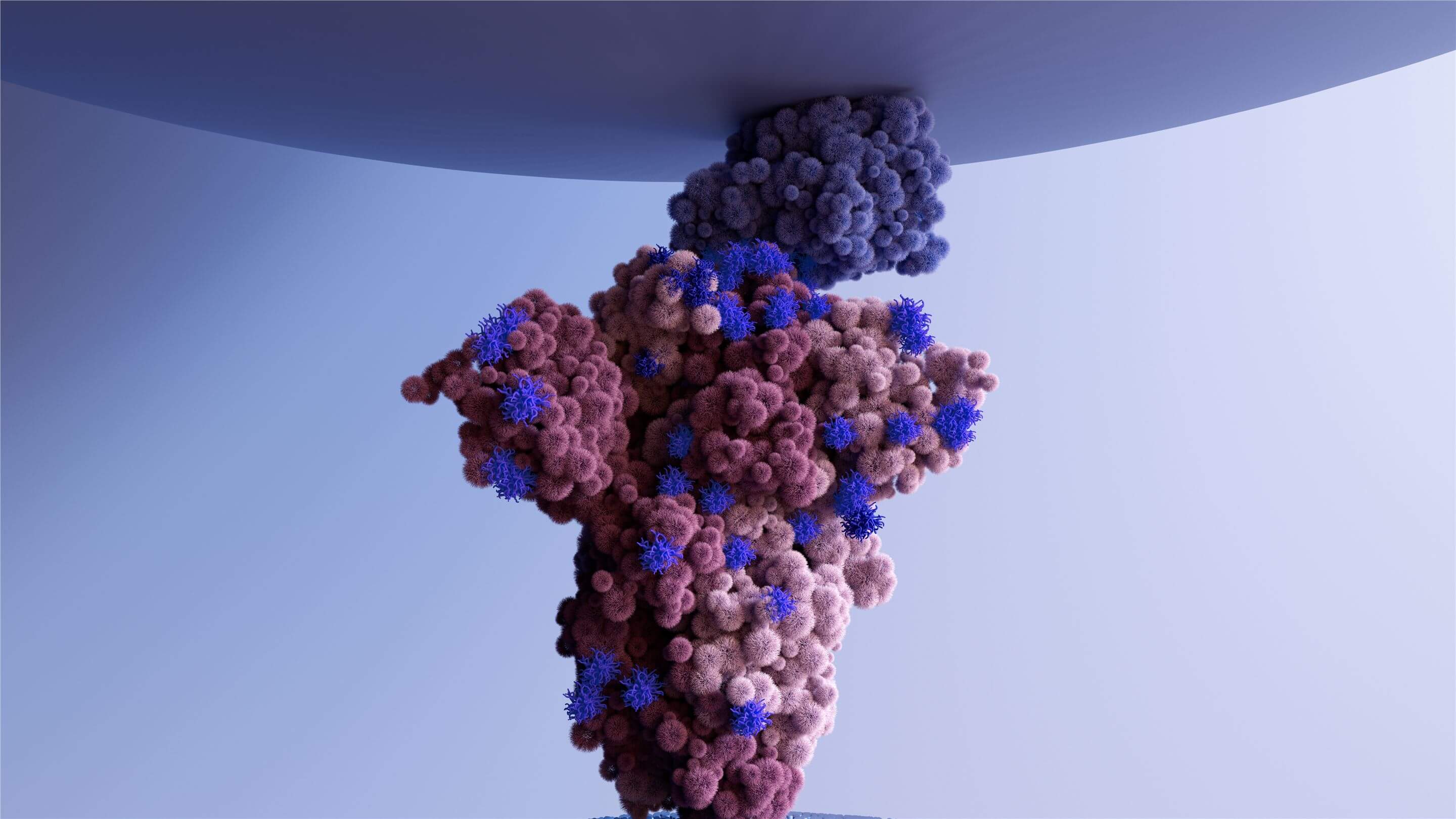
Gliadin is a single-chain polypeptide storage protein with an average molecular weight ranging from 25 to100 kDa and an isoelectric point (pI) of approximately 6.5. Conformationally, gliadin features a unique "amphiphilic" (amphipathic) molecular architecture consisting of a hydrophilic central domain enriched in glutamine and proline residues, flanked by terminal hydrophobic domains containing non-polar amino acids.
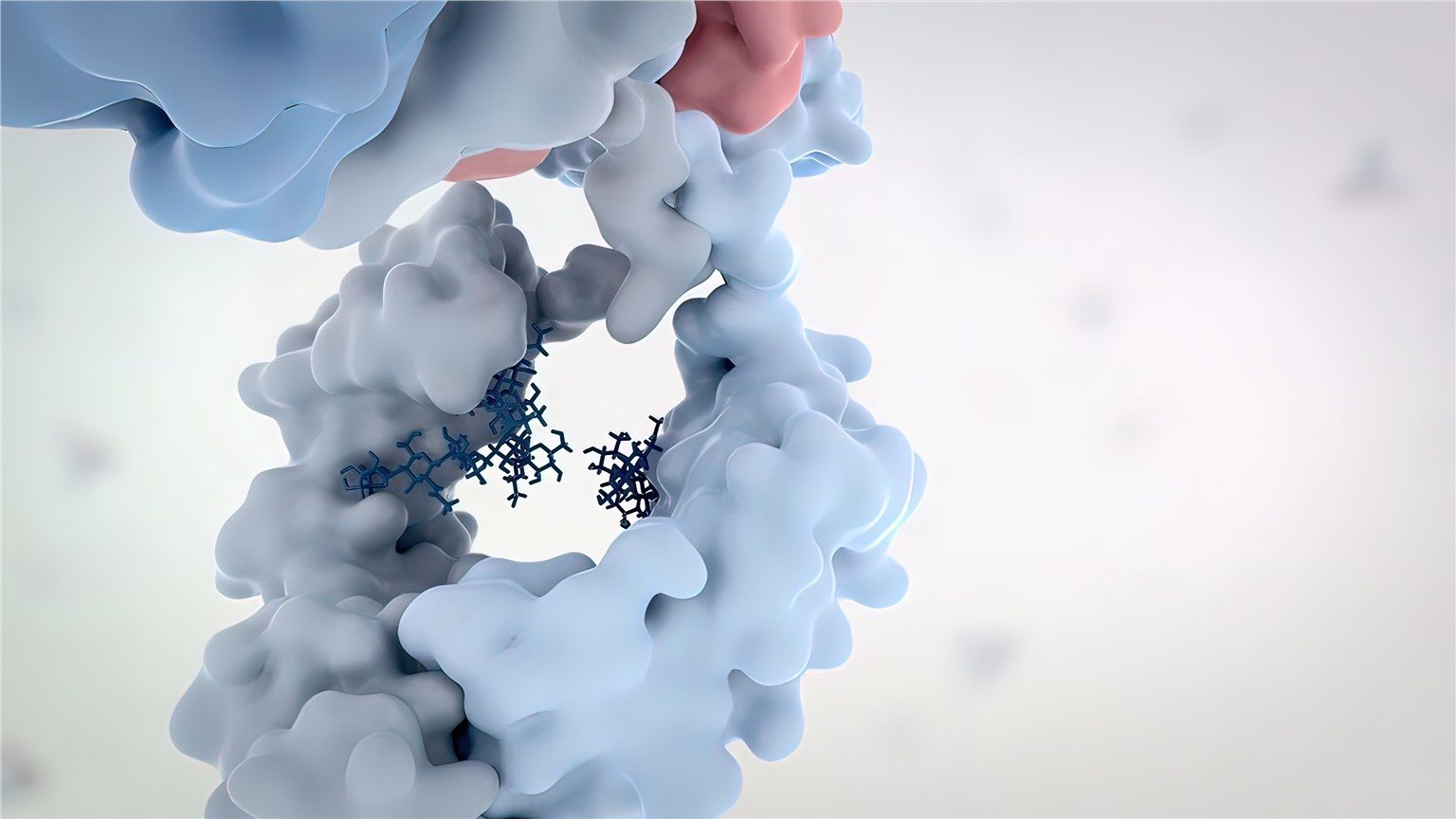
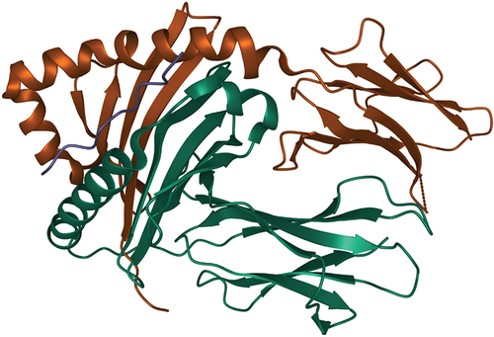 Fig. 1 The crystal structure of gliadin.1
Because of this unique primary sequence, gliadin is completely insoluble in pure water but dissolves readily in 70% ethanol solutions. When a hydroethanolic gliadin solution is introduced to an aqueous phase, the sudden shift in solvent polarity triggers spontaneous molecular aggregation and self-assembly. Creative Biolabs leverages this hydrophobic collapse to encapsulate lipophilic therapeutic payloads within the hydrophobic core of the self-assembled nanoparticles, while exposing the hydrophilic domains to the outer aqueous phase to maintain colloid dispersion.
Our gliadin-based delivery platform is highly compatible with a broad spectrum of active pharmaceutical ingredients (APIs) and bioactive compounds:
Protects highly lipophilic and photolabile polyphenols from oxidative and thermal degradation, improving their apparent aqueous solubility and oral bioavailability.
e.g., Resveratrol, Curcumin, Honokiol, Quercetin, Pterostilbene, and Naringin.
Utilizes benign, organic-free assembly methods to encapsulate highly unstable genetic cargo, shielding it from ribonuclease (RNase) cleavage while facilitating endosomal escape.
e.g., siRNA, shRNA, mRNA, miRNA, antisense oligonucleotides (ASOs), plasmid DNA, and CRISPR-Cas9 components.
Encapsulates enzymes, antimicrobial peptides, and hormone mimics under mild physiological conditions to preserve their functional three-dimensional tertiary structures.
Protects sensitive lipid double bonds against lipid peroxidation, masking undesirable volatile off-odors and prolonging shelf-life.
e.g., Algal oil, Coix Seed Oil, fish oil, and carvacrol.
Biopolymers derived from plant storage proteins (such as wheat-derived gliadin and maize-derived zein) possess high hydrophobic density. Consequently, unmodified prolamin nanoparticles are highly prone to irreversible aggregation and precipitation when exposed to physiological ionic environments or pH shifts near their isoelectric points.
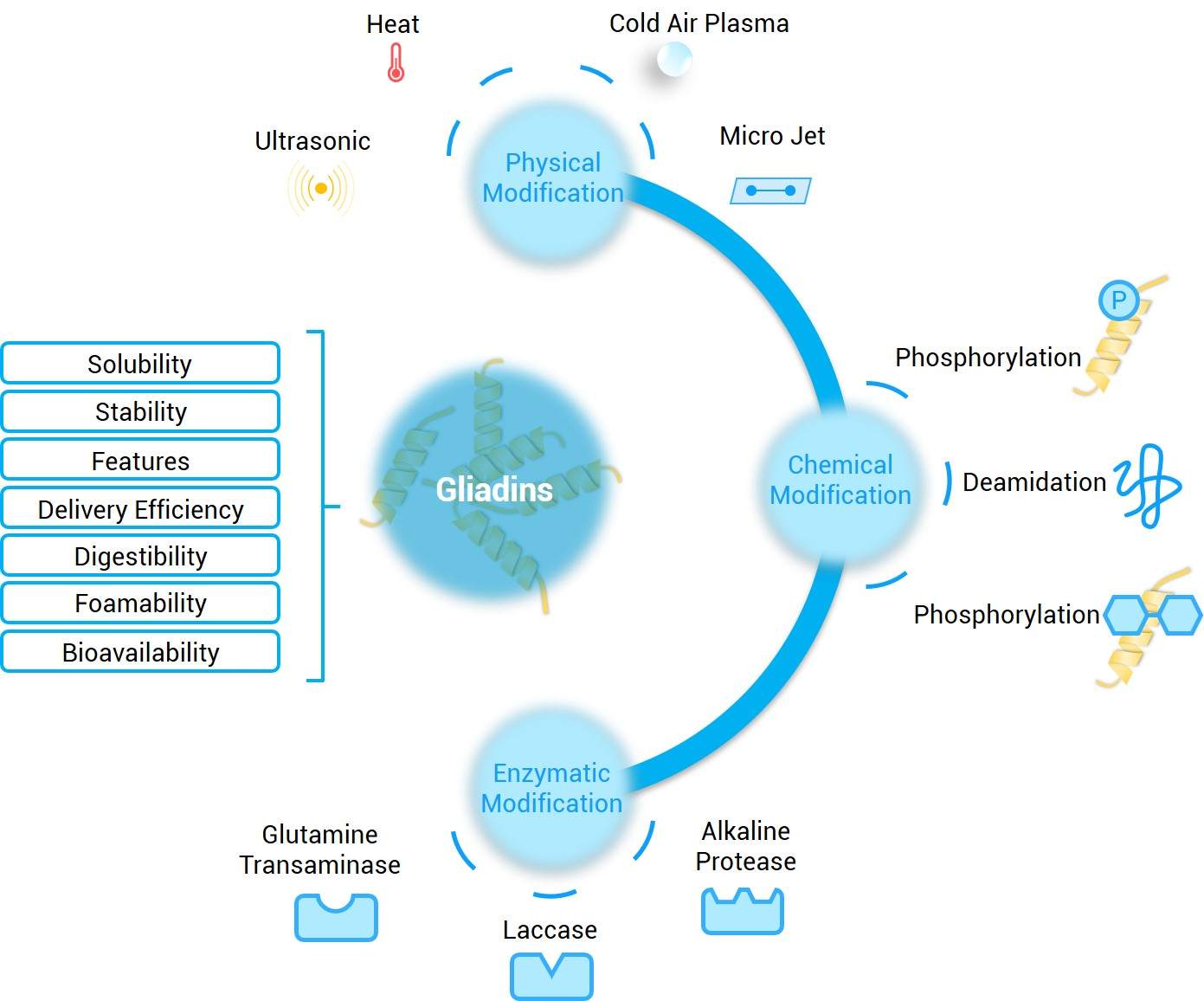 Fig. 2 Modification methods of gliadin.
To prevent systemic salt-out, reduce premature clearance by the reticuloendothelial system (RES), and enable receptor-mediated targeted endocytosis, precise chemical, physical, and enzymatic modifications are crucial. These modifications tune the surface zeta potential (zeta-potential) to stable ranges (typically -20 mV to -30 mV), build steric hydration shells, and conjugate tissue-specific ligands.
| Modification Category | Specific Treatment & Processing | Payloads | Primary Interfacial & Biological Delivery Benefits |
|---|---|---|---|
| Physical Modification | High-Pressure Microfluidization | Algal Oil |
|
| Chemical Modification | Maillard-Driven Glycosylation | Quercetin |
|
| Enzymatic Modification | Controlled Alcalase Hydrolysis | Naringin |
|
| Combined Modification | 400 W Ultrasound Pretreatment + Glycosylation | Quercetin |
|
| Combined Modification | Chemical Deamidation + Starch Gel Complexation | Resveratrol |
|
| Polysaccharide Complexation | Carboxymethyl Chitosan (CMCS) Electrostatic Coating | Curcumin |
|
| Polysaccharide Complexation | Gum Arabic + Chitosan Hydrochloride Coating | Resveratrol |
|
| Polysaccharide Complexation | Tremella Polysaccharide Electrostatic Wrapping | Curcumin |
|
| Polysaccharide Complexation | Sodium Alginate Complex Coacervation | Curcumin |
|
| Other Biopolymers | Rhamnolipid Biosurfactant Complexation | Curcumin |
|
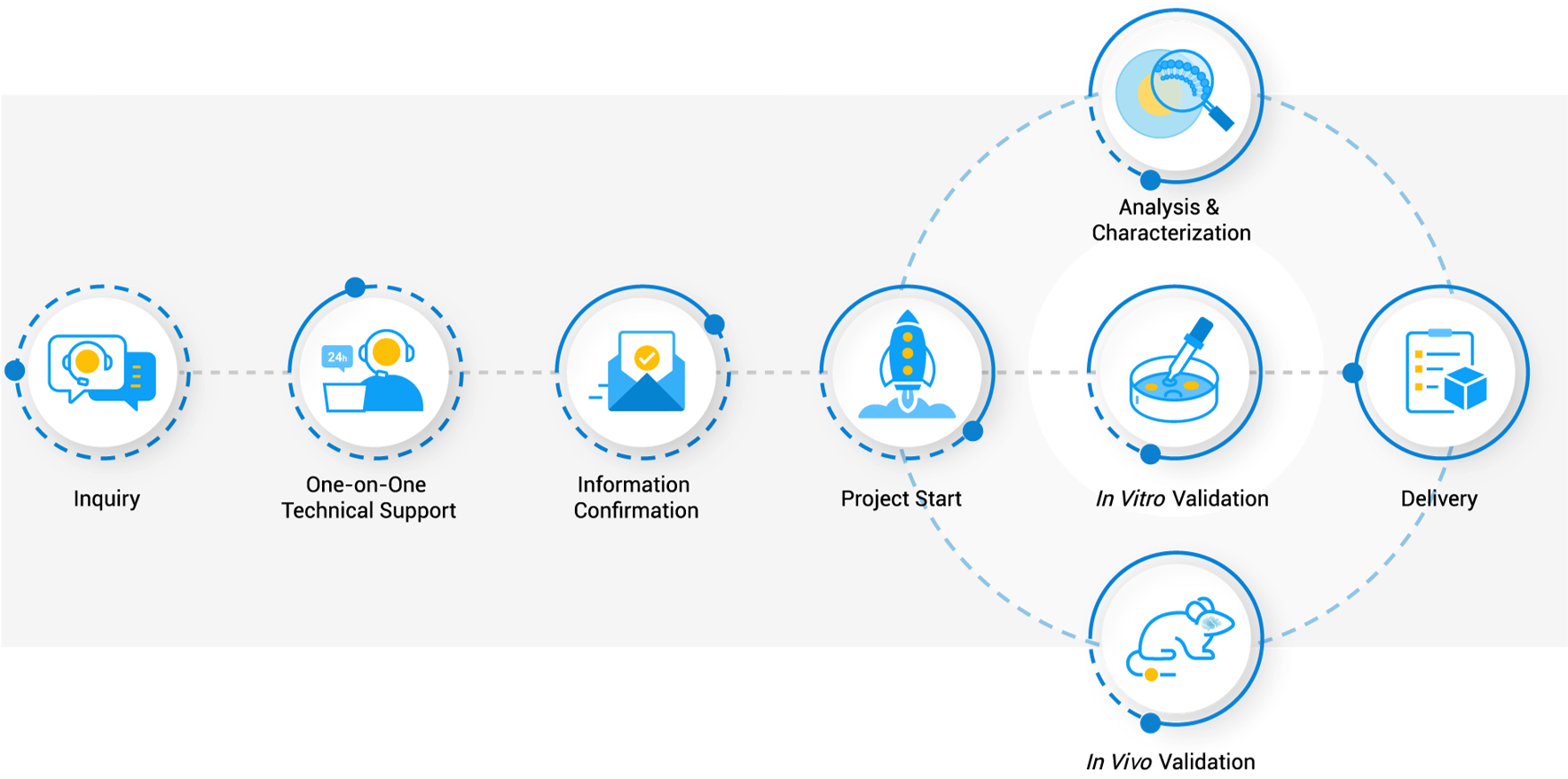
Creative Biolabs offers comprehensive contract research organization (CRO) services to guide your custom protein-based delivery project from conceptual feasibility to validated preclinical samples.
Creative Biolabs provides custom formulation design utilizing advanced, high-throughput liquid-liquid phase separation systems. We systematically map solubility profiles, optimizing parameters such as solute ratios, mixing speed, and solvent-to-antisolvent injection rates to deliver highly reproducible batch-to-batch consistency.
Screening of optimal solvent-antisolvent ratios to establish phase-separation boundaries.
Microfluidic-assisted synthesis for highly monodisperse nanoparticle populations.
Benign, organic-solvent-free self-assembly optimized for sensitive biomolecules and delicate peptide therapeutics.
Creative Biolabs is a pioneer in the design, optimization, and synthesis of plant-protein-based nanocarriers, offering custom-engineered solutions for biotechnology, pharmaceuticals, food science, and active packaging. Our specialized Gliadin Nanoparticle Development Service provides leading-edge formulation expertise, helping you overcome poor solubility, systemic instability, and biological barriers. Whether your program focuses on complex hydrophobic small molecules, fragile nucleic acids, or industrial Pickering emulsions, our elite team of physical chemists and formulation scientists is ready to deliver a customized, high-performance targeted drug delivery solution tailored to your exact specifications.
Proprietary Interfacial Chemistry
Our advanced electrochemical deamidation technology shifts the carrier's zeta potential to highly stable negative ranges, achieving superior self-dispersion without using synthetic, toxic surfactants.
Outstanding Encapsulation Metrics
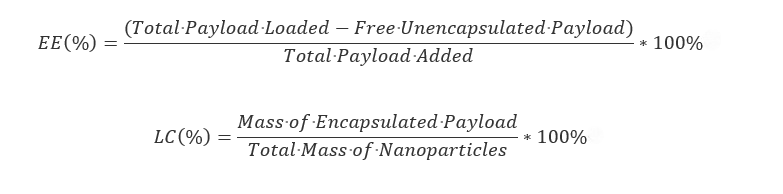
We routinely achieve encapsulation efficiencies EE%) exceeding 90% for highly challenging, lipophilic compounds.
Synergistic Shielding Engineering
We utilize highly purified natural polysaccharides (such as carboxymethyl chitosan and hyaluronic acid) to form resilient "nanocage" structures, providing exceptional stability against physiological salinity.
Preclinical Scientific Rigor
Every custom formulation program is fully validated using high-resolution TEM/SEM, and DLS.
Chemical Synthesis Services
Nucleic Acid Synthesis Services
Gliadin's hydrophobic core acts as a natural micellar solubilizer, suppressing drug crystallization and yielding stable aqueous dispersions.
Its surface glutamine residues form strong hydrogen bonds with mucosal glycoproteins, prolonging mucosal residence time to facilitate continuous passive absorption.
We apply proprietary enzymatic and chemical deamidation to alter antigenic epitopes, ensuring a safe, biocompatible profile in research models.
Our benign, pH-driven self-assembly routinely achieves nucleic acid encapsulation efficiencies (EE%) of 80% to 95%.
Polysaccharide coatings introduce strong electrostatic and steric repulsion, maintaining colloidal stability under physiological ionic strengths (NaCl > 100 mg/L).
Reference
Creatibe Biolabs' custom LNP was the only solution that successfully delivered our CRISPR-Cas9 payload across the blood-brain barrier with high efficiency and low toxicity.”

Dr. Evelyn Reed
Postdoctoral Researcher, Leading University
Our siRNA candidate was failing due to off-target toxicity, but Creatibe Biolabs' team rapidly redesigned our LNP using their modular platform, rescuing our preclinical program.”

Ben Carter
Project Manager
Achieving cytosolic delivery of our protein degrader with Creatibe Biolabs' exosome platform was the key to unlocking our candidate's full therapeutic potential.”

Dr. Kenji Tanaka
Principal Scientist, Large Pharma Corp
Our oncology drug's efficacy was limited by poor tumor accumulation. Creatibe Biolabs' peptide-conjugated liposomes provided the precise targeting we needed, dramatically increasing the drug's therapeutic index.”
Dr. Clara Schmidt
Senior Scientist, Oncology Innovations Inc.
We required a delivery system that would only release its payload in the tumor's acidic microenvironment. Creatibe Biolabs' pH-responsive liposomes performed flawlessly, minimizing systemic exposure.”
David Chen
Formulation Scientist
Outstanding expertise in antibody engineering.The team's attention to detail and innovative approaches have sianificantly accelerated our development timeline.
Sarah L.
Senior Research Scientist