
Nanopesticides are encapsulated in protective matrices (like polymer nanospheres or liposomes) to bypass environmental degradation and target pests or fungal pathogens specifically. This reduces the required chemical load by up to 90% while significantly diminishing the likelihood of pest resistance development.
Nanoparticle Application in Crop Protection
Are you currently facing low agrochemical efficacy, escalating pest resistance, and challenges achieving true environmental sustainability in crop management? Our Advanced Nanoparticle Formulation Services help you maximize crop yield and secure long-term soil health through site-targeted, controlled-release delivery systems and Nano-Microbiome Compatibility technology.
Click Here to View more about our Service
Overview of Nanoparticle Applications
Nanoparticles, defined by dimensions between 1-100 nanometers, offer a radical departure from conventional bulk chemistry. Their immense surface area-to-volume ratio, stability, and ability to traverse biological barriers unlock unprecedented precision in agricultural inputs, driving the shift toward sustainable and profitable farming practices.
What Are Our Research Areas?
Creative Biolabs focuses on the intersection of advanced delivery science and plant biology to overcome the limitations of traditional agriculture. Nanoparticles are used in the development of targeted, controlled-release nano-pesticides, nano-fungicides, and diagnostic nanosensors to combat biotic stress with minimal chemical residue.
Why Choose Us?
Leveraging two decades of expertise in complex delivery systems, Creative Biolabs designs nanoparticles that are not just effective, but environmentally sound. Key advantages include:
- Massively Enhanced Efficacy: Nanocarriers protect active ingredients from degradation (e.g., UV light, hydrolysis) and ensure a higher concentration of the payload reaches the intended site.
- Controlled, Sustained Release: Formulations can be engineered to release payloads slowly over days or weeks, reducing application frequency and overall agrochemical use.
- Reduced Environmental Footprint: Lower application doses lead to less runoff, minimizing soil and water contamination, which is critical for meeting global sustainability metrics.
- Improved Plant Uptake: The small size allows for easier internalization by plant tissues, facilitating systemic delivery of both nutrients and genetic materials.
Key Applications
The integration of advanced nanodelivery science creates tangible, high-value outcomes across the agricultural supply chain.
Precision Pest Management
High-Efficiency Nutrient Delivery
Nanofertilizers provide essential micronutrients (like Zinc, Iron, and Copper) in a highly bioavailable form. This controlled-release mechanism matches nutrient availability precisely to the plant's metabolic demands, preventing nutrient leaching and dramatically increasing nutrient-use efficiency compared to bulk fertilizers.
Advanced Crop Engineering via Nanobiotechnology
Nanocarriers, such as Lipid Nanoparticles (LNPs), serve as superior, non-viral delivery vehicles for transferring nucleic acids (siRNA, mRNA) directly into plant cells. This allows for fast, stable, and highly specific genetic modification to engineer crops with enhanced traits, such as increased abiotic stress tolerance or inherent disease resistance.
Real-Time Diagnostics and Monitoring
The development of sophisticated nanobiosensors allows for highly sensitive, on-site detection of chemical contaminants, pathogens, and early signs of environmental stress (e.g., salinity, drought). This moves farming from reactive treatment to predictive precision management.
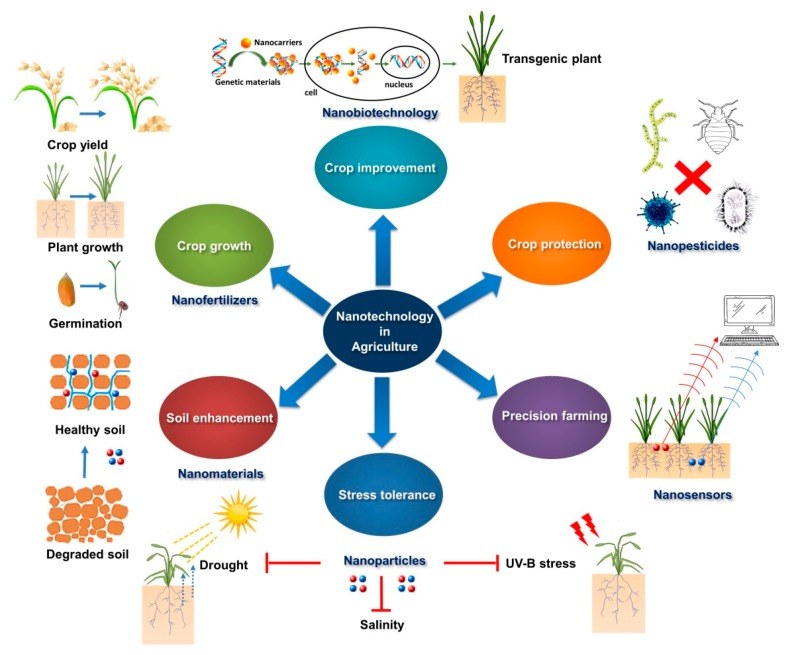 Fig.2 Applications of nanotechnology in agriculture: enhanced crop growth, yield, and productivity through controlled release of nanofertilizers.1
Uncover How We Can Support You - Set Up a Meeting!
How We Support Your Nanoparticle R&D
Creative Biolabs' extensive service portfolio in complex delivery systems is fully leveraged to accelerate your agricultural innovation pipeline. We provide the material science and formulation expertise necessary to take an active ingredient from concept to compliant product.

LNP-based Delivery System Development
Targeted Plant Genetic Modification
Liposome-based Delivery System Development
Controlled Release Agrochemicals & Biopesticides
Site-Specific Pest/Pathogen Control
QA/QC for Nano-Agrochemicals
Hydrogel-based Delivery System Development
Specialized Mechanical Hydrogels Development
Translational Impact: Data-Driven Sustainability
Adopting Creative Biolabs' nano-enabled solutions is a direct pathway to operational excellence and environmental stewardship. By leveraging controlled release systems, our clients typically achieve a 30-50% reduction in active ingredient consumption while maintaining or surpassing conventional yield targets. Furthermore, by ensuring our nano-formulations are non-toxic to beneficial soil microbes, we secure a long-term commitment to soil fertility and biodiversity—a crucial differentiator in today's regulatory landscape.
Discover the Unique Benefits of Creative Biolabs - Inquire for Your Quote Now!
Products
To facilitate initial research and process optimization, Creative Biolabs offers a range of high-quality products related to nanoparticle synthesis and formulation.
| Product Name | Description | Inquiry |
|---|---|---|
| LNP Lipid Kit | Proprietary functionalized lipid blends formulated for high-efficiency encapsulation of siRNA/mRNA payloads for systemic plant delivery. | |
| Aptamer Modules | Customized nucleic acid sequences that selectively bind to target pest or pathogen surface markers for enhanced control. | |
| Nano-Polymer Carrier | Smart polymer systems designed for sustained release of nutrients and biopesticides directly to the rhizosphere with optimized biodegradability. |
Frequently Asked Questions
Are Nanoparticles Safe for the Environment and the Food Chain?
This is a critical question. While some bulk nanomaterials can pose risks, utilizing biocompatible, biodegradable materials and plant-based synthesis methods. More importantly, we perform stringent Nano-Microbiome Compatibility screening to ensure our products maximize crop health without harming essential soil microorganisms.
How can nanotechnology improve fertilizer efficiency compared to standard coatings?
Standard coatings delay release; our nanoparticles control the release. The nanoscale dimension allows the nutrient payload to be highly bioavailable and readily taken up by the plant root system, preventing the nutrient from leaching or becoming chemically immobilized in the soil. This leads to a higher Nutrient Use Efficiency that traditional coatings simply cannot match.
Can Nanoparticle delivery systems be used for gene editing in the field?
Yes, nanobiotechnology is transforming field-based genetic applications. LNP and polymer carriers are engineered to protect and transport delicate genetic payloads (like mRNA or siRNA) into plant cells. This offers a revolutionary, efficient, and precise alternative to traditional plant transformation methods.
Creative Biolabs is committed to delivering the scientific rigor and technical excellence required to drive the next wave of sustainable agricultural productivity. Our integrated platforms, covering targeted module synthesis, advanced LNP and Liposome development, and rigorous characterization, provide an end-to-end solution for your crop protection and enhancement goals. To discuss your specific project needs, from high-efficiency nanofertilizer formulation to cutting-edge plant gene delivery, our expert team is ready to assist.
Reference
- Shang, Yifen, et al. "Applications of nanotechnology in plant growth and crop protection: a review." Molecules 24.14 (2019): 2558. Distributed under Open Access license CC BY 4.0, without modification. DOI: https://doi.org/10.3390/molecules24142558
Our services are For Research Use Only. We do not provide services to individuals.
Online Inquiry