Nanoparticles based on Human Serum Albumin (HSA) or Bovine Serum Albumin (BSA) are widely used due to albumin's abundance and its intrinsic tumor-targeting properties. Albumin interacts with the gp60 receptor, facilitating both passive accumulation (EPR effect) and active cellular uptake in cancer cells.
Protein based Nanoparticles for Targeted Drug Delivery
Protein-based nanoparticles (PNPs) are the foundation of next-generation biomimetic drug delivery systems. Creative Biolabs accelerates your therapeutic pipeline by providing end-to-end PNP delivery system development services, solving complex payload encapsulation and targeting challenges for high-barrier diseases like glioblastoma (GBM) and advancing multi-modal therapies.
Click Here to View more about our Service
 Albumin-Based Delivery System Development Service Protein-Based Delivery Systems Development Service
Introduction to Protein-Based Nanoparticles
Lipoprotein
These are biomimetic carriers (e.g., those using HDL or LDL components) that exploit the body's natural lipid transport pathways. They are especially effective at crossing difficult biological barriers, such as the Blood-Brain Barrier (BBB), to deliver therapeutics efficiently to neurological targets.
Protein-based nanoparticles (PNPs) represent a paradigm shift in nanomedicine, utilizing naturally occurring or engineered proteins as the core material for drug carriers. They are intrinsically biodegradable and highly biocompatible, offering a significant advantage over synthetic polymers due to their low immunogenicity and high chemical versatility. PNPs harness natural biological recognition mechanisms for precise drug delivery.
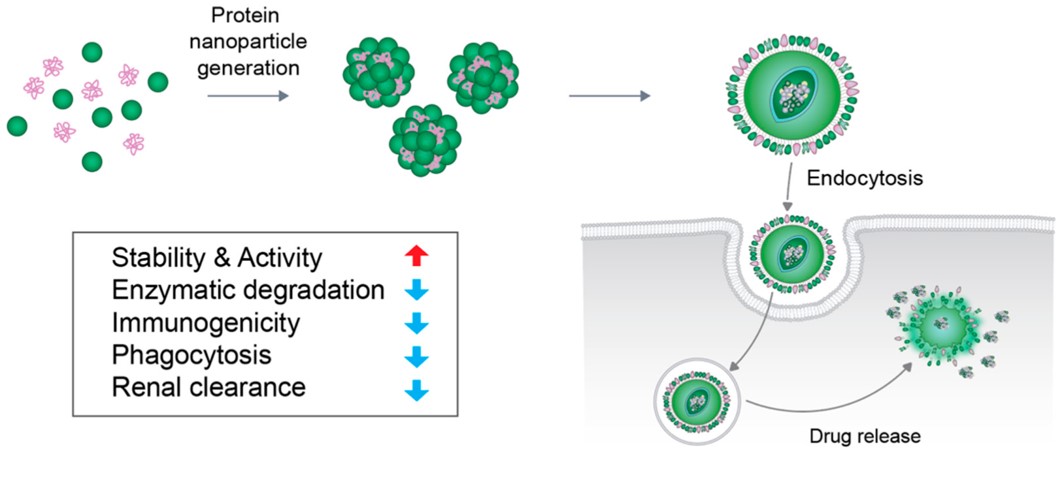 Fig.1 Delivery of protein nanoparticle to the cell.1
Advantages of Protein-Based Nanoparticles
PNPs possess critical delivery advantages rooted in their natural structure and engineering flexibility:
Superior Biocompatibility
They break down entirely into non-toxic amino acid metabolites, significantly simplifying the regulatory pathway and lowering systemic toxicity risks compared to synthetic materials.
Rational Design
PNP surfaces are rich in functional groups (-NH2, -COOH, -SH), enabling highly precise, multi-ligand conjugation for active targeting and pharmacokinetic extension.
Stimuli-Responsiveness
PNPs can be engineered for on-demand drug release at the disease site, reacting to tumor microenvironment cues like low pH or high concentrations of specific enzymes (MMP-2).
Manufacturing Uniformity
We use advanced techniques to ensure a narrow particle size distribution and batch-to-batch consistency, overcoming common scale-up challenges.
Applications of Protein-Based Nanoparticles
Targeted Oncology
PNPs provide specific delivery of chemotherapy agents, improving the therapeutic index and reducing systemic exposure.
Vaccinology
Protein cages (e.g., ferritin or virus-like particles (VLPs)) serve as robust platforms for multivalent antigen display, which is critical for driving powerful T-cell and B-cell immune responses against cancer or pathogens.
Theranostics and Synergistic Therapy
PNPs can combine diagnostic imaging agents (NIR-II Ag2S Quantum Dots) with therapeutic payloads, enabling real-time monitoring of accumulation and simultaneous treatment delivery. This allows for multi-modal treatments, such as integrating PTT or Radiosensitization (RT) agents.
Immunotherapy and ICD
PNPs are key to inducing immunogenic cell death (ICD), carrying drugs that turn immunologically "cold" tumors into "hot" ones by releasing danger signals, a crucial step for boosting the body's anti-cancer immune response.
Table.1 Examples of protein-based nanoparticles.
| Application Area | PNP Class | Key Benefit |
|---|---|---|
| Oncology | Albumin (HSA) NPs | Targeted delivery of small molecule drugs |
| Vaccines | Protein Cages (Ferritin, VLPs) | Multivalent antigen display for enhanced immunogenicity |
| Oral Delivery | Casein Microcapsules | pH-responsive protection through the gastrointestinal (GI) tract |
| Theranostics | Peptide-Functionalized PNPs | Real-time monitoring combined with Chemo-PTT/RT synergy |
Creative Biolabs provides expert delivery system development, specializing in PNPs, biomimetic drug delivery systems, and novel liposomes. Leverage our platform's scale-up reliability and rational design capabilities. Contact our team today for a detailed service consultation.
Reference
- Hong, Seyoung, et al. "Protein-based nanoparticles as drug delivery systems." Pharmaceutics 12.7 (2020): 604. Distributed under Open Access license CC BY 4.0, without modification. https://doi.org/10.3390/pharmaceutics12070604
Our services are For Research Use Only. We do not provide services to individuals.
Online Inquiry