Resilin-Like Polypeptide (RLP) Development Service for Targeted Drug Delivery
Delivering advanced therapeutics directly to their site of action without compromising systemic stability remains a foundational challenge in modern biopharmaceutics. Traditional delivery vehicles often fail to balance mechanical strength with precise biological targeting, resulting in poor bioavailability or off-target toxicities. To resolve these challenges, Creative Biolabs provides a comprehensive Resilin-Like Polypeptide (RLP) Development Service for Targeted Drug Delivery. By leveraging sequence-controlled recombinant DNA technology, Creative Biolabs specializes in designing and engineering high-purity, biomimetic resilin platforms that revolutionize intracellular, tissue-specific, and environment-responsive cargo transport.
Advanced Biomaterials Science: Understanding Resilin-Like Polypeptides
Unmatched Mechanical Resilience & High-Strain Durability
Resilin is a natural, insect-derived elastomeric protein renowned for its near-perfect resilience, high fatigue life, and exceptionally low dynamic stiffness. In nature, it allows insects to jump and fly millions of times without material failure. At the molecular level, resilin is an intrinsically disordered protein (IDP) that behaves as an entropy-dominated elastomer.
Using recombinant DNA technology, Creative Biolabs synthesizes customized genetically engineered resilin-like polypeptides for drug delivery that capture these remarkable mechanical properties. By adjusting the sequence length and crosslinking density, we can precisely tune the shear storage modulus (G') and loss modulus (G'') to match native tissues, ensuring that localized delivery platforms do not trigger physical irritation or chronic inflammatory responses.
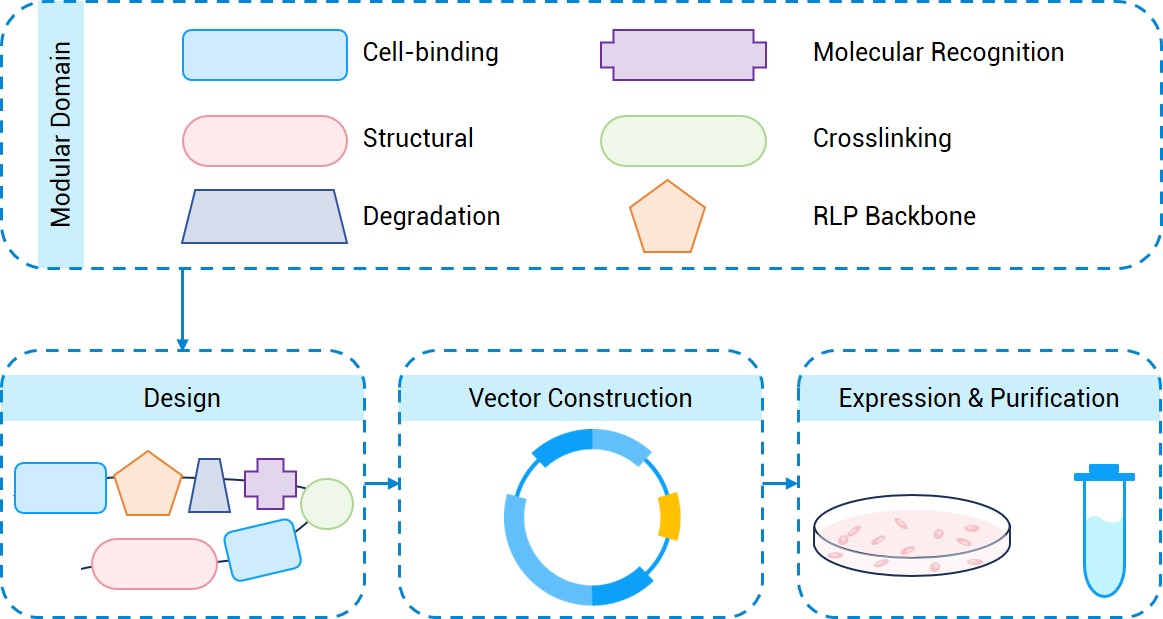 Fig. 1 Modular RLPs synthesis.
Phase Transition Behaviors: LCST & UCST Systems
A key feature of our engineered RLPs is their ability to undergo liquid-liquid phase separation (LLPS) or transition between soluble monomeric states and dense coacervates. This transition is highly tunable and responds dynamically to environmental stimuli, such as temperature, ionic strength, or pH transitions.
- Lower Critical Solution Temperature (LCST): Below the LCST, the polypeptide is soluble. Above the LCST, hydrophobic interactions dominate, causing coacervation and self-assembly.
- Upper Critical Solution Temperature (UCST): The system remains in a coacervate or gelled state at lower temperatures and transitions to a soluble state when heated above the UCST.
By exploiting these thermodynamic transitions, we design drug delivery vehicles that encapsulate sensitive payloads under mild aqueous conditions, shielding them from premature degradation.
Recombinant Resilin Hydrogel Networks: Structure & Mechanics
Beyond soluble monomeric states, RLPs can be crosslinked into highly hydrated, three-dimensional hydrogel networks. These macromolecular networks combine the high-water content of traditional hydrogels with the unmatched fatigue life of native resilin. The elastic properties of these recombinant resilin hydrogels are governed by rubber-elasticity theory, where the shear modulus (G) is inversely proportional to the average molecular weight between crosslinks (Mc):
By genetically controlling the spacing of active crosslinking sites (such as tyrosine residues for dityrosine photo-crosslinking or lysine residues for chemical amine gelation), we precisely tune the hydrogel's mesh size and swelling ratio. This level of molecular control allows us to design injectable depots that exhibit rapid in situ gelation, matching the physical mechanics of soft tissues while acting as a physical barrier to regulate the diffusion-controlled release of therapeutic cargo.
How RLPs Outperform Standard Carriers
To help our partners select the ideal vehicle, the matrix below details how our recombinant RLPs address the common limitations of synthetic polymers and natural extracted proteins.
| Performance Metric | Traditional Synthetic Polymers | Natural Extracted Proteins | Creative Biolabs' Recombinant RLPs |
|---|---|---|---|
| Sequence Precision | Low (Polydisperse mixtures) | Low (Slight batch variations) | Absolute (Genetically programmed) |
| Mechanical Tunability | High, but often stiff or brittle | Low (Fixed biological properties) | Ultra-High (Tunable G' and G'' elastic modulus) |
| Immunogenicity | Variable (Risk of toxic byproducts) | High (Risk of animal pathogen transmission) | Minimal (Biocompatible, humanized designs) |
| Targeting Integration | Complex chemical conjugation | Hard to functionalize uniformly | Direct (In-frame fusion of targeting ligands) |
| Stimuli-Responsiveness | Requires harsh chemical synthesis | Limited responsiveness | Inherent (pH, temperature, redox, or enzymatic) |
Tailored RLP Engineering and Development
Creative Biolabs offers an end-to-end service suite designed to take your therapeutic candidate from initial sequence concept to a validated, high-performing drug delivery carrier.
In Silico Sequence Design and Fusion Engineering

We design custom RLP sequences optimized for your specific payload and target tissues. By utilizing gene-level synthesis, we can construct multi-domain fusion proteins that combine structural resilience with biological signaling.
Ligand Integration
Direct, in-frame integration of cell-binding domains (e.g., RGD motifs) and antibody-binding regions to ensure tissue-specific accumulation.
Cleavable Linkers
Incorporation of enzyme-responsive peptide blocks (such as MMP-sensitive sequences) to allow localized degradation at the disease site.
Charged Domains
Strategic placement of cationic segments to facilitate electrostatic condensation of nucleic acids.
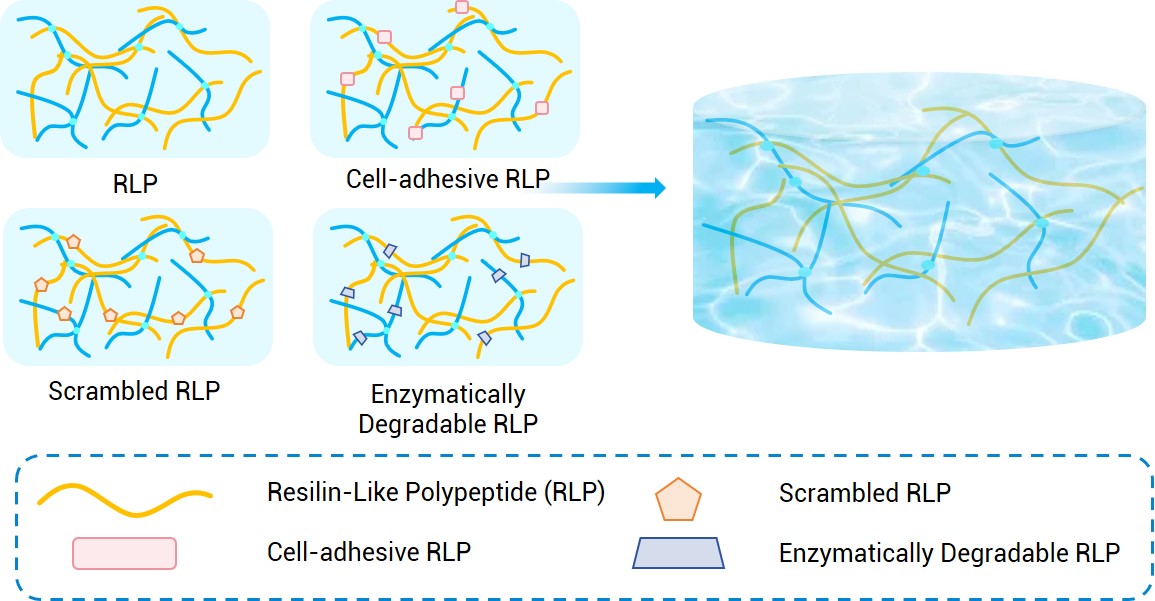 Fig. 2 RLP-based hydrogels with various material compositions.
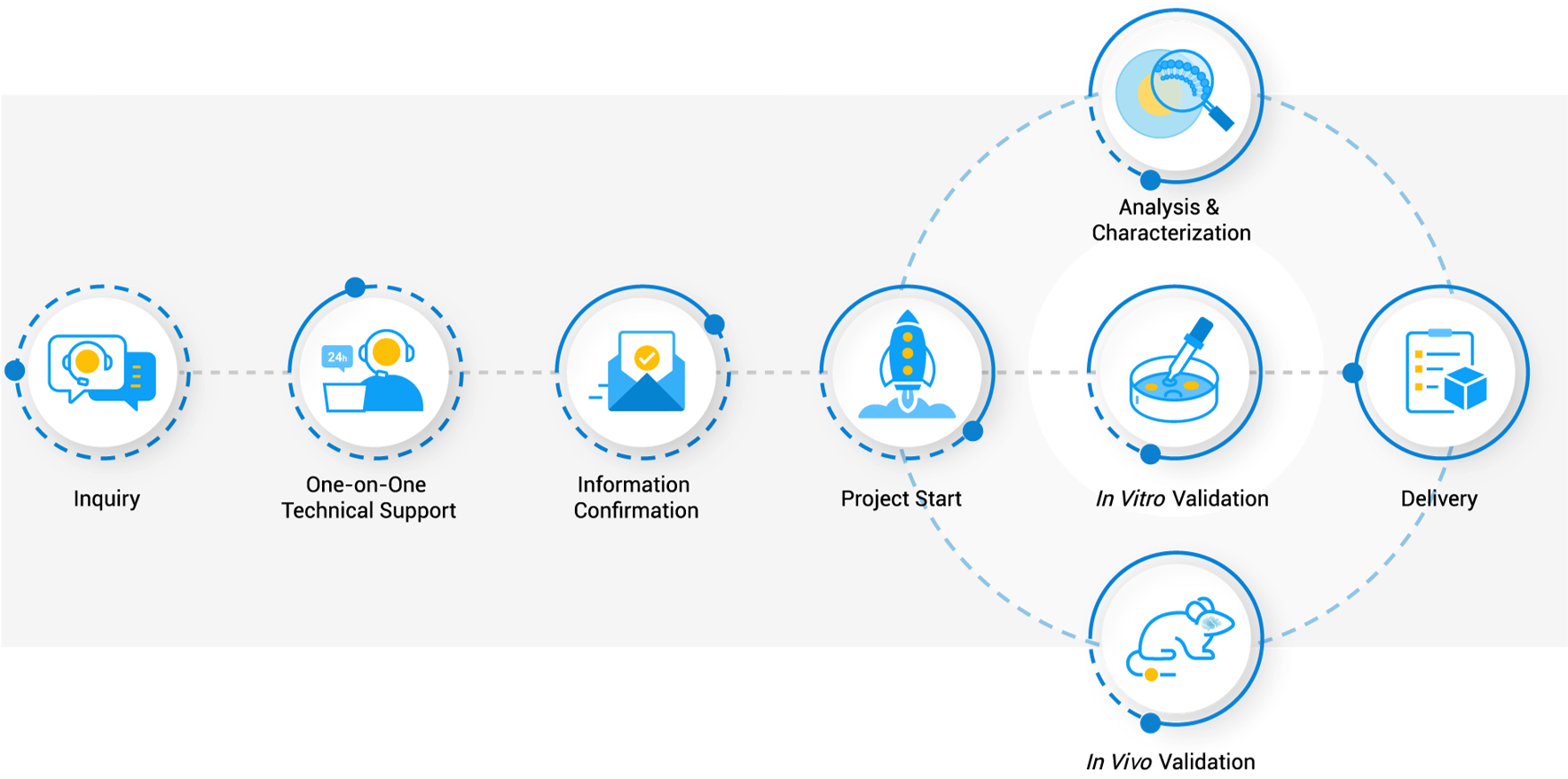
Workflow
Targeted Therapeutic & Regenerative Applications
Creative Biolabs' environment-responsive protein-based drug carriers are tailored to bypass physiological barriers, offering versatile targeting solutions across critical biological frontiers.
- Oncology & Tumor Microenvironment Targeting: Development of pH- and redox-sensitive elastomeric protein nanocarriers that remain stable in systemic circulation but selectively disassemble to release cytotoxic payloads in response to the acidic, high-glutathione tumor microenvironment.
- Localized Biomechanical Tissue Regeneration: Formulation of injectable recombinant resilin hydrogels that provide immediate mechanical mimicry in high-strain tissues (such as cartilage, cardiovascular structures, or vocal folds) while delivering a sustained release of localized growth factors.
- Gene Therapy & Intracellular Nucleic Acid Delivery: Engineering of custom RLP-based nanoparticles for nucleic acid delivery designed to condense fragile siRNA, mRNA, or CRISPR-Cas9 components, shielding them from nucleases and facilitating pH-triggered endosomal escape.
- Smart Coatings & Bio-Interfaces: Fabrication of thin-film RLP hydrogels for active medical implants or biosensing interfaces that dynamically alter surface characteristics or deploy antimicrobial agents in response to localized bacterial enzymatic activity.
Why Choose Creative Biolabs?
Creative Biolabs is dedicated to resolving the most complex challenges in targeted drug delivery. By combining state-of-the-art genetic engineering with advanced polymer chemistry, our RLP Development Service for Targeted Drug Delivery provides researchers with a highly tunable, sequence-precise, and biocompatible carrier platform. Whether you are aiming to deliver delicate gene therapies, sequester toxic small molecules, or build elastic tissue engineering scaffolds, our team has the specialized expertise to design, express, and validate a bespoke vehicle that drives your pipeline forward.
Sequence-Controlled Precision
Every RLP we manufacture is designed at the genetic level, eliminating the high polydispersity and batch-to-batch variation associated with synthetic polymers or animal-extracted materials.
Modular Architecture
Easily fuse targeting peptides, cell-penetrating sequences, and enzymatically sensitive cleavage domains into a single, uniform macromolecular chain.
High-Purity, Research-Grade Material
Our specialized purification workflows ensure low endotoxin levels, making our formulations ideal for sensitive in vitro and in vivo research assays.
End-to-End Co-Development:
We are more than a vendor. We provide collaborative, highly consultative services, from initial in silico sequence optimization to complete biophysical and rheological characterization.
Related Services & Products
Related Services
Chemical Synthesis Services


Nucleic Acid Synthesis Services
FAQs
How are resilin-like polypeptides used in targeted drug delivery?
Resilin-like polypeptides serve as self-assembling biological carriers. By engineering their gene sequences, we program them to respond to microenvironmental triggers (like pH shifts or enzymatic cleavage) to encapsulate cargo systemically and release it selectively at target cells.
Why choose recombinant resilin for therapeutic payload delivery?
Unlike synthetic polymers, recombinant resilin is fully biodegradable, biocompatible, and yields non-toxic degradation products. Unlike extracted natural proteins, our recombinant RLPs offer absolute sequence precision, eliminating batch-to-batch variations and allowing precise in-frame targeting modifications.
What types of therapeutic cargo can be encapsulated in your RLPs?
Our custom platforms are highly modular and can successfully encapsulate hydrophobic small molecules, fragile therapeutic enzymes, peptides, and diverse nucleic acids, including siRNA, mRNA, antisense oligonucleotides (ASOs), and CRISPR-Cas9 plasmids.
What is the typical purity and endotoxin level of your RLP formulations?
All our research-grade RLPs undergo rigorous multi-step chromatography. We guarantee a protein purity of > 95% via SDS-PAGE and low endotoxin level, ensuring safety for in vivo animal models.
Can the mechanical stiffness of RLP hydrogels be customized?
Yes. By manipulating the amino acid sequence length, concentration, and crosslinking density, we can precisely tune the storage modulus to match target tissues.