Overview: Engineered sub-200 nm spheres optimized for cellular uptake, systemic circulation, and tumor accumulation.
Primary Indication: Intravenous chemotherapeutic delivery, lymphatic targeting, and ocular diseases.

In modern precision medicine, overcoming challenging physiological barriers requires carrier systems with exceptional biocompatibility and highly tunable physical properties. Creative Biolabs, a world-leading pioneer in biomaterial translation, offers our flagship Silk Fibroin-Based Targeted Drug Delivery System Development Services. By leveraging our state-of-the-art macromolecular engineering platform, we transform high-purity natural silk (Bombyx mori) fibroin into highly customized nano- and micro-carriers. These systems endow your active ingredients with superior in vivo stability, precise target distribution, and controlled release kinetics.
Silk fibroin (SF) is a natural macromolecular fibrous protein extracted from the cocoons of the domestic silkworm, Bombyx mori. Its molecular weight is approximately 390 kDa, composed of a heavy chain (Heavy Chain,~350kDa) and a light chain (Light Chain, ~26 kDa) covalently linked via a single disulfide bond, accompanied by a non-covalently associated glycoprotein P25 (~30 kDa). This assembly forms a highly stable multimeric complex.
Unlike traditional synthetic polymers (such as PLGA) that generate acidic degradation byproducts—which often induce localized sterile inflammation and compromise fragile nucleic acids or proteins—silk fibroin offers unmatched biopharmaceutical carrier advantages:
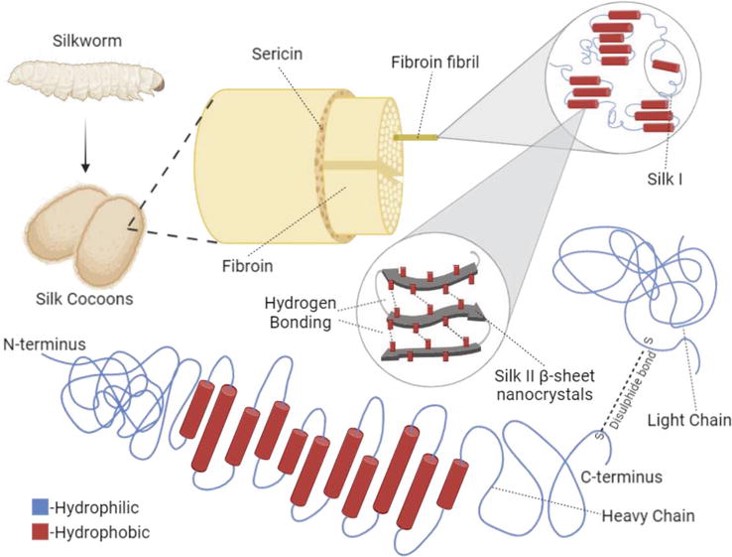 Fig. 1 Cross-sectional and structural composition of silk fibers.1,4
It degrades progressively in vivo via endogenous proteases into biocompatible amino acids, which are completely reabsorbed and metabolized by surrounding tissues.
By controlling the transition from random coil structures (Silk I) to highly crystalline, hydrophobic β-sheet architectures (Silk II), we can precisely program the enzymatic degradation rate in vivo, adjusting the release window from several days to multiple months.
SF self-assembly can be executed entirely under ambient aqueous conditions, eliminating the need for toxic organic solvents (e.g., dichloromethane) and maximizing the conformational preservation of delicate proteins, antibodies, and nucleic acids.
Depending on the targeted therapeutic indication and preferred route of administration, Creative Biolabs processes silk fibroin into a diverse array of micro-, nano-, and macro-scale delivery vehicles.
Overview: Engineered sub-200 nm spheres optimized for cellular uptake, systemic circulation, and tumor accumulation.
Primary Indication: Intravenous chemotherapeutic delivery, lymphatic targeting, and ocular diseases.
Overview: Micron-scale matrix systems designed to control cargo release rates via progressive surface erosion.
Primary Indication: Sustained intramuscular depot formulations and localized anti-inflammatory therapies.
Overview: Highly hydrated 3D networks that undergo physical or chemical crosslinking to capture and release macromolecules.
Primary Indication: Localized tumor bed cavity delivery, subcutaneous implants, and injectable long-acting depots.
Overview: Composite lipid-protein structures combining the rapid membrane fusion of liposomes with the protective structural shield of silk.
Primary Indication: Mucosal adhesion enhancement, ocular topical delivery, and intracellular gene delivery.
Overview: Ultra-thin, transparent polymer sheets fabricated via casting or Layer-by-Layer (LbL) electrostatic deposition.
Primary Indication: Transdermal active patches, insertable vaginal discs, and implantable ocular membranes.
Overview: Highly interconnected, macroporous sponges that serve as physical templates for tissue regeneration while releasing localized growth factors.
Primary Indication: Bone and cartilage tissue engineering, chronic wound dressings, and post-resection packing.
The matrix below outlines established formulation benchmarks and verified functional outcomes across diverse silk fibroin carrier architectures, demonstrating the highly predictable and tunable release kinetics of this platform:
| Carrier Architecture | Associated Therapeutic Payload | Observed Performance & Functional Outcomes |
|---|---|---|
| SF Sponges | Erythromycin (Macrolide Antibiotic) | Sustained drug release kinetics coupled with extended bactericidal efficacy against S. aureus |
| SF Biofilms | Horseradish Peroxidase (HRP) | Pronounced conformational protection and thermal stabilization of protein cargo |
| Glucose Oxidase (GOx) | Significant preservation of enzymatic activity and biocatalytic retention | |
| FITC-Dextran (Macromolecular Model) | Fine-tuned, diffusion-controlled macromolecular release kinetics | |
| Epirubicin (Anthracycline Chemotherapeutic) | Programmed elution profiles with minimized initial burst effect | |
| SF Lyogels | Hydrocortisone (Corticosteroid) | Augmented therapeutic efficacy and localized anti-inflammatory response |
| Immunoglobulin G (IgG) | Excellent structural protection and prolonged sustained-release behavior | |
| Insertable SF Discs | IgG & HIV Inhibitor 5P12-RANTES | Synergistic conformational shielding and modified release kinetics |
| SF Nanoparticles | Curcumin (Polyphenol) | Enhanced intracellular accumulation, optimized pharmacokinetics, and cellular uptake |
| SF Microspheres | Horseradish Peroxidase (HRP) | Micro-erosion-controlled macromolecular release kinetics |
| SF-Coated PCL Microspheres | Vancomycin (Glycopeptide Antibiotic) | Surface-barrier modulated elution to suppress burst drug release |
| SF-Coated Liposomes | Ibuprofen (NSAID) | Enhanced mucoadhesion to corneal epithelial cells with tailorable ocular transport |
| Emodin (Anthraquinone) | Receptor-independent selective target cell cytotoxicity in keloid fibroblasts |
The side chains of natural silk fibroin are rich in active functional groups, including the phenolic hydroxyl groups of tyrosine, the free carboxyl groups (-COOH) of aspartic and glutamic acids, and the primary amines (-NH2) of lysine. Creative Biolabs exploits these chemically reactive sites to engineer multifunctional nanoparticles:
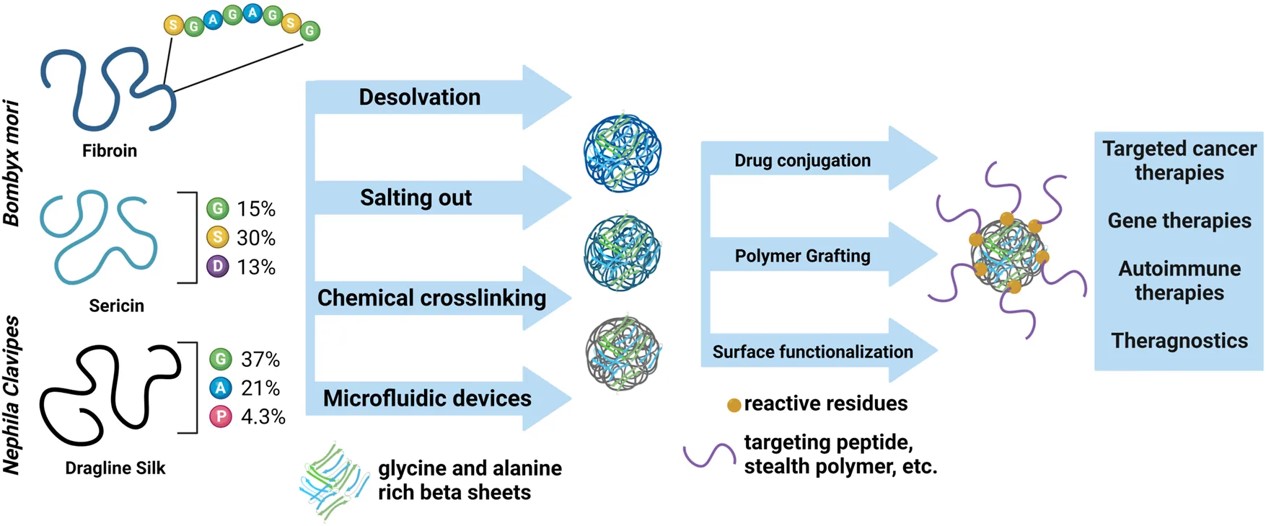 Fig. 2 Common methods for silk biopolymer-based nanomaterial fabrication and functionalization.2,5
Utilizing EDC/NHS crosslinking chemistry, we covalently graft polyethylene glycol (PEG) chains onto the nanoparticle surface. This shields the carrier from opsonization, significantly minimizes uptake by the mononuclear phagocyte system (MPS), and extends systemic circulation half-life (t1/2).
By incorporating safe, biodegradable cationic polymers (such as low molecular weight PEI or poly-L-lysine), we compress negatively charged nucleic acids. Upon cellular internalization, these modified nanoparticles exploit the acidic endosomal environment pH 5.0-5.5) to trigger a proton sponge effect or conformational shift, disrupting the endosomal membrane to deliver therapeutics directly to the cytoplasm.
We modify the silk fibroin backbone with smart responsive polymers or cleavable linkages to trigger carrier disintegration only upon exposure to specific environmental cues.
At Creative Biolabs, our expertise spans the entire biopolymer development pipeline. We do not just formulate delivery vehicles; our deep expertise in materials science means we engineer the underlying collagen matrix itself to perfectly match your project's unique requirements.
At Creative Biolabs, we provide specialized extraction and purification services to deliver high-quality, ultra-pure collagen tailored to your specific formulation requirements. We ensure that the native structural integrity of the biopolymer is rigorously preserved for optimal downstream applications.
Isolation of specific collagen types (e.g., Type I, II, III, IV) from marine, bovine, or advanced recombinant sources.
Rigorous endotoxin removal protocols to meet stringent pre-clinical and clinical-grade specifications.
Preservation of the native triple-helix conformation to guarantee maximal biocompatibility and low immunogenicity.
Owing to their unique mechanical robustness, outstanding in vivo biosafety, and versatile surface modification capabilities, silk fibroin-based delivery systems are transforming multiple biological and therapeutic fields:
At Creative Biolabs, we bridge the gap between advanced biomaterials and translational therapeutics. Our Silk Fibroin-Based Targeted Drug Delivery System Development Services offer a green, versatile, and highly tunable platform to overcome modern physiological barriers, protect delicate APIs, and deliver precise controlled release. Whether your compound is a poorly soluble small molecule, a fragile nucleic acid, or a complex gene-editing protein, our customizable pathways, extensive analytical validation, and transparent IP policies ensure a seamless developmental journey.
20+ Years of Specialization
Our scientific advisory board has pioneered silk-based biomaterials for over two decades, overcoming industry-wide bottlenecks such as raw material variability and sericin-related immunogenicity.
Minimal Batch-to-Batch Variation
By utilizing automated microfluidic production suites and strict In-Process Quality Controls (IPQC), we ensure that every delivered batch conforms to exact particle size, PDI, and drug loading parameters.
Organic Solvent-Free "Green" Engineering
Our formulation processes prioritize aqueous-based self-assembly, preventing cellular cytotoxicity or animal study artifacts associated with toxic solvent residues.
Transparent Intellectual Property (IP) Terms
We offer highly flexible, collaborative models. Your proprietary APIs are protected by strict NDAs, and IP rights for novel custom-developed carrier materials are clearly delineated in project agreements to protect your commercial interests.
Chemical Synthesis Services
Nucleic Acid Synthesis Services
In sterile PBS, our nanoparticles maintain stability for up to 6 months without aggregation, supported by a high Zeta potential. For longer storage, we offer trehalose-based lyophilization protocols that ensure complete, aggregation-free reconstitution.
We avoid high temperatures, mechanical shear, and organic solvents. The entire process occurs in mild, aqueous buffers. Encapsulated biologics consistently retain >90% of their structural and functional activity.
References
Creatibe Biolabs' custom LNP was the only solution that successfully delivered our CRISPR-Cas9 payload across the blood-brain barrier with high efficiency and low toxicity.”

Dr. Evelyn Reed
Postdoctoral Researcher, Leading University
Our siRNA candidate was failing due to off-target toxicity, but Creatibe Biolabs' team rapidly redesigned our LNP using their modular platform, rescuing our preclinical program.”

Ben Carter
Project Manager
Achieving cytosolic delivery of our protein degrader with Creatibe Biolabs' exosome platform was the key to unlocking our candidate's full therapeutic potential.”

Dr. Kenji Tanaka
Principal Scientist, Large Pharma Corp
Our oncology drug's efficacy was limited by poor tumor accumulation. Creatibe Biolabs' peptide-conjugated liposomes provided the precise targeting we needed, dramatically increasing the drug's therapeutic index.”
Dr. Clara Schmidt
Senior Scientist, Oncology Innovations Inc.
We required a delivery system that would only release its payload in the tumor's acidic microenvironment. Creatibe Biolabs' pH-responsive liposomes performed flawlessly, minimizing systemic exposure.”
David Chen
Formulation Scientist
Outstanding expertise in antibody engineering.The team's attention to detail and innovative approaches have sianificantly accelerated our development timeline.
Sarah L.
Senior Research Scientist