Soy Protein based Nanoparticle Development Service for Targeted Drug Delivery
In modern biopharmaceutics, achieving an optimal therapeutic index remains the definitive challenge due to rapid systemic clearance and severe off-target toxicities. To address these physiological bottlenecks, Creative Biolabs offers a pioneering Soy Protein-Based Nanocarrier Development Service, leveraging the natural structural advantages of Soy Protein Isolate (SPI) to design high-performance, biocompatible, and stimulus-responsive nanovehicles. By engineering soy protein isolate as targeted delivery system architectures, we empower global researchers to cross complex biological barriers, shield highly sensitive payloads, and deliver therapeutics directly to specific tissues. Creative Biolabs brings decades of advanced biomaterial science and formulation expertise to customize these natural delivery systems for your specific research goals.
Why Choose Soy Protein Isolate as a Targeted Delivery System?
What are the advantages of plant-based protein nanocarriers?
Developing an effective targeted drug delivery system requires a carrier material that is inherently biocompatible, structurally versatile, and economically viable. Soy Protein Isolate (SPI) has emerged as a premier bio-derived platform, successfully addressing the critical limitations of synthetic polymers. Its unique combination of hydrophilic and hydrophobic segments allows for spontaneous self-assembly in aqueous environments, shielding sensitive payloads from physiological degradation while ensuring efficient, target-specific intracellular release.
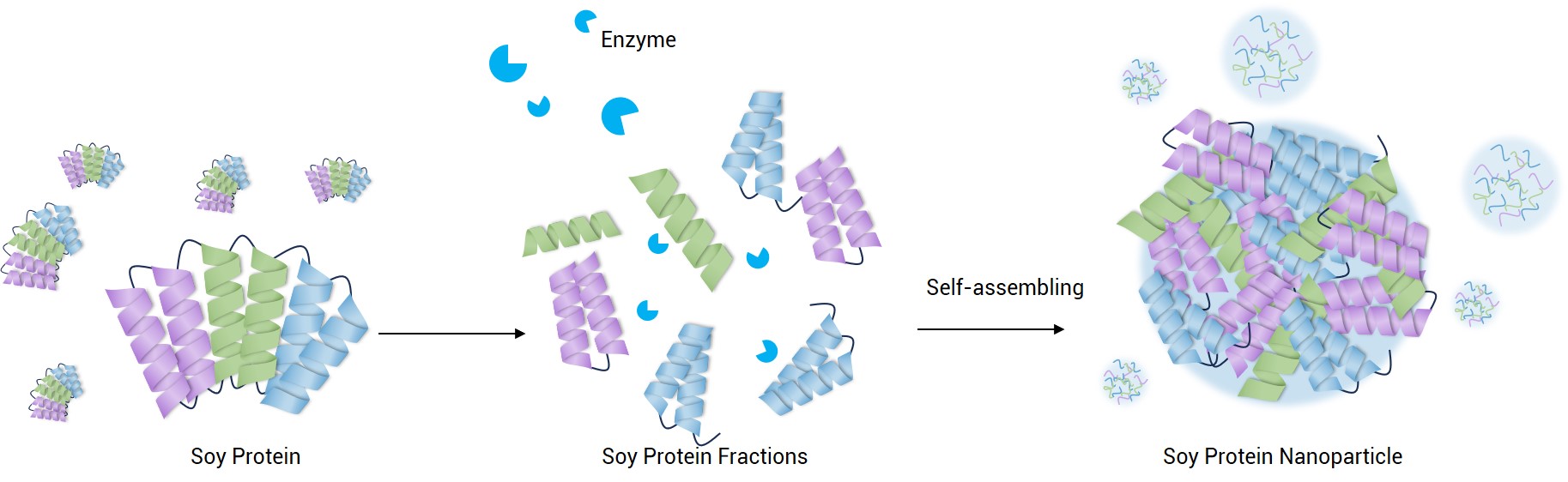 Fig. 1 Self-assembly of soy protein into nanoparticles after partial enzymatic digestion.
- Native Multifunctional Scaffold: Consisting of structured globulins, SPI provides a highly dense network of surface-exposed reactive groups (carboxyl, amine, and sulfhydryl groups) that serve as ideal anchoring points for chemical modifications and active targeting ligands without requiring harsh organic reactions.
- Excellent Biocompatibility & Safety Profile: Unlike synthetic polyesters that release acidic degradation byproducts (which may cause localized inflammation), SPI degrades naturally in vivo into biocompatible, nutritional amino acids.
- Robust Amphiphilic Self-Assembly: SPI naturally folds to form a dense hydrophobic inner core that encapsulates poorly soluble therapeutics, surrounded by a highly hydrated hydrophilic outer shell that ensures stellar colloidal stability in physiological fluids.
Broad Compatibility: Encapsulatable Bioactive Substances
A primary driver for choosing our SPI-based delivery systems is their broad and adaptable loading compatibility. The table below outlines the major classes of bioactive molecules and therapeutic compounds commonly encapsulated within our custom soy protein nanocarrier platforms, showcasing their natural sources and therapeutic significance:
| Bioactive Category | Model Compound | Botanical / Natural Source | Therapeutic Significance & Encapsulation Focus |
|---|---|---|---|
| Flavonoids | Quercetin | Allium cepa, Capers, Apples | Enhancing aqueous solubility and antioxidant bioavailability |
| Flavonoids | Anthocyanins | Vaccinium myrtillus (Bilberry) | Protecting chromatic stability and target-specific colon delivery |
| Flavonoids | Proanthocyanidins | Vitis vinifera (Grape Seed) | Controlling release rate for vascular endothelial protection |
| Carotenoids | Lycopene | Solanum lycopersicum (Tomato) | Preventing photo-oxidation; enhancing lymphatic transport |
| Carotenoids | β-Carotene | Daucus carota (Carrot) | Improving chemical stability against thermal degradation |
| Lipophilic Vitamins | Cholecalciferol (Vitamin D3) | Fortified matrices, marine sources | Sustained release; lipid-core phase preservation |
| Hydrophilic Nutrients | L-Ascorbic Acid (Vitamin C) | Citrus fruits, Rosehips | Restricting premature oxidation via core-shell barrier shield |
| Polyphenolic Acids | Tannic Acid | Quercus infectoria gall extracts | Polyplex stabilization through hydrogen-bonding crosslinks |
| Catechins | Epigallocatechin Gallate (EGCG) | Camellia sinensis (Green Tea) | Sustaining biological activity; minimizing stomach degradation |
| Stilbenoids | Resveratrol | Polygonum cuspidatum, Grapes | Enhancing systemic circulation time and tumor cell uptake |
| Diarylheptanoids | Curcumin | Curcuma longa (Turmeric) rhizome | Drastically improving aqueous solubility; targeted anti-inflammatory release |
Precision-Engineered Soy Protein Delivery Services
Creative Biolabs provides comprehensive, research-grade development services designed to convert raw soy proteins into highly targeted, payload-stabilized carrier platforms tailored to your research pipeline.
1. Custom Backbone Modification & Ligand Conjugation
We chemically modify the reactive residues of the soy protein polypeptide chains to enable active cellular targeting. By covalently grafting targeting ligands (such as folic acid, transferrin, or RGD peptides) or structural modifiers (like PEG and chitosan), we customize the particle surface to enhance target tissue affinity and extend systemic half-life.
2. Advanced Payload Encapsulation & Optimization
Our formulation scientists optimize thermodynamic self-assembly parameters to achieve high loading capacity (LC) and encapsulation efficiency (EE). This tailored processing allows for the stable integration of diverse cargo profiles, including hydrophobic small molecules, fragile biological enzymes, and complex nucleic acid structures.
3. Smart, Stimuli-Responsive Design & Engineering
We engineer smart, stimuli-responsive linkages within the protein matrix to trigger spatially controlled cargo release. Our customized formulations utilize pH-sensitive chemical linkers (cleaving in acidic tumor/endosomal microenvironments) or redox-responsive disulfide bridges that rapidly disassemble upon encountering intracellular reducing agents.
4. Comprehensive Physicochemical Characterization
To ensure reproducible in vitro and in vivo performance, we subject every custom batch to exhaustive biophysical profiling. Using state-of-the-art instruments, we verify particle size distributions, zeta potentials, morphological uniformity, chemical structures, and simulated release kinetics.
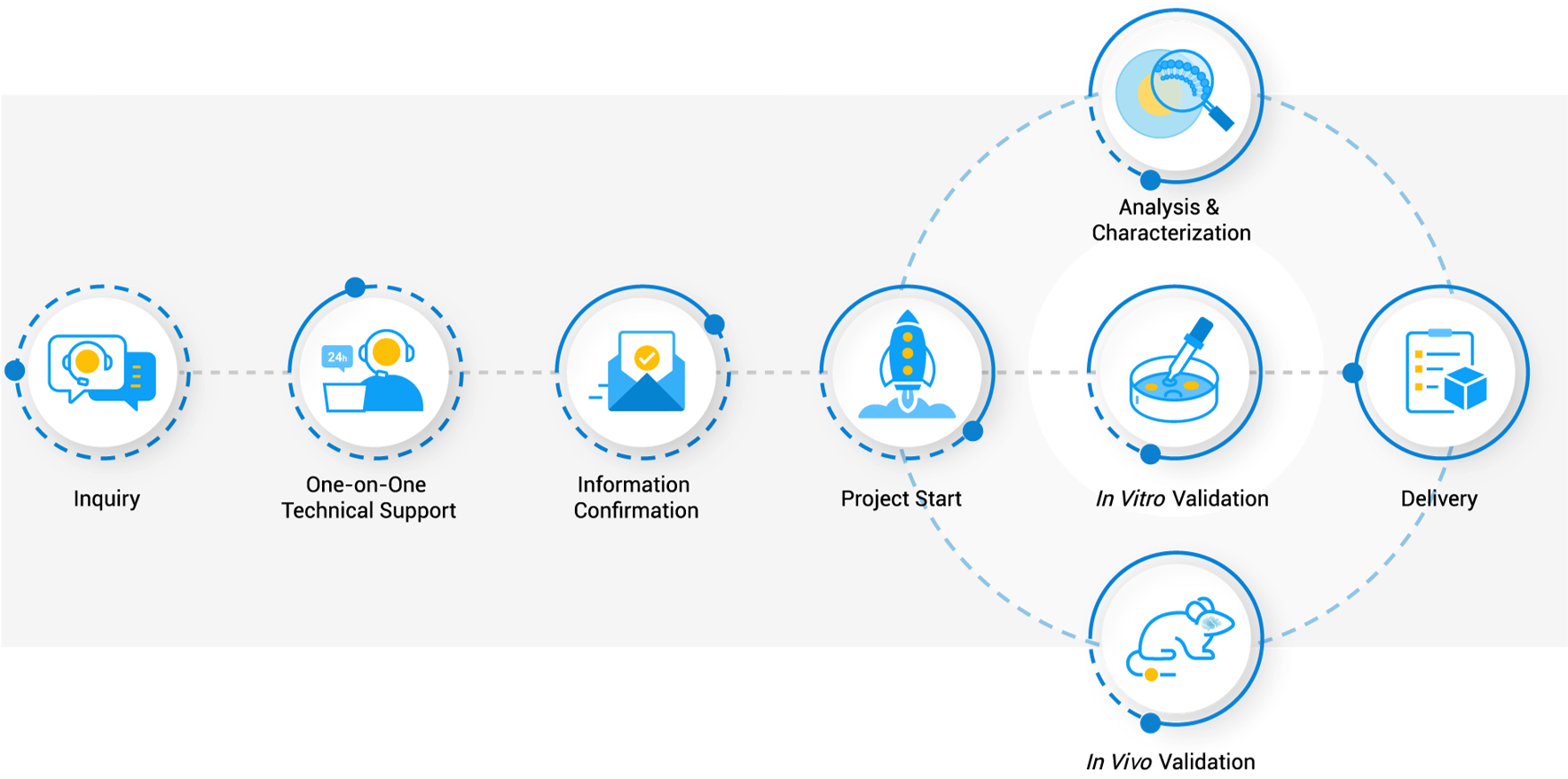
Precision-Engineered Soy Protein Carriers for Targeted Delivery →Workflow
High-Impact Applications of Soy Protein Carriers
By utilizing soy protein isolate as targeted delivery system frameworks, we open new avenues across diverse scientific disciplines:
- Targeted Oncology & Intracellular Delivery: Utilizing functionalized soy protein nanoparticles for tumor targeting to maximize cellular uptake via receptor-mediated endocytosis, achieving effective endosomal escape and direct intracellular drug release.
- Gene Therapy Research: Shielding fragile nucleic acid payloads (siRNA, mRNA, and plasmidDNA) from systemic nucleases, facilitating robust cellular transfection and post-transcriptional gene silencing.
- Oral Delivery of Fragile Bioactives: Exploiting the dense, folded molecular matrix of SPI to shield sensitive therapeutic peptides, enzymes, and hydrophobic nutraceuticals (e.g., curcumin) from aggressive gastric acid and enzymatic hydrolysis.
- Agricultural & Environmental Biotechnology: Developing controlled-release vehicles for hydrophobic biopesticides, botanical antimicrobials, and micronutrients. This ensures improved adhesion to plant surfaces, reduced environmental runoff, and sustained release of active compounds.
Why Choose Creative Biolabs?
Creative Biolabs is dedicated to resolving your most complex targeted drug delivery challenges. Our specialized Soy Protein-Based Nanocarrier Development Service leverages the structural versatility of soy proteins to deliver outstanding biocompatibility, cargo protection, and cellular targeting. Let our scientists assist your team in transforming raw biopolymers into high-performance, research-grade therapeutic delivery vehicles.
Pioneering Biomaterial Expertise
Over 20 years of specialized experience translating plant-derived proteins into functional nanomedicine scaffolds.
Eco-Friendly Green Chemistry
We avoid toxic cross-linkers, utilizing sustainable, aqueous-based synthesis methods that maintain the native biocompatibility of soy proteins.
Unrivaled Customization
Every formulation is tailor-made to match your payload's specific molecular weight, charge, and target tissue microenvironment.
Complete Intellectual Property Protection
All custom modification strategies, functionalization protocols, and resulting formulations remain 100% proprietary to our clients.
Related Services & Products
Related Services
Chemical Synthesis Services
Nucleic Acid Synthesis Services
FAQs
How do you adjust the particle size of soy protein nanoparticles during formulation?
We modulate the z-average diameter by precisely controlling the ratio of 7S to 11S globulins, adjusting the ionic strength, and optimizing the shear force during anti-solvent precipitation.
What is the typical encapsulation efficiency (EE) for hydrophobic small molecules using your SPI platform?
For highly hydrophobic compounds (e.g., paclitaxel), our tailored soy protein isolate nanoparticles routinely achieve an encapsulation efficiency (EE) ranging between 80% and 95%.
Can your soy protein carriers protect nucleic acids from enzymatic degradation?
Yes. By forming polyelectrolyte complexes with cationic modifiers, our soy protein matrices physically shield nucleic acids, preventing ribonuclease enzyme penetration and degradation.
Are these soy protein systems stable in simulated physiological fluids?
Yes, our optimized formulation process guarantees high colloidal stability, with no significant aggregation or premature payload release in simulated physiological buffer (pH 7.4) over 72h.