Developing smart wound dressings capable of releasing antibiotics or healing factors only when a change in the wound's pH or temperature is detected. Creating antimicrobial hospital linens, gowns, and uniforms that maintain potency through repeated sterilization cycles, significantly reducing nosocomial infections.
Targeted Delivery for Functional Textile
In the pursuit of groundbreaking materials innovation, the journey from a passive fabric to a truly functional, responsive textile often stalls at the challenge of durable, controlled active ingredient release. Protecting sensitive molecules and ensuring their on-demand delivery to the skin or surrounding environment are critical hurdles that determine product efficacy and lifespan. Our Targeted Delivery for Functional Textiles service helps you transform standard fabrics into smart, high-value products through advanced nano- and microencapsulation techniques engineered for stimuli-responsive performance and superior wash fastness.
Click Here to View more about our Service
Introduction of Targeted Delivery for Functional Textiles
Targeted delivery, traditionally a cornerstone of advanced biopharmaceutical development, refers to the precision-guided administration of an active substance to a specific site at a controlled rate. When applied to textiles, this concept is realized through the immobilization of micro- or nanocarriers onto fabric fibers, converting the textile substrate itself into a wearable delivery platform.
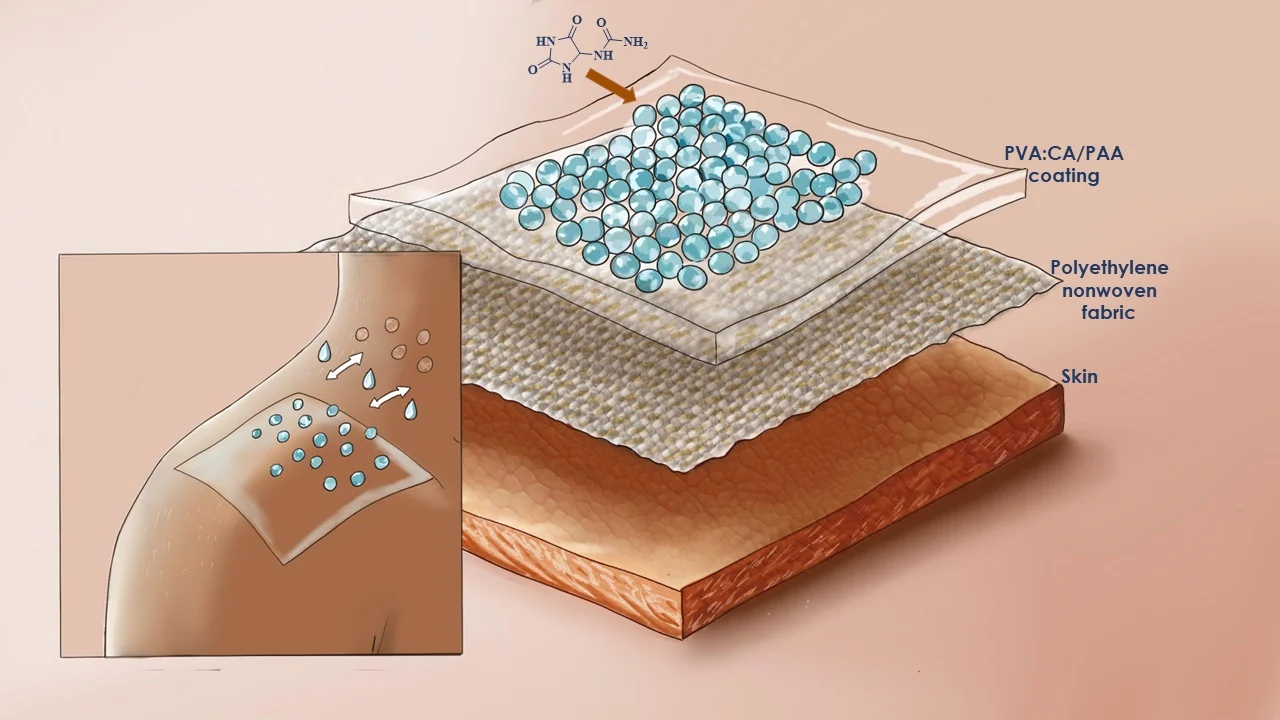 Fig.1 Controlled Release of Hydrophilic Active Agent from Textile.1
This specialized field, often referred to as "cosmetotextiles" or "bio-functional textiles," has evolved significantly. Early methods involved simple chemical bonding or surface adsorption, resulting in poor durability and uncontrolled "burst" release. Modern approaches leverage nanoscale engineering, utilizing advanced carriers like polymeric nanoparticles, specialized liposomes, and microcapsules to achieve spatial and temporal control over release kinetics.
The core technology relies on creating a protective shell (the wall material) around the functional payload (the core material). The choice of wall material (e.g., melanin-formaldehyde resins, cyclodextrins, biopolymers) dictates the stability and the release mechanism. These intelligent carriers are engineered to remain stable during storage and washing, only breaking down or diffusing their cargo in response to a pre-defined trigger. This sophisticated mechanism allows textiles to perform functions like:
- Sustained release of cosmetic agents (e.g., moisturizers, vitamins, anti-aging compounds) directly to the skin.
- Triggered release of insect repellents or therapeutic drugs (e.g., anti-inflammatories) in response to body heat or friction.
- Embedding phase-change materials (PCMs) for superior thermoregulation, where the microcapsules absorb and release latent heat as environmental temperatures shift.
In essence, Targeted Delivery for Functional Textiles overcomes the chemical and physical incompatibility between fragile active agents and the harsh environments of textile processing and daily use, ensuring the sustained performance required for next-generation smart materials.
Applications of Targeted Delivery in Functional Textiles
The controlled, durable, and responsive nature of targeted delivery systems unlocks high-value applications across diverse sectors of the textile and apparel industry. This technology is driving innovation by enabling fabrics to transition from passive materials to active, intelligent interfaces.
Healthcare and Medical Textiles
Performance and Activewear
Incorporating functional agents like cooling compounds, sweat-activated fragrances, or muscle-soothing botanicals that are released gradually under mechanical friction or elevated body temperature. This provides athletes with sustained performance benefits and enhanced comfort.
Cosmetotextiles and Wellness
Manufacturing hosiery, sleepwear, and loungewear embedded with microencapsulated skincare ingredients (e.g., hyaluronic acid, coenzyme Q10, antioxidants). The slow, consistent release upon skin contact facilitates transdermal or topical delivery for cosmetic effects, such as hydration or anti-aging benefits.
Safety and Military Apparel
Embedding insect repellents or UV-protective filters (like encapsulated zinc oxide) that resist degradation and leaching, ensuring long-term protection for outdoor and tactical gear, making the textile a continuous barrier.
Industrial and Home Furnishings
Applying odor-neutralizers or long-lasting decorative fragrances to upholstery, carpets, and air filtration media, ensuring the longevity and freshness of the final product far exceeding conventional surface treatments.
What We Can Offer
Targeted Delivery in the textile space moves beyond simple surface coating; it is the science of embedding intelligence directly into the fibers to control the release profile of an active agent. At Creative Biolabs, we specialize in overcoming the primary limitations that plague functional textiles: volatility, rapid depletion, and poor wash durability.
We don't just load materials; we engineer micro-environments designed to protect, stabilize, and release your payload only when specific triggers are met—such as moisture (sweat), temperature changes (body heat), pH shifts (wound environment), or mechanical friction (wear).
Specific Deliverables and Solutions:
Extended Efficacy
We utilize custom polymer matrices and shell materials to prevent premature release, dramatically extending the effective life of agents like antimicrobials, UV blockers, and essential oils through dozens of wash cycles.
Stimuli-Responsive Functionality
Our nanocarriers (including specialized liposome systems and polymeric capsules, adapting concepts from published nanomedicine) are designed to react to endogenous stimuli, transforming a garment into a self-regulating, intelligent device, ideal for smart wound dressings or performance apparel.
Enhanced Biocompatibility
By encapsulating ingredients, we minimize direct contact between potent active molecules and the skin or fiber structure, reducing potential irritation while enhancing the overall safety and regulatory compliance of your final product.
Process Scalability
We provide formulations and protocols optimized for established textile finishing processes (padding, spraying, bath exhaustion), ensuring a smooth transition from R&D to industrial-scale manufacturing.
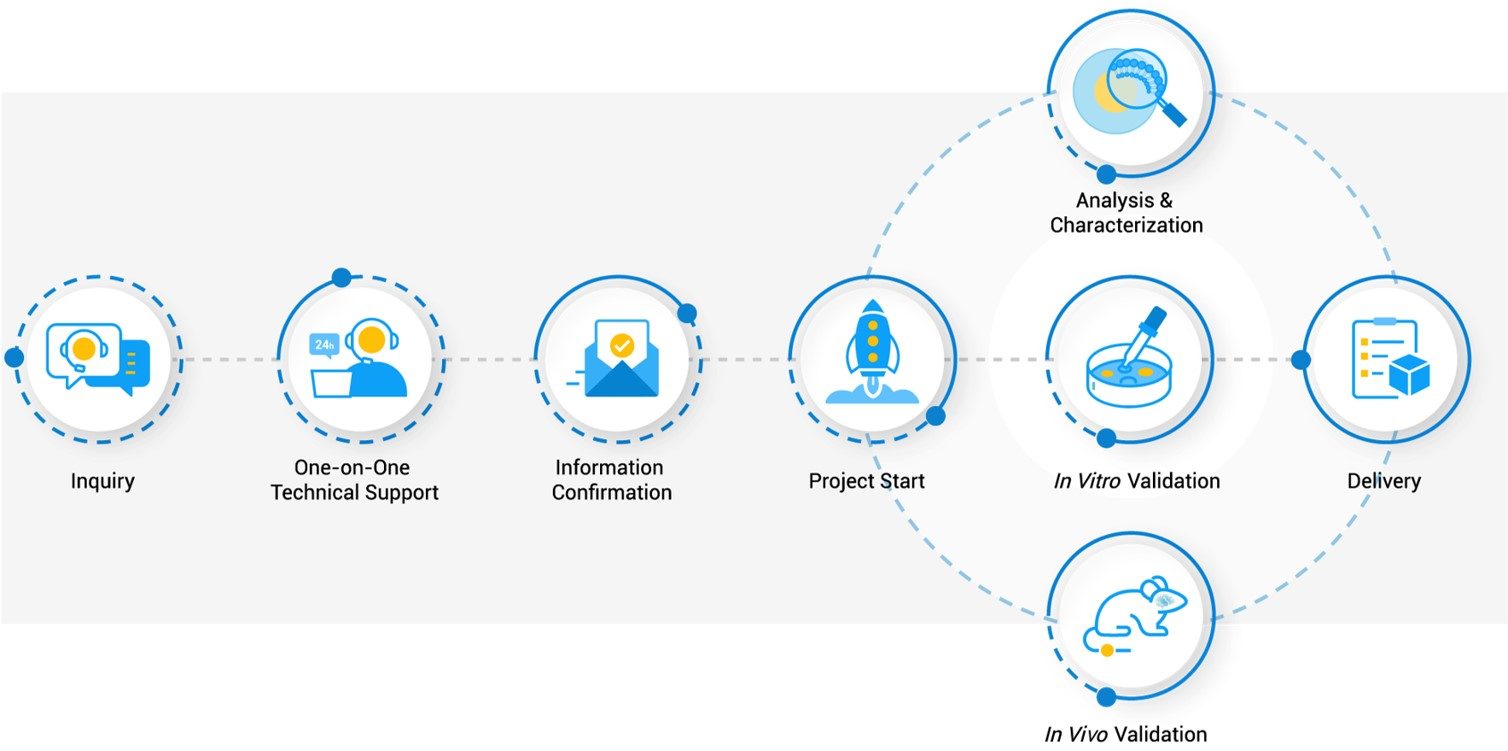
Workflow
Frequently Asked Questions
How does this technology ensure the active ingredient remains effective after repeated washing or long-term storage?
The active compound is encased within a protective shell, isolating it from external factors like water, detergents, and oxygen. The choice of shell material (often a highly durable polymer or robust lipid structure) is engineered specifically to resist mechanical and chemical stress, maintaining the ingredient's stability until the on-demand release mechanism is activated by use, not by washing.
Can this controlled-release approach be adapted to different types of fabrics, such as natural cotton versus synthetic polyester?
Yes, the system is highly customizable. While the fundamental encapsulation chemistry remains, the final application process is adjusted based on the fiber type. Synthetic fabrics often require specific surface treatments or binder systems to promote strong adhesion, whereas natural fibers like cotton may utilize electrostatic or hydrogen bonding interactions. Optimized application protocols ensure durable, even distribution regardless of the textile substrate.
What is the primary advantage of using nanoscale carriers over traditional microcapsules in functional textiles?
Nanoscale carriers offer a significantly higher surface-area-to-volume ratio, which is crucial for achieving precise control over the release rate and ensuring a subtle hand-feel on the fabric. More importantly, their size allows for tighter integration within the fiber matrix, dramatically enhancing wash fastness and overall durability compared to larger microcapsules applied only to the surface.
Are there any concerns regarding the safety or potential skin irritation caused by the nanocarrier shell materials?
Safety and biocompatibility are paramount. The shell materials selected are typically chosen from established, non-toxic, and often biodegradable polymers or lipids, similar to those used in certified topical cosmetic applications. Full-panel safety and irritation testing is essential to confirm that the encapsulated system is non-irritating, ensuring the textile is safe for prolonged skin contact.
How can I achieve a specific, pulsed release profile rather than a constant, slow leak of the active ingredient?
Achieving pulsed release requires utilizing stimuli-responsive carriers, where the shell material undergoes a distinct phase transition or structural breakdown only when a sharp external signal is detected. This could be a specific temperature threshold (e.g., above 38°C) or a local pH change. This "switch-on/switch-off" functionality prevents passive leaching, ensuring the ingredient is delivered as an intentional burst dose.
Creative Biolabs is your definitive partner for integrating advanced Targeted Delivery into Functional Textiles. By applying decades of expertise in controlled biopharmaceutical release to material science, we offer bespoke solutions that solve the critical challenges of ingredient stability, durability, and responsive functionality. Whether you are developing medical apparel, high-performance athletic wear, or premium cosmetotextiles, our engineered carrier systems provide the technical advantage necessary to maximize product efficacy and market value.
Reference
- Mizrahi, Limor et al. "Controlled Release of Hydrophilic Active Agent from Textile Using Crosslinked Polyvinyl Alcohol Coatings." Journal of functional biomaterials vol. 16,6 216. 10 Jun. 2025, Distributed under Open Access license CC BY 4.0, without modification. https://doi.org/10.3390/jfb16060216
Our services are For Research Use Only. We do not provide services to individuals.
Online Inquiry