
Encapsulated platinum and palladium-based catalysts exhibit unprecedented stability, maintaining their small particle size and high activity even at extreme temperatures (e.g., up to 1100 ℃ in steam/air). This is crucial for applications like automotive emission control systems and high-efficiency chemical processing where sustained performance is paramount.
Targeted Encapsulation for Catalyst
Targeted Encapsulation for Catalysts is the critical strategy for overcoming pervasive limitations in conventional chemical synthesis, allowing for unprecedented control over reaction environments. Our Targeted Encapsulation Service helps you optimize reaction efficiency, prevent catalyst deactivation, enhance long-term stability, and enable highly selective and greener synthetic processes through precision nanoreactors and controlled-release systems. This advanced approach transforms volatile, single-use catalysts into robust, recyclable, and highly performant assets, directly impacting process economics and sustainability.
Click Here to View more about our Service
Introduction of Targeted Encapsulation for Catalysts
Targeted encapsulation involves enclosing catalytically active species within a protective, porous shell or matrix, effectively creating a dedicated "nanoreactor." This technique is fundamentally driven by the need to resolve the inherent instability and mass transfer issues that plague high-performance catalysts, especially those at the nanoscale.
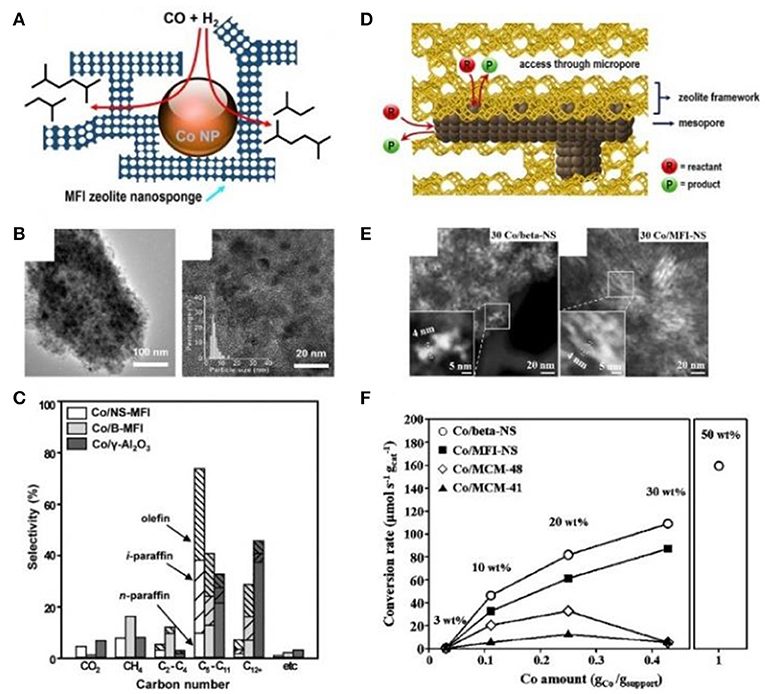 Fig.1 Mesoporous zeolite nanosponge-encapsulated Co NPs for Fischer-Tropsch reaction.1
In conventional catalysis, high-surface-area nanocatalysts frequently suffer from sintering (aggregation into larger, less active particles) and leaching (loss of active material into the reaction medium), particularly under demanding industrial conditions like high temperature or in the presence of steam. Targeted encapsulation addresses these irreversible deactivation pathways by physically confining the active sites.
Key Structural Principles and Mechanisms:
- Core-Shell Architectures: A noble metal nanoparticle (the core) is covered by a porous shell (often silica, carbon, or zeolite). The shell acts as a rigid, protective barrier preventing particle migration and aggregation while the pores allow reactants to reach the core.
- Confinement Effect: By limiting the space available to the catalyst, the shell structure inhibits the mobility of metal atoms, drastically improving anti-sintering performance, often raising stability thresholds to over 800℃.
- Tuning Selectivity: The precise control over the shell's pore size and surface chemistry can introduce a "molecular sieving" effect, allowing only specific reactants to access the active site, thereby enhancing reaction selectivity—a hallmark of true targeted action.
This sophisticated engineering approach allows for the realization of ideal catalytic processes, combining the high efficiency and diversity of homogeneous catalysis with the straightforward separation and robust stability of heterogeneous systems.
Applications of Targeted Encapsulation
The versatility and stability afforded by targeted encapsulation have led to transformative advancements across multiple industrial and emerging chemical fields.
High-Temperature and Harsh Environment Catalysis
Sustainable Organic Synthesis
Encapsulated non-precious metal catalysts (like copper nanoparticles within zeolite or silica matrices) show superior activity and selectivity in various fundamental organic transformations, including hydrogenation, oxidation, and carbon-carbon bond formations. The protective shell minimizes metal leaching, making the processes greener, safer, and more economically feasible.
Controlled Polymerization
Encapsulated transition metal catalysts provide remarkable latency and long-term storage stability for reactive systems, such as frontal polymerization resins. The shell prevents premature spontaneous polymerization, extending the resin's shelf life significantly without compromising the ultimate material properties or front propagation rate.
Electrochemical Energy Conversion
In the design of next-generation fuel cells and batteries, encapsulated single-atom catalysts (SACs) and nanocatalysts are used to enhance the durability and active site utilization for reactions like the oxygen reduction reaction (ORR) and electrochemical CO2 reduction, providing a robust solution to stability issues in acidic or alkaline media.
What We Can Offer
Creative Biolabs' specialized Targeted Encapsulation Service focuses on transforming high-value, but often fragile or unstable, catalytic species into durable, recoverable, and reusable systems. The core challenge in catalysis—the trade-off between maximizing surface area (for activity) and maintaining structural integrity (for stability and recovery)—is directly addressed by our technology.
We provide comprehensive solutions for both homogeneous and heterogeneous systems, tailoring the encapsulation matrix (e.g., porous inorganic shells, polymeric nanocapsules, or molecular cages) to the specific catalyst (e.g., metal nanoparticles, single-atom catalysts, or organometallics) and reaction conditions (e.g., high temperature, oxidizing environments).
Specific Deliverables and Solutions:
Enhanced Thermal and Chemical Stability
We engineer protective shells that shield active sites from harsh media, high temperatures, and chemical degradation (sintering, leaching, coking), ensuring sustained activity over numerous cycles.
Mass Transfer Optimization
Our designs incorporate tunable pore sizes and hierarchical pore structures (micropores and mesopores) to facilitate the rapid ingress of substrates and egress of products, mitigating diffusion limitations often associated with traditional encapsulation.
Controlled Reaction Microenvironment
We can fine-tune the confinement effect, controlling the electronic structure and local polarity around the active site to boost reaction selectivity and suppress unwanted side reactions.
Seamless Catalyst Recovery and Reuse
The encapsulated construct simplifies the transition from homogeneous-like activity to heterogeneous-like separation, enabling quick and cost-effective catalyst recovery, which is critical for industrial scale-up and reducing waste.
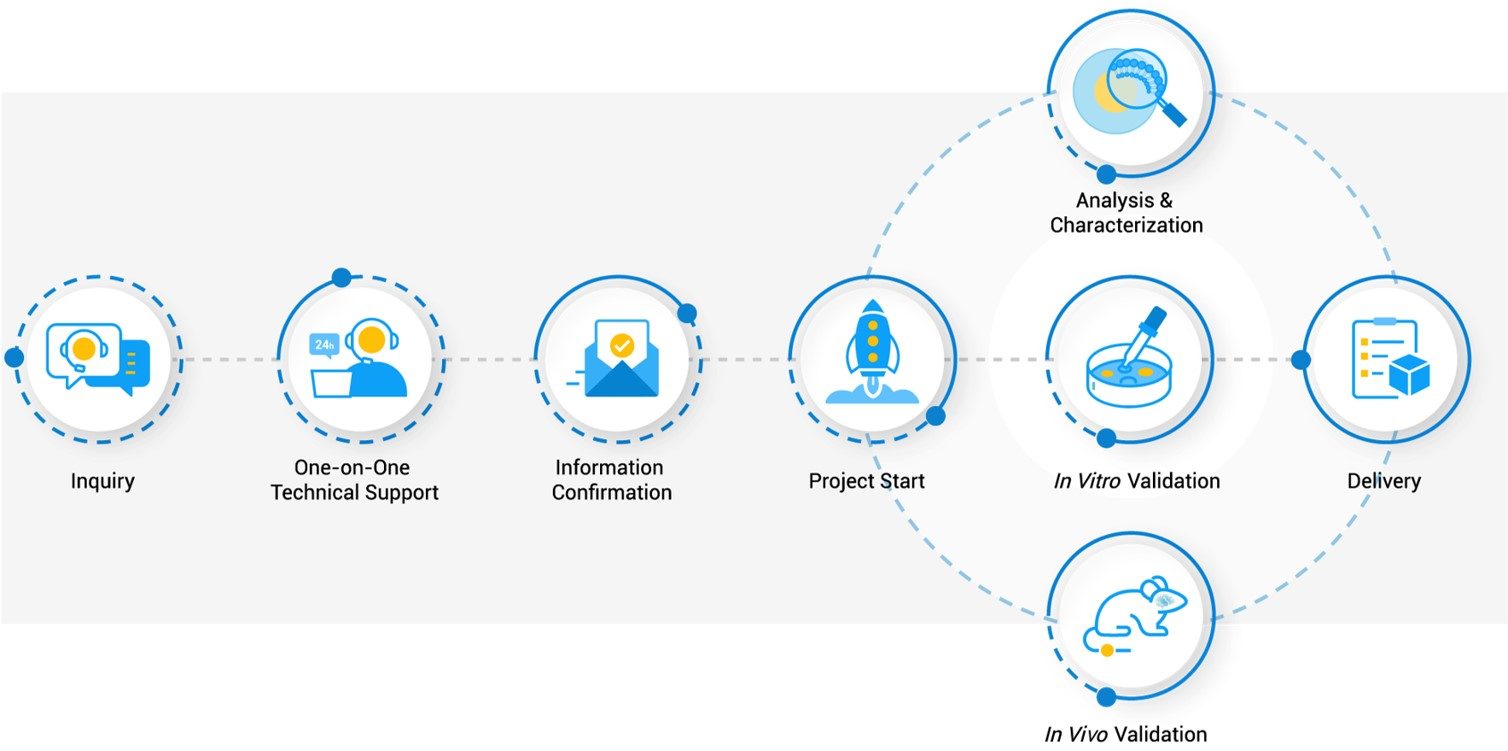
Workflow
Frequently Asked Questions
What is the primary benefit of encapsulating a metal nanoparticle catalyst compared to simply supporting it on a high-surface-area material?
The encapsulation strategy offers a rigid, protective physical barrier—a molecular cage or shell—around the active metal. While conventional supports help disperse the metal, they often fail to prevent the metal particles from migrating and aggregating (sintering) or leaching away under harsh reaction conditions. Encapsulation locks the active species in place, maintaining high dispersion and activity over extended operational periods, particularly at elevated temperatures.
How is mass transfer limitation avoided when the catalyst is surrounded by a protective shell?
Effective encapsulation systems are not solid barriers; they are designed as porous nanoreactors. This involves engineering the shell with specific pore sizes (often mesopores) and a tunable pore density. This allows for the rapid diffusion of small substrate molecules to the active site while retaining the larger catalyst core, thus minimizing diffusion resistance and ensuring reaction rates remain comparable to those of the non-encapsulated species.
Can the encapsulation material influence the selectivity of a chemical reaction?
Absolutely. The surrounding shell exerts a significant confinement effect on the reaction microenvironment. By tuning the chemical nature of the shell material (e.g., acidity, polarity) and precisely controlling the size of the access pores, the system can selectively filter substrates based on size (molecular sieving) or preferentially stabilize certain reaction intermediates, effectively steering the reaction toward a desired product.
For a highly sensitive organometallic catalyst, what are the primary precautions or design factors to consider during encapsulation?
The primary concerns are catalyst deactivation during the encapsulation process itself and ensuring the capsule can withstand the reaction solvent. Design must focus on mild synthesis methods (e.g., self-assembly or mild polymerization) and highly chemically resistant shell materials (e.g., specialized polymers or robust inorganic frameworks). Furthermore, the shell must be chemically inert toward the catalyst to prevent unwanted secondary coordination or electronic interference.
How does this precision encapsulation technique compare to traditional immobilization methods, particularly concerning reusability?
Traditional immobilization (like simple surface adsorption) often relies on weak physical forces, leading to inevitable leaching and loss of activity. Precision encapsulation, by contrast, relies on physical caging or strong covalent/coordination bonding within a matrix. This results in superior anti-leaching performance and robust structural stability that survives rigorous washing and recovery protocols, making the catalyst system genuinely reusable and economically viable for continuous processes.
Creative Biolabs is your trusted partner for engineering highly stable and selective catalysts through Targeted Encapsulation. Our services move beyond simple immobilization, delivering custom nanoreactor solutions that dramatically improve stability, enhance catalytic performance, and ensure economic recovery for your most demanding chemical projects.
Reference
- Xu, Dongdong et al. "Encapsulation of Metal Nanoparticle Catalysts Within Mesoporous Zeolites and Their Enhanced Catalytic Performances: A Review." Frontiers in chemistry vol. 6 550. 9 Nov. 2018, Distributed under Open Access license CC BY 4.0, without modification. https://doi.org/10.3389/fchem.2018.00550
Our services are For Research Use Only. We do not provide services to individuals.
Online Inquiry