Customized nanocarrier vectors and optimized electroporation protocols achieve high viability and high efficiency gene delivery to difficult-to-transfect cells such as MSCs, HSCs, and iPSCs.
Targeting Delivery for Stem Cell Therapy
Stem cell therapy holds transformative promise for repairing damaged tissues and treating degenerative diseases. However, current clinical translation faces major bottlenecks: low survival rates, lack of precise homing, and functional instability of transplanted cells in vivo. Creative Biolabs offers sophisticated targeted delivery technology, focusing on engineered stem cells to transform them into therapeutic agents with "intelligent homing" capabilities, thereby directly addressing these core challenges of homing, survival, and functional stability.
Click Here to View more about our Service
What is Targeted Delivery?
In regenerative medicine, the core objective of "targeted cell delivery" is the optimization of functional cells. It refers to the safe and highly efficient introduction of functionally enhanced nucleic acids (like mRNA or DNA) into stem cells in vitro. This genetic modification enhances the expression of cell surface homing receptors, such as CXCR4, increasing the cellular response to chemokines (like SDF-1α) released from damaged or inflamed tissues. This sophisticated directional migration promotes specific homing to the lesion sites, while simultaneous genetic protection enhances cell survival in harsh microenvironments such as hypoxia and inflammation.
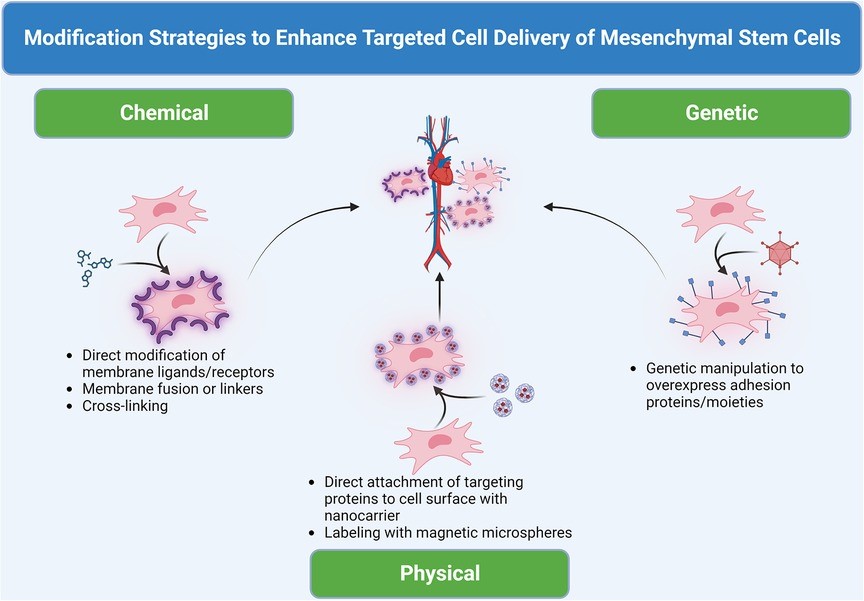 Fig.1 Domains of modification for enhancing the delivery of mesenchymal stem cells (MSCs).1
Applications for Stem Cell Therapy
Enhanced Cell Homing Ability
Delivery of chemokine receptor mRNA significantly enhances the ability of MSCs and hematopoietic stem cells (HSCs) to accurately track damage signals (such as SDF-1α), greatly improving homing efficiency to sites like ischemic myocardium.
Enhanced Cell Survival and Anti-inflammatory Function
Delivery of anti-apoptotic genes (such as BCL-2) or specific immunomodulatory factors protects transplanted cells in ischemic and hypoxic microenvironments and strengthens their anti-inflammatory function, crucial for chronic disease management.
Precise Guidance of Differentiation Potential
Transient delivery of specific transcription factor mRNA pre-induces stem cells to differentiate into desired cell types (such as cardiomyocytes or neuronal progenitor cells) in vitro, thereby improving functional expression after transplantation.
Universal Cell Therapy Platform
Provides non-viral delivery solutions for induced pluripotent stem cell (iPSC)-derived cells for in vitro gene modification to enhance their safety and tailor their efficacy for specific regenerative needs.
Delivery Challenges of Stem Cell Therapy
- Low Transplanted Cell Survival & Homing Efficiency: This remains the biggest bottleneck. Most transplanted cells fail to survive the transition into the patient's system or become trapped in non-target organs (like the lungs or liver), making it difficult to effectively reach the damaged site.
- Difficulty in Transfecting Stem Cells: Primary stem cells (especially HSCs and MSCs) are intrinsically difficult to transfect, requiring low-toxicity, high-efficiency non-viral delivery systems to avoid negatively affecting cell viability and function.
- Safety & Functional Stability: Gene modification must be non-integrative (e.g., mRNA delivery) to avoid the risk of permanently altering the cell's genome, which is vital for preserving stem cell pluripotency and eliminating potential tumorigenic risks.
What We Can Offer
We offer professional targeted delivery technologies, focusing on solving the challenges of survival, homing, and engineering efficiency in stem cell therapy:
Ultra-efficient Cell Engineering Platform
Homing Molecular Delivery & Expression
Delivery of chemokine receptor mRNA significantly enhances the response of transplanted cells to specific inflammatory and damage signals (SDF-1α), dramatically improving homing efficiency and retention at the target lesion.
Enhanced Cell Function & Tolerance
Delivery of anti-apoptotic or antioxidant gene mRNA improves the tolerance of transplanted cells to hostile hypoxic and inflammatory microenvironments, leading to prolonged in vivo survival time and higher therapeutic output.
Non-Viral & Safety Optimization
We focus on non-integrative mRNA delivery methods, ensuring that gene modification is instantaneous, transient, and controllable, thereby maximizing the safety profile and differentiation potential of the stem cells.
Physical Guidance Integration
We leverage the potential for physical modifications, such as magnetic particle labeling, to offer immediate, dose-enhancing retention and non-invasive MRI tracking of the therapeutic cells at the site of injury.
Why Choose Us?
Validated Multi-Modal Approach
Our strategy integrates Genetic, Chemical, and Physical (Magnetic) homing methods, ensuring robust delivery.
Superior Engineering Efficacy
We achieve high transfection efficiency in primary stem cells without compromising cell viability or function.
Non-Integrative Safety
Exclusive use of non-viral mRNA technology eliminates the risk of genomic integration and its associated safety concerns.
Cross-Disease Application
Our core CXCR4/SDF-1 mechanism is validated across both regenerative (CVD) and oncologic applications.
Workflow
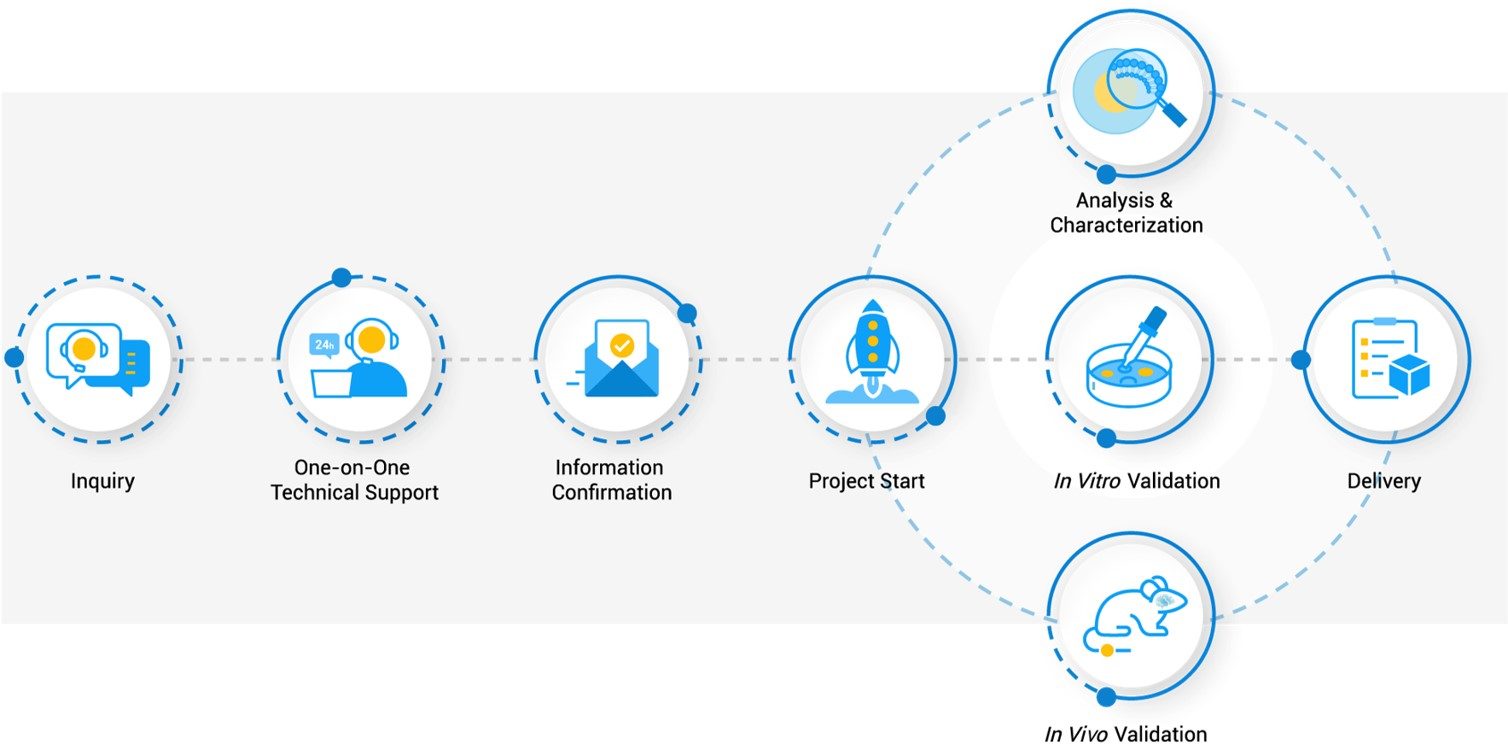
Ready to unlock the full potential of your stem cell pipeline? Contact us today to discuss how our "intelligent homing" technology can transform your therapeutic concept into a clinical reality with unmatched precision and efficacy.
Reference
- Huerta, Carlos Theodore, et al. "Targeted cell delivery of mesenchymal stem cell therapy for cardiovascular disease applications: a review of preclinical advancements." Frontiers in cardiovascular medicine 10 (2023): 1236345. Distributed under Open Access license CC BY 4.0, without modification. https://doi.org/10.3389/fcvm.2023.1236345
Our services are For Research Use Only. We do not provide services to individuals.
Online Inquiry