

We optimize dendrimers and chitosan nanocarriers to achieve long-term, continuous, and highly controllable release kinetics of growth factors, nucleic acids, or small molecules at damaged sites, ensuring consistent therapeutic levels.
Targeting Delivery for Tissue Repair
As a crucial goal of regenerative medicine, tissue repair relies on precisely controlling signaling molecules in the damaged microenvironment. Advanced targeted delivery systems overcome short half-life and systemic toxicity, efficiently driving angiogenesis, anti-inflammation, and cell reprogramming. Creative Biolabs' targeted delivery technology focuses on the local sustained release of molecular signals and targeting of damaged tissue, accelerating the repair process of bone, cartilage, myocardium, and chronic wounds.
Click Here to View more about our Service
What is Targeted Delivery?
In tissue repair, the core objective of "targeted delivery" is the precise local regulation of molecular signals. This refers to a sophisticated strategy that ensures therapeutic agents are effective, safe, and available exactly where they are needed most. The primary mechanisms include:
Encapsulation and Protection: Encapsulating fragile molecular signals (growth factors, mRNA, siRNA, etc.) within nanocarriers or biomaterials (like dendrimers, chitosan nanoparticles, or smart hydrogels) to shield them from enzymatic degradation and maintain their therapeutic activity in vivo.
Local Sustained Release: Ensures long-term, controllable release kinetics of molecular signals at damaged tissue, maintaining effective local concentrations without the need for frequent re-dosing.
Damaged Tissue Specificity: The delivery vehicle must be responsive to damage markers (such as shifts in pH or elevated enzyme activity) or inflammatory signals, achieving targeted enrichment in the diseased area.
Applications for Tissue Repair
Our advanced delivery platform provides essential technical support for key innovations across multiple complex tissue repair challenges:
Angiogenesis & Ischemic Injury Repair
Delivering vascular endothelial growth factor (VEGF) mRNA/protein or its enhancing molecules, targeting ischemic tissue, promoting angiogenesis, for critical applications like myocardial infarction or peripheral artery disease.
Bone & Cartilage Regeneration
Integrating potent regenerative agents, such as bone morphogenetic protein (BMP) or specific siRNA, into bioactive Tough or Hybrid hydrogels to achieve local, sustained release, precisely inducing stem cells to differentiate into osteogenic or chondrogenic pathways.
Chronic Wound Healing & Anti-inflammation
Delivering anti-inflammatory small molecules or miRNAs to regulate the pathological inflammatory microenvironment, accelerating chronic wound healing and preventing debilitating fibrosis, leveraging the intrinsic antimicrobial properties of carriers like Chitosan Nanoparticles.
Neural Regeneration
Developing nanocarriers capable of penetrating the blood-brain barrier or specifically targeting glial cells to deliver nerve growth factors or neuroprotective genes.
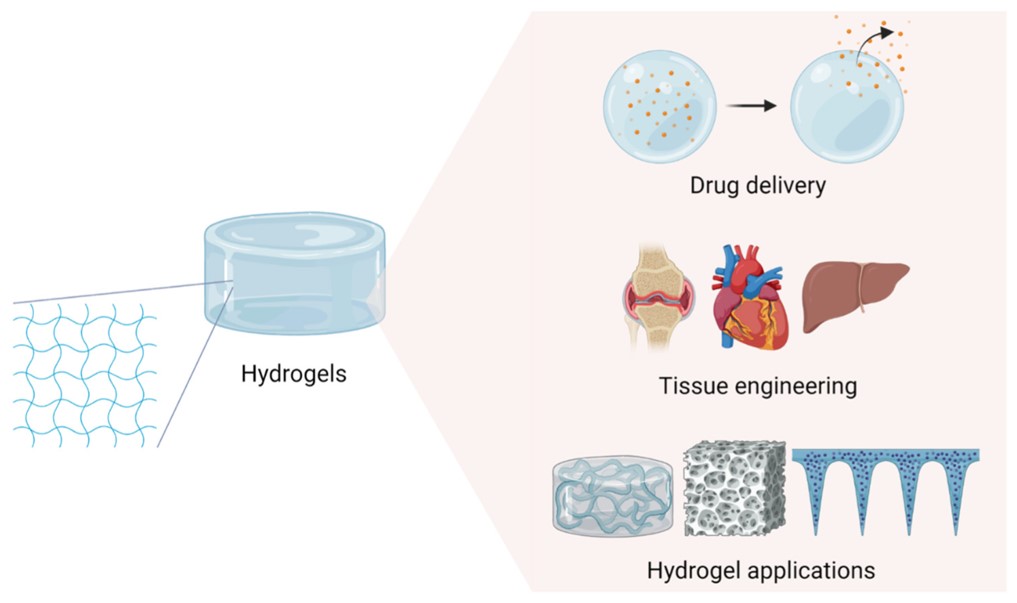 Fig.1 Applications of hydrogel in tissue engineering and drug delivery systems.1
Delivery Challenges of Tissue Repair
We help clients overcome core obstacles that frequently derail novel therapeutic development in tissue repair:
- Short Half-Life & Inactivation of Molecular Signals: Most growth factors or nucleic acids have extremely short half-lives in vivo and are easily inactivated by systemic enzymes and clearance mechanisms, making it difficult to maintain effective therapeutic concentrations at damaged sites.
- Challenges of the Inflammatory Microenvironment: Chronic inflammation and hypoxia inhibit the natural repair process. Delivery systems need to be engineered as Smart/Stimuli-Responsive systems that possess both anti-inflammatory and regenerative properties, actively transforming the hostile microenvironment into a pro-regenerative niche.
- Insufficient Tissue Specificity & Systemic Toxicity: Systemic distribution of delivered molecular signals (such as VEGF) can lead to severe and dangerous systemic side effects. Precise local targeting, often achieved through our response-driven hydrogels, is required to confine the therapy to the target tissue.
What We Can Offer
We offer professional targeted delivery technologies, focusing on solving the critical challenges of sustained release, targeting, and microenvironment regulation in tissue repair:
Local Sustained-Release Nanocarriers
Damaged Tissue-Specific Targeting
We develop damage-responsive carriers (e.g., sensitive to low pH, specific enzymes, or inflammatory signals) or modify carriers with collagen-targeting ligands to achieve highly selective enrichment of therapeutics in damaged areas.
Biomaterial Integration & Functionalization
We specialize in embedding therapeutic carriers into complex biomaterials like Injectable Hydrogels (for orthopedic defects) and Smart Microneedle Arrays (for skin/wound applications) to achieve localized, non-systemic therapeutic effects.
Microenvironmental Immune Regulation
We enable the synergistic delivery of drugs or nucleic acids (such as miRNA) with proven anti-inflammatory and immunomodulatory functions, facilitating the switch from chronic inflammation to a regenerative environment, which is paramount for successful tissue repair.
Why Choose Us?
Validated Platforms
We provide customizable delivery system, including dendrimers, chitosan nanoparticles, and adaptive hydrogels, and so on.
Technical Depth
Our expertise covers formulation, surface functionalization, and advanced stimuli-responsive release kinetics.
Risk Reduction
Our standardized platforms significantly reduce R&D timelines and minimize formulation risk for your pipeline.
Full Service
From conceptual design to scale-up, we provide end-to-end support for precision delivery.
Workflow
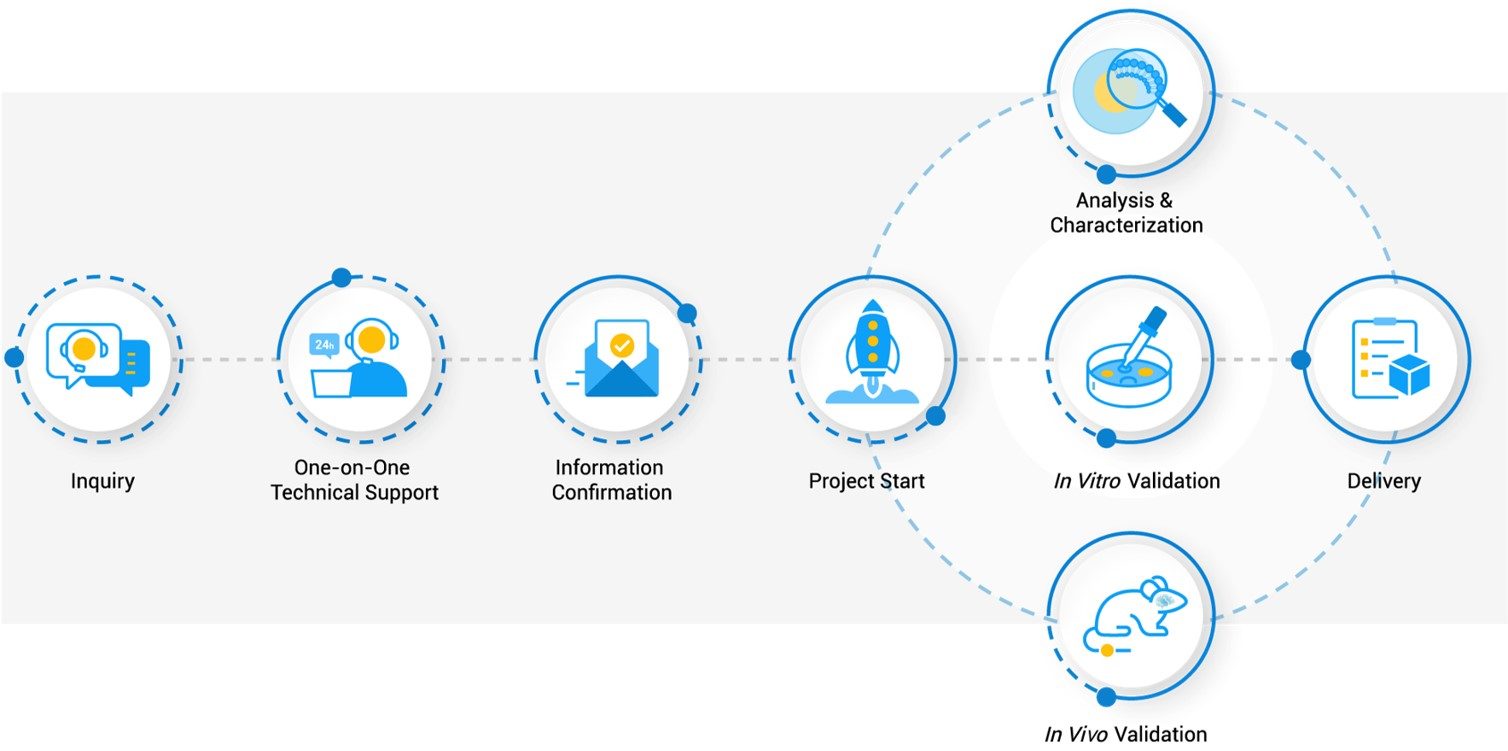
Drive your tissue regeneration project with targeted delivery technology! Your tissue repair project needs to overcome the challenges of short signal half-lives and local targeting. Please contact our team of delivery experts for customized sustained-release vectors and tissue-targeting solutions.
Reference
- Choi, Hoon, Wan-Sun Choi, and Jin-Oh Jeong. "A review of advanced hydrogel applications for tissue engineering and drug delivery systems as biomaterials." Gels 10.11 (2024): 693. Distributed under Open Access license CC BY 4.0, without modification. https://doi.org/10.3390/gels10110693
Our services are For Research Use Only. We do not provide services to individuals.
Online Inquiry