In the pursuit of highly sensitive and specific diagnostics, the challenge of detecting trace biomarkers in complex samples is paramount. Creative Biolabs' expertise in Targeted Delivery for In vitro Diagnostics (IVD) offers the definitive solution. Our advanced nanocarrier platforms—including surface-functionalized liposomes and metallic nanoparticles—help you accelerate IVD development and overcome low-sensitivity limitations by concentrating diagnostic signals, protecting payloads, and ensuring precise molecular capture.
Targeted delivery, historically a cornerstone of advanced drug therapies, refers to the controlled, selective delivery of a payload to a specific site. In the context of IVD, this principle is elegantly repurposed: the payload is the diagnostic reporter or capture probe, and the target is the biomarker or pathogen in the biological sample.
Fig.1 Nanotechnology tools-based cancer targeting diagnosis and treatment.1
This field leverages the same physicochemical principles of nanomedicine utilized in therapeutic development, such as:
Size-Dependent Behavior: Nanocarriers, typically ranging from 10 nm to 500 nm, are engineered for optimal mobility and interaction within microfluidic channels, porous membranes (like in lateral flow assays), or cellular environments.
Surface Chemistry: The surface is chemically modified (functionalized) with targeting moieties (ligands) that recognize the analyte of interest. This active targeting capacity dramatically increases the local concentration of the reporter at the site of the target.
Encapsulation/Loading: Carriers like liposomes and polymeric nanoparticles provide a robust structure to physically encapsulate a high concentration of detection labels, resulting in the aforementioned signal amplification. This is a crucial distinction from traditional methods where each capture antibody only carries a single detection molecule.
The success of these systems, whether using liposomes, polymeric nanoparticles, or functionalized metallic nanostructures, is validated by numerous studies showing 100-fold to 1000-fold improvements in the Limit of Detection (LOD) compared to traditional enzyme-linked immunosorbent assays (ELISA).
Within this foundational framework, two key areas where targeted delivery provides significant value are:
High-Sensitivity Detection Probes
Achieving the required level of sensitivity for early disease detection necessitates innovations in detection probes. Creative Biolabs specializes in synthesizing targeted nanoprobes that function as powerful amplifiers in assays like LFIAs and microarrays. By utilizing carriers such as dye-encapsulating liposomes or plasmonically active gold nanostars, we create single particles that deliver a manifold increase in detectable signal compared to standard colloidal markers. This high payload capacity enables the detection of trace analytes that would otherwise be missed.
Cell Sorting & Isolation
In cell-based diagnostics, efficiency and purity of separation are critical. Our targeted delivery systems, particularly those utilizing magnetic nanoparticles (MNPs), are optimized for specific and gentle cell isolation. By conjugating high-affinity antibodies to the surface of MNPs, we enable the rapid and precise capture of rare cells, such as Circulating Tumor Cells (CTCs) or specific immune cell subsets, directly from complex biological samples, significantly enhancing the viability and accuracy of subsequent cellular analysis.
Critical Applications of Targeted Delivery in IVD
The integration of targeted delivery technology is transforming several key areas of in vitro diagnostics, enabling higher performance and accessibility:
Enhanced Immunoassays and Point-of-Care Testing (POCT)
In systems like Lateral Flow Immunoassays (LFIAs), sensitivity is often limited by the visual signal intensity of colloidal gold nanoparticles (AuNPs). Targeted delivery systems overcome this:
Liposome-Enhanced LFIAs: Liposomes are loaded with thousands of fluorescent or colored dyes. Upon capture at the test line, a lysis agent can be applied, releasing the entire payload for massive signal enhancement. This allows for visual detection of analytes at femtomolar concentrations.
Catalytic Nanoparticles: Engineering nanostructures with catalytic properties, such as gold nanostars or platinum nanocatalysts, allows for local chemical amplification of the signal, converting non-visible substrates into highly visible or fluorescent products directly on the test strip, dramatically lowering the LOD.
High-Resolution Molecular Diagnostics
For the detection of nucleic acids (DNA/RNA) or specific proteins, targeted delivery ensures the stability and effectiveness of probes:
Probe Protection and Delivery: Fragile molecular probes, such as aptamers or short oligonucleotide sequences, can be encapsulated within nanoparticles or conjugated to their surface. This protects them from degradation by nucleases and proteases in complex samples, improving the accuracy of molecular testing.
Microbial and Viral Detection: Targeting ligands can be designed to bind specific surface antigens of pathogens (e.g., viruses or bacteria). Once bound, the nanocarrier, which is loaded with a contrast agent or a high-fluorescence payload, allows for rapid isolation, quantification, or imaging of the target in clinical samples.
Cell Isolation and Flow Cytometry
Targeted nanocarriers are utilized for highly efficient and non-toxic cell labeling and separation:
Magnetic Cell Sorting: Magnetic nanoparticles (MNPs) functionalized with cell-specific antibodies (e.g., against CD markers) are used to label target cells (e.g., circulating tumor cells or specific immune subsets). The targeted cells can then be rapidly and precisely isolated from whole blood using an external magnetic field, a crucial step for specialized clinical research and diagnostics.
Fluorescent Cell Tracing: Highly bright fluorescent nanoparticles are targeted to specific receptors, enabling clearer, background-free visualization and quantification of cell populations via flow cytometry or microscopy.
What We Can Offer: Comprehensive Targeted IVD Services
Targeted delivery systems fundamentally revolutionize in vitro diagnostics by moving beyond passive detection methods. Instead of relying solely on diffusion and simple binding kinetics, Creative Biolabs engineers systems that actively and specifically enhance the diagnostic signal at the target site. This approach provides three critical advantages for your IVD project:
Signal Amplification and Enhanced Sensitivity
By loading multiple reporter molecules (e.g., fluorescent dyes, enzymes, metal clusters) into a single, targeted nanocarrier (like a liposome or gold nanobean), we achieve a massive signal boost for every single capture event. This is essential for detecting low-abundance biomarkers, enabling earlier and more accurate disease detection.
Improved Specificity and Reduced Background
Nanocarriers can be coated with specific ligands (e.g., antibodies, peptides, aptamers) that actively target the desired analyte (cell, protein, or nucleic acid sequence). This high degree of specificity minimizes non-specific binding and reduces background interference common in complex clinical samples such as whole blood or saliva.
Stability and Shelf-Life Extension of Reagents
Encapsulating sensitive diagnostic reagents (such as enzymes or proprietary molecular probes) within a protective nanocarrier matrix shields them from degradation, denaturation, and proteolysis, significantly extending the shelf life and reliability of your final IVD product.
We offer customized solutions, from initial proof-of-concept formulation to scale-up for commercial manufacturing, ensuring your diagnostic assay delivers best-in-class performance.
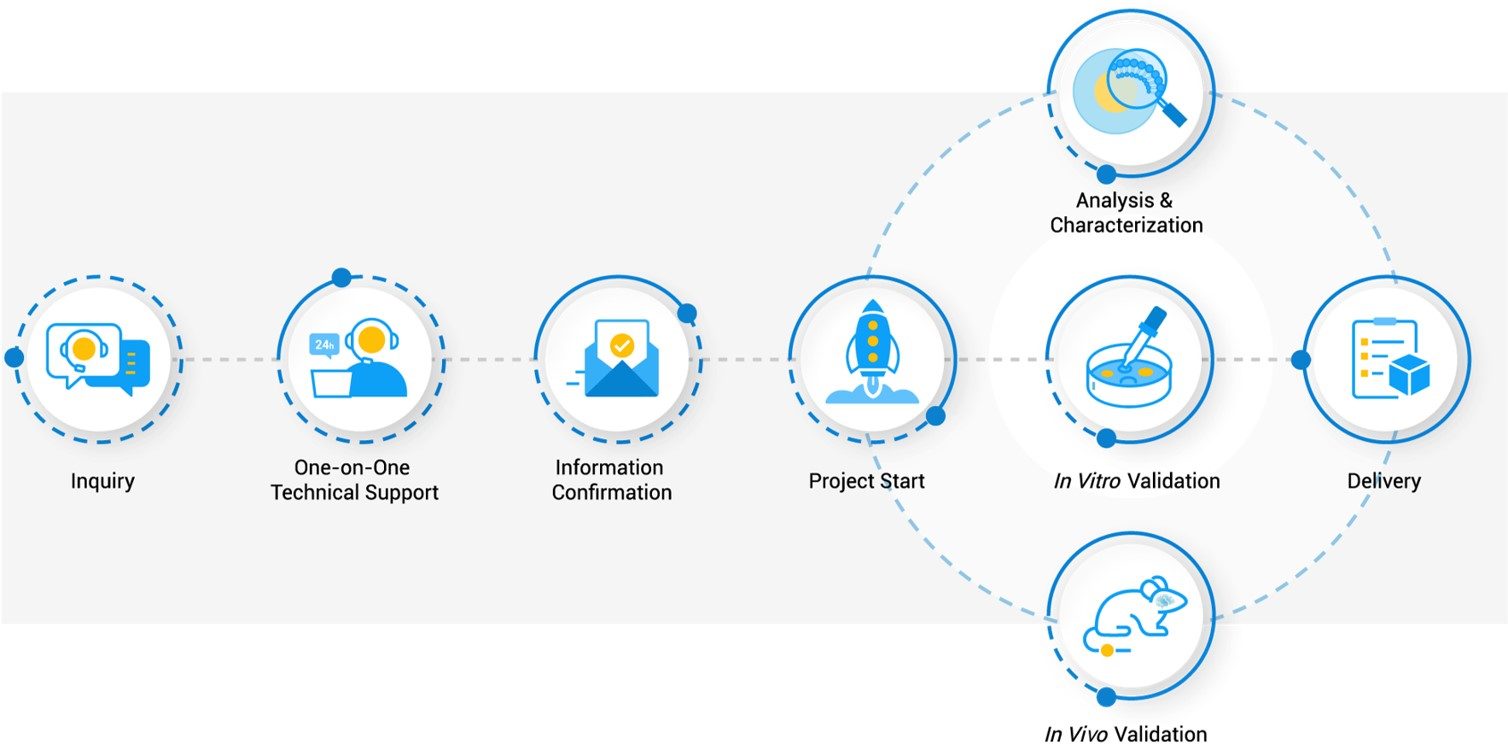
Workflow
FAQs
How does switching to a nanocarrier system fundamentally improve the limit of detection (LOD) in my existing immunoassay?
The enhancement in LOD primarily stems from signal amplification. Nanocarriers function as powerful signal beacons because a single binding event captures a particle loaded with hundreds or even thousands of reporter molecules (e.g., fluorophores or enzymes). This concentrates the signal far more effectively than traditional labeling methods, allowing you to reliably detect biomarkers at much lower concentrations.
We are developing a cell-sorting protocol. Which targeted delivery technology is best suited for efficient and non-toxic cell capture and isolation?
For cell sorting, magnetic nanoparticles are typically the material of choice. When functionalized with highly specific antibodies, these particles selectively bind the target cells. This combination allows for extremely rapid, high-throughput isolation via an external magnetic field without damaging the cell viability, making the technology ideal for subsequent downstream analysis or clinical application.
Is it possible to use a single delivery system to detect multiple biomarkers simultaneously (multiplexing)?
Yes, nanocarrier systems are highly advantageous for multiplexing. This can be achieved in several ways: 1) using nanocarriers of different sizes or shapes, each functionalized for a unique target; or 2) encapsulating different, spectrally distinct fluorescent dyes within identical carriers, which are then targeted by unique ligands. These methods ensure distinct detection signals for multiple analytes within the same sample volume.
What are the main stability concerns when storing IVD reagents coupled with these advanced delivery systems, and how are they addressed?
The main concerns are aggregation of the nanoparticles and degradation of the encapsulated payload or surface ligands. We address this by optimizing the surface charge (zeta potential) through buffer and coating choices (e.g., PEGylation) to prevent aggregation. Furthermore, stabilizing the core structure, especially for liposomes, is achieved by precise lipid ratio selection to maintain integrity under various temperature and storage conditions.
Our product requires scale-up to high-volume manufacturing. Is the fabrication process for targeted nanocarriers viable for industrial-scale IVD production?
Absolutely. While initial lab-scale synthesis can be complex, our established protocols are designed for scalability. We primarily use methods like microfluidics or extrusion for manufacturing large batches of highly uniform nanoparticles, which are consistent, reproducible, and compliant with industrial quality standards, ensuring you can meet high market demand.
Targeted Delivery for in vitro Diagnostics represents a paradigm shift toward ultra-sensitive, high-specificity diagnostic tools. Creative Biolabs stands ready as your dedicated partner, providing the necessary scientific expertise in nanocarrier formulation, precise surface functionalization, and comprehensive characterization services to elevate your IVD assay performance.
Reference
Tiwari, Harshita et al. "Recent Advances in Nanomaterials-Based Targeted Drug Delivery for Preclinical Cancer Diagnosis and Therapeutics." Bioengineering (Basel, Switzerland) vol. 10,7 760. 25 Jun. 2023, Distributed under Open Access license CC BY 4.0, without modification. https://doi.org/10.3390/bioengineering10070760
Our services are For Research Use Only. We do not provide services to individuals.
Creatibe Biolabs' custom LNP was the only solution that
successfully delivered our CRISPR-Cas9 payload across the blood-brain barrier with high
efficiency and low toxicity.”
Dr. Evelyn Reed
Postdoctoral Researcher, Leading
University
Our siRNA candidate was failing due to off-target toxicity, but
Creatibe Biolabs' team rapidly redesigned our LNP using their modular platform, rescuing our
preclinical program.”
Ben Carter
Project Manager
Achieving cytosolic delivery of our protein degrader with Creatibe Biolabs' exosome platform
was the key to unlocking our candidate's full therapeutic potential.”
Dr. Kenji Tanaka
Principal Scientist, Large
Pharma Corp
Our oncology drug's efficacy was limited by poor tumor
accumulation. Creatibe Biolabs' peptide-conjugated liposomes provided the precise targeting
we needed, dramatically increasing the drug's therapeutic index.”
Dr. Clara Schmidt
Senior Scientist, Oncology
Innovations Inc.
We required a delivery system that would only release its payload
in the tumor's acidic microenvironment. Creatibe Biolabs' pH-responsive liposomes performed
flawlessly, minimizing systemic exposure.”
David Chen
Formulation Scientist
Outstanding expertise in antibody engineering.The team's attention
to detail and innovative approaches have sianificantly accelerated our development timeline.


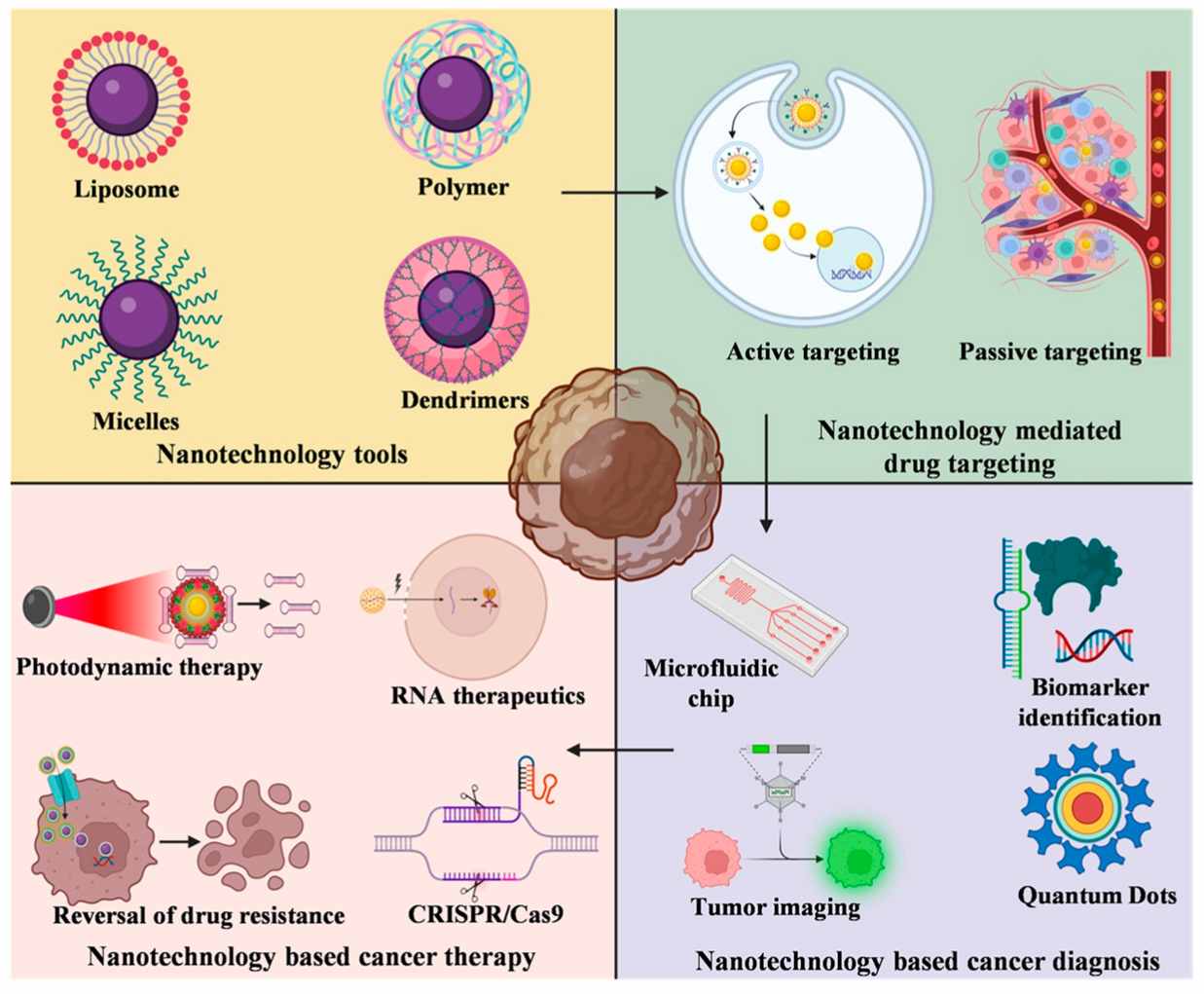 Fig.1 Nanotechnology tools-based cancer targeting diagnosis and treatment.1