


Why Rotavirus Vaccines Don't Protect Against Norovirus
Gastrointestinal viruses impose a substantial global health burden, with children being the most vulnerable group. Rotavirus (RV) and Norovirus (NoV) stand out as the two primary pathogens causing viral gastroenteritis in children worldwide. Infections by these viruses typically result in severe symptoms such as diarrhea, vomiting, and fever, which often lead to hospitalizations and even fatalities, especially in low - income regions.
Rotavirus vaccines have revolutionized the prevention of RV - related diseases. They demonstrate remarkable efficacy, preventing severe gastroenteritis in 85% - 100% of cases and significantly reducing child mortality associated with RV infections. Nevertheless, a critical limitation of these vaccines has been identified: they provide no cross - protection against Norovirus. This raises a pivotal question in the fields of virology and public health: Given that both RV and NoV are enteric viruses, why does the immune protection induced by RV vaccines fail to extend to NoV? The answer lies in the fundamental virological disparities between the two viruses, particularly in their antigenic structures, genetic diversity, and the mechanisms by which the immune system responds to them.
Fundamental Virological Differences Between RV and NoV
The core reason for the lack of cross - protection lies in the inherent virological differences between RV and NoV, with antigenic structure and genetic diversity being the key distinguishing factors.
Antigenic Structure Contrast
- Rotavirus (RV): The outer capsid of RV consists of VP7 and VP4 proteins, which are the primary drivers of the body's neutralizing antibody response. Current RV vaccines are specifically designed to target specific G (derived from VP7) and P (derived from VP4) serotypes. A notable advantage of these vaccines is their ability to induce heterotypic protection. For instance, a vaccine developed to target G1 - G4 serotypes can also offer protection against some closely related RV strains.
- Norovirus (NoV): NoV's antigenic properties are determined by its capsid protein VP1, which is characterized by high variability. Among NoV genotypes, the GII.4 type undergoes continuous antigenic drift. This process involves small genetic changes that alter the structure of the VP1 protein, making new NoV variants unrecognizable to antibodies induced by previous infections or existing vaccine candidates.
Genetic Diversity Comparison
- Rotavirus (RV): Despite the existence of multiple RV serotypes, the genetic diversity is relatively limited. This limited diversity enables RV vaccines to cover a broad range of related strains through heterotypic protection, as mentioned earlier.
- Norovirus (NoV): In sharp contrast, NoV exhibits extensive genetic diversity. To date, at least 10 distinct genotypes of NoV have been identified. The antigenic differences between these genotypes are so significant that cross - protection between different NoV genotypes is nearly nonexistent.
Services you may interested in
In Vivo ADME & PK Study for Vaccine
Key Differences in Immune Response Mechanisms
The way the human immune system responds to RV and NoV further contributes to the absence of cross - protection, with differences in neutralizing antibody specificity and immune escape strategies being crucial.
Specificity of Neutralizing Antibodies
- Rotavirus (RV): RV vaccines primarily induce the production of mucosal IgA antibodies in the gut, which is the main site of RV infection. However, there is ongoing debate and uncertainty regarding the correlation between serum antibodies (antibodies present in the bloodstream) and actual protection against RV. This uncertainty highlights the complexity of the immune response to RV.
- Norovirus (NoV): In contrast, after a NoV infection, the body produces antibodies that can persist for 4 - 8 years. Unfortunately, this long - lasting antibody response is ineffective against newly emerging NoV variants. The antibodies induced by previous infections only recognize the specific NoV strain that caused the infection and cannot bind to or neutralize new variants with altered VP1 proteins.
Immune Evasion Strategies
- Norovirus (NoV): NoV has evolved a sophisticated immune evasion strategy. It mutates the binding sites on the VP1 protein that interact with human histo - blood group antigens (HBGAs). These mutations allow new NoV strains to avoid detection and neutralization by antibodies that were effective against earlier strains.
- Rotavirus (RV): RV, on the other hand, does not employ such a dynamic immune evasion strategy. Its structural proteins (VP7 and VP4) remain relatively stable, providing consistent and reliable targets for vaccines. This stability is a key factor in the success of RV vaccines in inducing protective immunity.
Clinical Evidence: Limitations of RV Vaccine Protection Against NoV
Clinical research has provided clear and compelling evidence confirming that RV vaccines cannot protect against NoV infections, and it has also shed light on the challenges in NoV vaccine development.
Lack of Cross - Protection in Clinical Studies
A study conducted by the U.S. Centers for Disease Control and Prevention (CDC) focused on the RV5 vaccine, one of the commonly used RV vaccines. The results of this study showed that the RV5 vaccine had no impact on reducing the incidence of NoV - associated diarrhea. Notably, some early RV vaccine formulations were found to provide non - specific protection against other enteric viruses, such as adenoviruses and sapoviruses. However, this non - specific protective effect did not extend to NoV, further emphasizing the unique nature of NoV and the inability of RV vaccines to combat it.
Challenges in NoV Vaccine Development
The development of NoV vaccines faces significant obstacles. One major challenge is the lack of suitable animal models. Animal models that can accurately replicate the process of human NoV infection and the corresponding immune responses are essential for testing and optimizing vaccine candidates. Currently, such models are scarce, slowing down the progress of NoV vaccine research. Additionally, the neutralizing epitopes (specific regions of the virus recognized by antibodies) on the NoV VP1 protein are highly unstable. This instability makes it extremely difficult to design vaccines that can effectively target all NoV strains, as the epitopes can change rapidly, rendering the vaccine ineffective against new variants.
Implications for Vaccine Design and Future Directions
Despite the challenges, researchers have made significant progress in exploring potential strategies for NoV vaccine development and improving cross - protection, with combination vaccines and new vaccine technologies showing great promise.
Potential of Combination Vaccines
- Triple - Component Vaccines: In mouse model studies, a triple - component vaccine targeting both RV and NoV has been shown to successfully induce the production of cross - neutralizing antibodies against both viruses. This suggests that combination vaccines could be a viable approach to providing protection against multiple enteric viruses simultaneously.
- Chimeric Vaccines: Chimeric vaccines, which use a RV vector to express NoV proteins, have also been tested in mouse models. The results of these studies have validated the concept that a single vaccine can target both RV and NoV, opening up new possibilities for the development of broad - spectrum enteric virus vaccines.
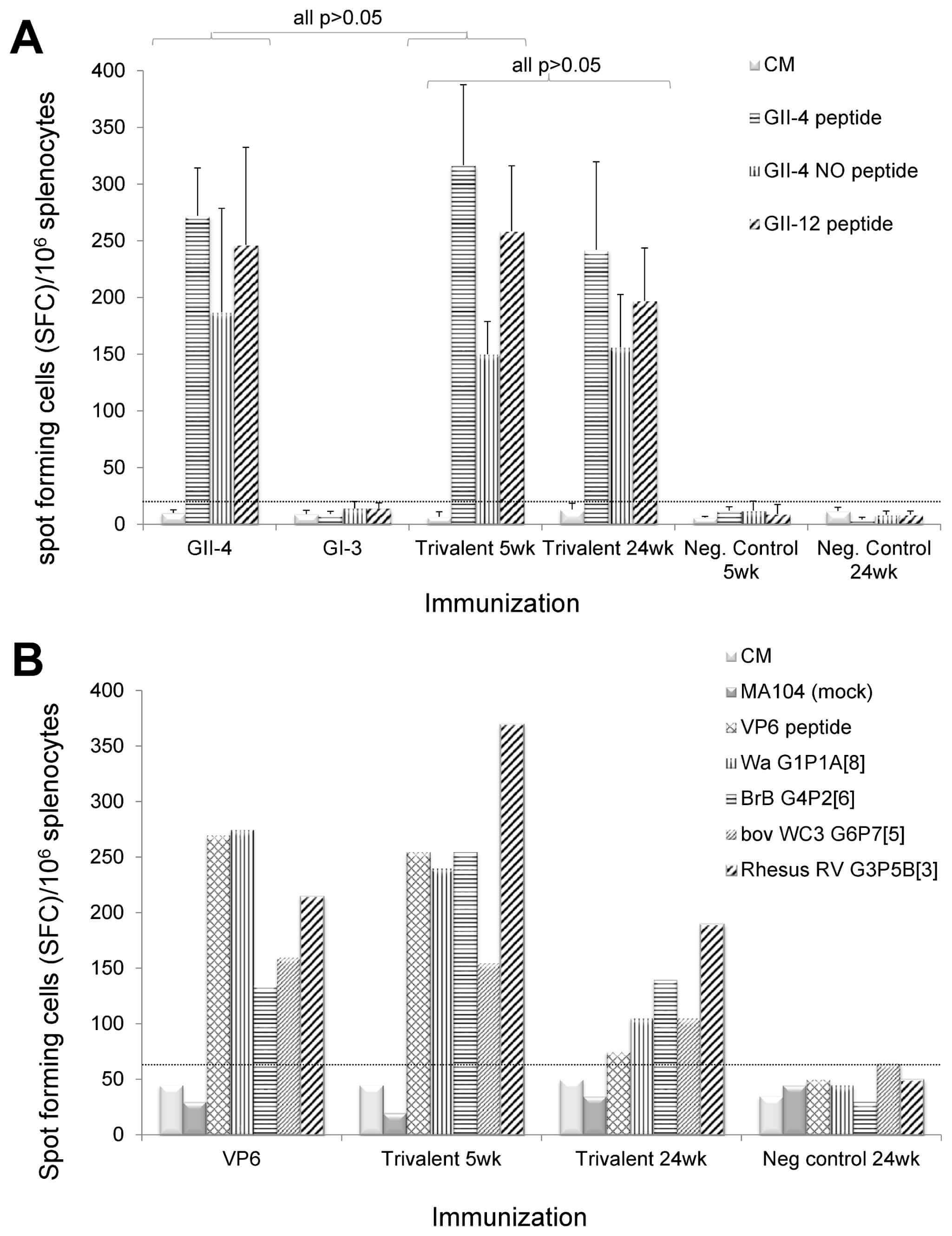 Fig.1 ELISPOT assay for NoV and RV-specific cells.1,2
Emerging New Vaccine Strategies
- VLP - Based Multivalent Vaccines: Virus - like particle (VLP) - based multivalent vaccines are being actively developed. VLPs mimic the structure of NoV but do not contain the virus's genetic material, making them safe for use in vaccines. These multivalent vaccines are designed to cover the main NoV genotypes, addressing the issue of NoV genetic diversity.
- Replicon RNA Vaccines: Replicon RNA vaccines represent another innovative approach. These vaccines use a modified RNA molecule that can trigger an immune response in the body. One of the key advantages of replicon RNA vaccines is their ability to enhance mucosal immunity, which is critical for fighting enteric viruses like NoV that primarily infect the gut mucosa.
Remaining Research Hurdles
While progress has been made, several hurdles remain. NoV has a high mutation rate, meaning that new strains emerge frequently. This requires vaccines to be continuously updated to keep up with these new variants. Additionally, elderly individuals and people with weakened immune systems (such as those with HIV/AIDS or undergoing chemotherapy) often have a weaker immune response to vaccines. Further research is needed to optimize vaccine formulations to ensure that these vulnerable populations can also benefit from effective NoV protection.
Conclusion and Knowledge Gaps
The core conclusion is that rotavirus (RV) vaccines fail to cross-protect against norovirus (NoV) primarily due to NoV's high antigenic variability and fundamental differences in immune targets between the two viruses—RV has stable structural proteins (VP7/VP4) and limited serotype diversity for effective vaccine protection, while NoV's highly mutable VP1 protein, multiple genotypes, and strong immune evasion enable it to escape such protection; two key knowledge gaps remain, including the lack of accurate mucosal immune response monitoring methods and poor understanding of NoV-protective immunity persistence mechanisms; thus, targeted NoV vaccine development is urgent to address its global health burden, with future research needing to overcome NoV's high variability, optimize vaccine efficacy for vulnerable groups (e.g., the elderly, immunocompromised populations), and leverage RV-NoV virological and immunological insights to enhance public health protection against these enteric viruses.
If you want to learn more about the norovirus vaccine, please refer to:
Murine vs. Human Norovirus Models in Vaccine Research
Norovirus Immune Evasion and the Challenge of Durable Vaccine Protection
Norovirus Vaccine Development – Where Are We Now in 2025
Virus-Like Particle Vaccines for Norovirus – A Promising Immunological Strategy
Browse our Norovirus Antigen Products
Need a custom solution? If our off-the-shelf products aren't a perfect fit, we can create one for you. Contact us to design a product that precisely matches your experimental demands.
References
- Tamminen, Kirsi, et al. "Trivalent combination vaccine induces broad heterologous immune responses to norovirus and rotavirus in mice." PloS one 8.7 (2013): e70409. https://doi.org/10.1371/journal.pone.0070409
- Distributed under Open Access license CC BY 4.0, without modification.
Created July 2025
All of our products can only be used for research purposes. These vaccine ingredients CANNOT be used directly on humans or animals.