
Exosomal miRNA is closely related to various human diseases, including diabetes. Studying the mechanism of action of exosomal miRNA and its role in diabetes will be valuable for gaining a deeper understanding of the pathophysiological processes of diabetes. Recently, researchers from the group of Ou Chunlin at Xiangya Hospital of Central South University published a review in the journal Clinical and Translational Medicine, focusing on the latest findings on the role and regulatory mechanisms of exosomal miRNA in the development of diabetes. The review provides a theoretical basis for the potential use of exosomal miRNA as a target for diabetes treatment.
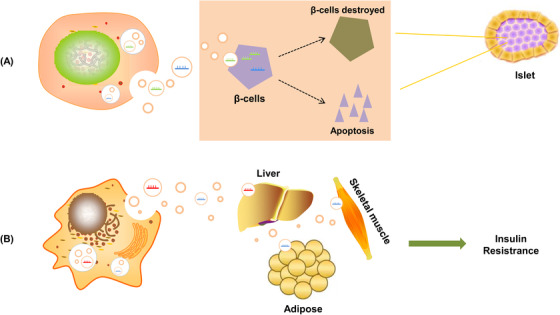 Diabetes mellitus (DM) refers to a class of metabolic disorders characterized by hyperglycemia. DM is caused by defective insulin secretion or insulin resistance (IR) due to genetic or environmental factors. In recent years, with the rapid increase in population growth, aging, urbanization, as well as obesity and lack of exercise, DM has become a global health problem. Epidemiological studies have shown that the global prevalence of diabetes is expected to increase from 4% in 1995 to 5.4% in 2025. The annual healthcare costs for the 693 million diabetic patients are estimated to be approximately US$850 billion by 2045. In recent years, DM has become the third most common non-infectious disease, after cardiovascular disease and cancer. Despite significant progress in the understanding and treatment of DM, the associated morbidity and mortality continue to increase. Therefore, effective biomarkers for early diagnosis, progression monitoring, and targeted treatment of DM are urgently needed.
Various extracellular vesicles (EVs) that stably exist in human body fluids can be divided into small EVs (sEVs, diameter <200nm) and large EVs (lEVs, diameter >200nm) based on their size. Exosomes are a type of sEV with a diameter of about 40-160 nm, derived from almost all types of human cells. Exosomes are widely present in all types of human body fluids, such as saliva, ascites, breast milk, cerebrospinal fluid, urine, and semen. They can carry RNA, DNA, lipids, proteins, and metabolites, and are important for information transmission between cells. In the era of precision medicine, accurate diagnosis and treatment of diseases are increasingly valued. The application of exosomes in the effective diagnosis and treatment of diseases is becoming a research focus. The potential of exosomes in precision medicine is based on their ubiquity and easy accessibility in the body. With the completion of the human genome project and the beginning of the post-genomic era, non-coding RNA (ncRNA) has attracted great interest in various research fields. MicroRNA (miRNA) is a type of ncRNA,about 22 nucleotides (nt) in length, encoded by endogenous genes.
miRNAs are widely present in plants, animals, and some viruses, and play a role in transcriptional or post-transcriptional regulation by binding to target mRNAs involved in regulating physiological and pathological processes in the human body, including binding to untranslated regions (UTRs). miRNAs are more stable in tissues and blood than long noncoding RNAs (lncRNAs) and mRNAs because of their shorter sequences. Interestingly, miRNAs can be encapsulated in exosomes, which transport them and release them into target cells or tissues, where they play a biological regulatory role. Most cells in the human body can secrete exosomes containing miRNAs. For example, about 100 miRNAs have been detected in exosomes secreted by mast cells. Exosomal miRNAs are not only involved in normal physiological processes but also in the occurrence and development of various diseases, including diabetes. Exosomal miRNAs are emerging as key regulators of the development and progression of diabetes. In addition, due to the specificity and sensitivity of exosomes, exosomal miRNAs released into the body’s fluid circulation have the potential to be used as diagnostic markers for diabetes. Further research on the mechanism of action of exosomal miRNAs in diabetes will be valuable for a thorough understanding of the pathophysiological processes of the disease.
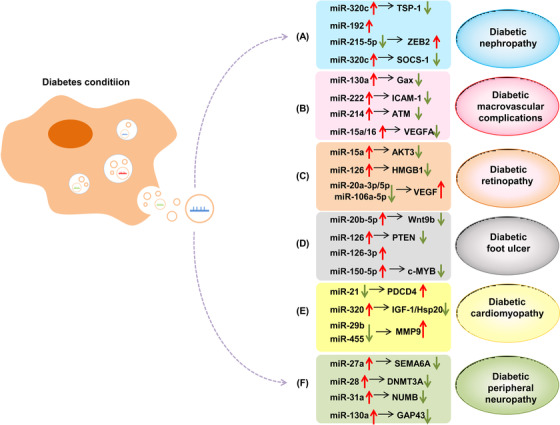
In this review, the researchers summarize the latest findings on exosomal miRNAs associated with diabetes and provide a new strategy to identify potential diagnostic biomarkers and drug targets for the early diagnosis and treatment of diabetes. Exosomal miRNAs are closely related to the progression of diabetes and its related complications. Therefore, exosomal miRNAs have been recognized as novel and potentially valuable molecules in diabetes research. We can exogenously silence or activate exosomal miRNAs in diabetic patients, such as by incorporating agomir or antagomir into exosomes in vitro and then injecting them into target tissues. This approach could potentially be developed as a therapeutic strategy for diabetes. Although our current understanding of the development of exosome-based drug delivery systems is still in its early stages, further research and technological advances are expected to enable exosomal miRNAs to offer new strategies for the prevention, diagnosis, and treatment of diabetes.
Reference:
He, Xiaoyun et al. “Emerging roles of exosomal miRNAs in diabetes mellitus.” Clinical and Translational Medicine vol. 11,6 (2021): e468. doi:10.1002/ctm2.468
Related Services: