CRBN-based Protein Degrader Ligand Screening Service
Creative Biolabs, which has many years of experience in small molecule drug development, has also conducted continuous research and exploration in the field of Protein Degraders. Therefore, we have the absolute qualifications and capabilities to provide you with high-quality Protein Degraders development services.
Introduction to CRBN
CRBN, also called cereblon, is encoded by the CRBN gene on human chromosome 3 and is highly conserved from plant to human. CRBN has important clinical significance. For example, the human teratogen drug can bind to CRBN and cause it to lose its activity, which in turn results in the antiproliferative effect of myeloma cells and teratogenic effects on fetal development. In addition, the CRBN gene mutation is also related to autosomal recessive nonsyndromic intellectual disability, which is speculated to be caused by abnormal regulation of calcium-activated potassium channels in the brain during fetal development. This shows the role of CRBN in the development and regulation of potassium ion channels.
In addition, CRBN also plays an important role in ubiquitin-mediated protease degradation. Because CRBN can form E3 ubiquitin ligase complex with DDB1 (damaged DNA binding protein 1), CUL4A (Cullin-4A), and ROC1 (regulator of cullins 1), it can down-regulate the levels of some proteins such as FGF8 (Fibroblast growth factor 8) and FGF10 (fibroblast growth factor 10). The role of CRBN in regulating potassium channels is manifested to be able to bind to KCNMA1 (large-conductance calcium-activated potassium channel) and regulate its activity. Studies have found that mice lacking this ion channel exhibit neurological disorders.
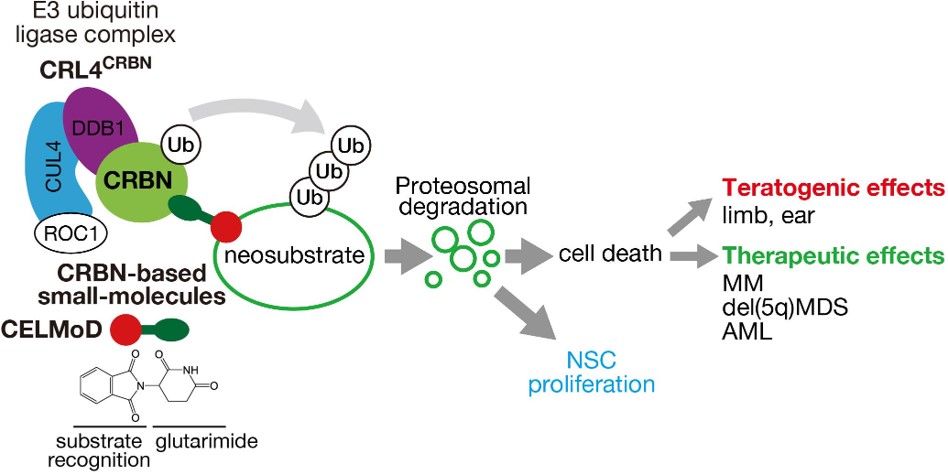 Fig.1 Mechanism of action of CRBN-based small-molecule compounds.1
Ligand Screening for CRBN-based Protein Degraders
CRBN is associated with DDB1 to form DDB1 / cullin4 E3 ubiquitin ligase complex and functions as a substrate receptor. When immunomodulatory drugs are combined with CRBN, the activity of ubiquitin ligase in this complex will change. It turns out that these drugs bind to the same site on the CRBN in a competitive manner. In mammals, CRBN contains LON and C-terminal binding domains. The CRBN binding domain is highly conserved and belongs to a β-tent fold member. It contains 2 antiparallel β sheets, which are fixed together at the top by the structure of zinc ion. These three types of IMiDs, can occupy and bind to this structure. Studies have found that they all contain a glutarimide moiety. This part is bound in an aromatic cage, which is mainly composed of three unchanged tryptophan residues.
Based on the structure of CRBN and the law of its binding and interaction with ligands, researchers have designed Protein Degraders, which can induce the degradation of BRD4 at low nanomolar concentrations. However, some studies have found that in addition to the target protein, Protein Degraders designed based on CRBN-containing E3 can also degrade other proteins at the same time. Therefore, controlling potential CRBN-mediated off-target effects is very important. On the one hand, it can achieve the purpose of degrading the target protein, and on the other hand, it can regulate the level of other proteins in the body through the intrinsic activity of E3 binding ligand.
Creative Biolabs’ Services
-
Ligand screening and identification
-
Ligand / E3 interaction study
-
Ligand design in various forms like small molecules, peptides, and antibodies, etc.
-
Optimization and modification of existing ligands
-
Ligand drugability and pharmacokinetics studies
-
Custom manufacturing of ligands
Creative Biolabs has long-term devoted to the development of Protein Degraders. Our scientists are confident in offering the best and most suitable ligand design for our customers all over the world. If you are considering developing novel Protein Degraders against the target of interest, please do not hesitate to contact us for more details.
Reference
-
Sato, Tomomi, Takumi Ito, and Hiroshi Handa. "Cereblon-based small-molecule compounds to control neural stem cell proliferation in regenerative medicine." Frontiers in Cell and Developmental Biology 9 (2021): 629326. Distributed under Open Access license CC BY 4.0, without modification.