
Introduction
The targeted protein degradation field has emerged as one of the most transformative approaches in modern drug discovery, offering researchers the ability to eliminate disease-causing proteins rather than merely inhibiting their activity. Unlike conventional small-molecule inhibitors that rely on sustained target occupancy, heterobifunctional degraders hijack the cell’s intrinsic ubiquitin-proteasome system to achieve catalytic, substoichiometric protein removal. This paradigm shift has opened the door to targeting proteins previously considered undruggable, including transcription factors, scaffold proteins, and other targeting regulatory proteins that lack well-defined enzymatic active sites.
Among the most compelling targets for protein degrader development are regulatory proteins — transcription factors and signaling modulators that govern gene expression, cell cycle progression, and cellular homeostasis. From CRABP-I/II and AHR to ERRα, TACC3, FKBP12, and X-Protein, each regulatory protein presents unique structural and functional characteristics that demand tailored ligand design strategies. This article examines the scientific foundations of protein degrader ligand design for these key regulatory targets and explores how specialized preclinical support services can accelerate degrader development programs.
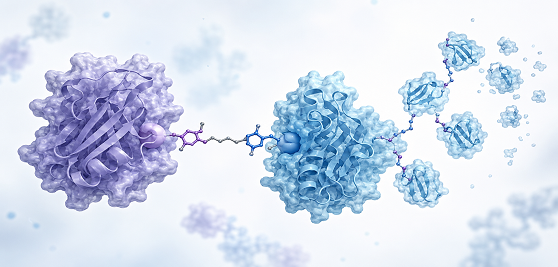
The Rise of Targeted Protein Degradation
Since the first conceptual demonstration of heterobifunctional degraders in the early 2000s, the field has undergone remarkable expansion. These engineered molecules recruit E3 ubiquitin ligases to target proteins, inducing polyubiquitination and subsequent proteasomal degradation. Because the degrader molecule is released after ubiquitination and can engage additional target proteins, the process is inherently catalytic — enabling potent protein depletion even at low compound concentrations. This mechanism provides several advantages over traditional occupancy-driven pharmacology, including the ability to eliminate both enzymatic and scaffolding functions of a target protein.
The scope of degradable targets continues to expand well beyond kinases and nuclear receptors. Regulatory proteins — which often lack deep binding pockets amenable to conventional inhibitor design — represent a particularly attractive yet challenging target class. Their involvement in oncogenic signaling, immune regulation, and metabolic control makes them high-value nodes for therapeutic intervention across oncology, immunology, and infectious disease indications.
Mechanism of Heterobifunctional Protein Degraders
A heterobifunctional protein degrader consists of three modular components: a target-binding ligand specific to the protein of interest (POI), an E3 ubiquitin ligase-recruiting ligand, and a chemical linker that connects the two. Upon cellular entry, the degrader simultaneously engages the POI and the E3 ligase, forming a ternary complex. This induced proximity facilitates the transfer of ubiquitin from an E2 conjugating enzyme to lysine residues on the target protein, marking it for recognition and degradation by the 26S proteasome. Following target degradation, the degrader molecule is liberated and can participate in additional degradation cycles.
The efficiency of this process depends critically on the quality of both ligands and the linker geometry. The target-binding ligand must exhibit sufficient affinity and, ideally, cooperativity in ternary complex formation. For regulatory proteins — many of which exist in dynamic conformational states or are part of multi-protein complexes — ligand design must account for structural plasticity, solvent accessibility, and the availability of suitable binding epitopes. These considerations underscore the value of integrated ligand discovery platforms that combine structure-based computational screening, phage display-derived binders, and rational medicinal chemistry optimization.
Key Regulatory Protein Targets for Degrader Development
CRABP-I/II: Retinoic Acid-Binding Proteins in Cancer
Cellular retinoic acid-binding proteins I and II (CRABP-I/II) are small cytosolic lipid-binding proteins that chaperone retinoic acid (RA) to nuclear RA receptors, influencing gene expression programs involved in cell differentiation and proliferation. CRABP-II is positive in over 50% of pancreatic ductal adenocarcinoma cases, and CRABP-I/II overexpression has been documented in ovarian cancer, leukemia, and head and neck squamous cell carcinoma. These expression patterns position CRABPs as both diagnostic markers and potential therapeutic targets. CRABP-I/II-targeting Protein Degrader Ligand Design leverages the conserved β-barrel structure of CRABPs, which forms a hydrophobic binding pocket with conserved arginine residues (Arg106, Arg126, Tyr128). Ligands are designed through in silico screening, peptide engineering, and recombinant antibody construction to achieve selective CRABP degradation.
AHR: Aryl Hydrocarbon Receptor in Immune Regulation and Cancer
The aryl hydrocarbon receptor (AHR) is a ligand-activated basic helix-loop-helix transcription factor broadly expressed in barrier tissues, with particularly high expression in lung and liver. AHR responds to environmental toxins, dietary compounds, and endogenous tryptophan metabolites, translating these signals into gene expression changes that modulate immune responses, xenobiotic metabolism, and cell proliferation. Increasing evidence implicates AHR in the pathogenesis of cardiovascular diseases, immune-related disorders, and multiple tumor types. AHR-targeting Protein Degrader Ligand Design has emerged as a promising strategy for cancer therapy, complementing small-molecule AHR antagonists by achieving complete receptor elimination rather than transient blockade. Recent studies have demonstrated that AHR is continuously subject to chaperone-mediated autophagy (CMA), with CMA activation leading to AHR degradation and suppression of AHR-dependent gene transcription. Ligand design for AHR-targeting degraders exploits the receptor’s three functional domains — the bHLH domain, PAS domain, and transactivation domain — using structure-based computational methods and bioactive peptide screening.
ERRα: Estrogen-Related Receptor Alpha in Metabolism and Oncology
Estrogen-related receptor alpha (ERRα) is an orphan member of the nuclear receptor superfamily that serves as a central regulator of energy metabolism, fatty acid beta-oxidation, mitochondrial biogenesis, and lipid uptake. ERRα is ubiquitously expressed but enriched in metabolically active tissues including heart, kidney, skeletal muscle, brown adipose tissue, and liver. A landmark study identified ERRα as a key immune-metabolic drug target, demonstrating its role at the interface of tumor metabolism and anti-tumor immunity. ERRα-targeting Protein Degrader Ligand Design addresses the structural features of this nuclear receptor, including its non-conserved N-terminal domain, central zinc finger DNA-binding domain (DBD), and C-terminal ligand-binding domain (LBD). Both small-molecule and peptide-based degrader approaches have been explored, with peptide-based degraders benefiting from strategies such as side-chain crosslinking and incorporation of β- or γ-amino acids to improve cellular stability and permeability.
TACC3: A Spindle Regulatory Protein in Mitosis and Cancer
Transforming acidic coiled-coil-containing protein 3 (TACC3) is a critical spindle-regulatory protein that localizes to the mitotic spindle and orchestrates spindle assembly, chromosomal alignment, and mitotic progression. TACC3 overexpression has been documented across a spectrum of malignancies, including lymphoma, ovarian cancer, squamous cell carcinoma, and breast cancer. Importantly, conditional TACC3 depletion has been shown to induce regression of thymic lymphoma in p53-deficient mice without causing overt toxicity in normal tissues, underscoring the therapeutic window of TACC3-targeted strategies. TACC3-targeting Protein Degrader Ligand Design exploits the C-terminal coiled-coil TACC domain, which is highly conserved and mediates protein-protein interactions essential for centrosome function. Degrader design for TACC3 incorporates ligands such as KHS108, a small molecule that reduces TACC3 protein levels, combined with E3 ligase-recruiting moieties to achieve ubiquitin-dependent proteasomal degradation.
FKBP12: A Multifunctional Immunophilin with Broad Disease Relevance
FK506-binding protein 12 (FKBP12) is the smallest member of the immunophilin family, with a molecular weight of 12 kDa and a structure comprising only 108 amino acid residues. Originally characterized as the intracellular receptor for the immunosuppressive drugs FK506 and rapamycin, FKBP12 has since been recognized as a participant in diverse biological processes, including receptor signal transduction, protein folding, calcium channel regulation, and protein trafficking. FKBP12-targeting Protein Degrader Ligand Design leverages the protein’s well-characterized ligand-binding pocket, which accommodates FK506 and rapamycin with high affinity. The compact structure of FKBP12 poses both advantages — a defined binding pocket facilitates ligand discovery — and challenges, particularly around achieving productive ternary complex geometry with different E3 ligase systems. Small-molecule ligands derived from known FKBP12 binders, as well as antibody- and peptide-based ligands, represent viable starting points for degrader development.
X-Protein: A Hepatitis B Virus Non-Structural Protein as a Therapeutic Target
The X-protein of hepatitis B virus (HBV) is a 154-amino-acid non-structural protein (approximately 17 kDa) that plays a multifaceted role in HBV replication and hepatocellular carcinoma (HCC) development. X-protein stimulates HBV replication by activating viral transcription and enhancing viral polymerase activity viacalcium signaling pathways. Furthermore, X-protein contributes to hepatocarcinogenesis through modulation of gene transcription, intracellular signal transduction, cell cycle control, and apoptotic pathways. X-Protein-targeting Protein Degrader Ligand Design represents a novel antiviral strategy distinct from conventional polymerase or capsid inhibitors. The X-protein instability domain (residues 103-154) has been characterized as an endogenous degron, and peptide-based targeting ligands that exploit this region offer a rational starting point for degrader design. Ligand development for X-protein integrates structure-based computational screening and phage display-derived antibody construction to identify binders with suitable affinity and selectivity.
Key Technical Considerations in Ligand Design for Protein Degraders
Designing effective ligands for heterobifunctional degraders targeting regulatory proteins requires careful navigation of several interconnected factors. First, binding site selection must balance affinity with the need to form productive ternary complexes. A ligand that binds too tightly in a non-productive orientation can sequester the degrader molecule without facilitating ubiquitination. Second, linker composition and length critically influence degradation efficiency by determining the spatial relationship between the target and the E3 ligase. Systematic linker optimization — varying length, rigidity, and attachment points — is often necessary to identify geometries that support cooperative ternary complex formation.
Additionally, ligand selectivity is paramount when targeting protein families with high sequence or structural homology. For instance, CRABP-I and CRABP-II share extensive structural similarity yet have distinct tissue distribution and disease associations, requiring ligands capable of isoform discrimination. Similarly, FKBP12 is one member of a larger immunophilin family, and off-target engagement of related FKBPs may introduce unwanted pharmacology. Rigorous selectivity profiling using biochemical and cellular assays should accompany ligand optimization. Finally, the physicochemical properties of the degrader molecule — including molecular weight, lipophilicity, and hydrogen bond donor count — must be balanced against the structural requirements of bivalent target engagement, as these properties ultimately determine cellular permeability, solubility, and metabolic stability.
Integrated Ligand Design Services for Protein Degrader Development
Creative Biolabs offers comprehensive ligand design services tailored to the unique challenges of regulatory protein-targeting degrader development. Drawing on extensive project experience in the targeted protein degradation space, our scientific team employs a diversified ligand discovery platform that integrates structure-based computational screening, phage display-based antibody and peptide discovery, and rational medicinal chemistry optimization. This multi-pronged approach ensures that the most suitable ligand modality — whether small molecule, peptide, or recombinant antibody fragment — is identified for each target based on its structural features and biological context.
For targets with well-characterized small-molecule binders, such as FKBP12 and TACC3, existing ligands can be modified and optimized to improve binding affinity, selectivity, and compatibility with linker attachment. For more challenging targets like X-protein, where small-molecule binders may be scarce, phage display libraries can be screened to identify high-affinity peptide or antibody-based ligands. Following ligand identification, iterative structure-activity relationship (SAR) analysis and ternary complex characterization — using techniques such as surface plasmon resonance and cellular target engagement assays — guide further optimization. Throughout the project lifecycle, close collaboration and transparent communication ensure that research objectives are aligned and that experimental strategies are adapted to emerging data.
Partnering with Creative Biolabs for Protein Degrader Programs
Beyond ligand design, Creative Biolabs provides integrated preclinical CRO services that span the entire degrader development workflow. From initial target feasibility assessment and ligand discovery through linker optimization, E3 ligase selection, in vitro degradation assays, and cellular functional characterization, our platform supports seamless progression from early discovery toward lead optimization. Flexible engagement models accommodate diverse research needs, whether for academic laboratories exploring novel targets or biotech companies advancing lead candidates toward development milestones.
Every project benefits from a tailored experimental design that accounts for the specific structural biology, pharmacology, and intended application of the target regulatory protein. With rigorous quality systems and comprehensive characterization capabilities, our team is positioned to support programs targeting the full spectrum of regulatory proteins discussed in this article — from CRABP-I/II and AHR to ERRα, TACC3, FKBP12, and X-Protein. Researchers exploring targeted protein degradation approaches may find that partnering with an experienced preclinical CRO can streamline experimental workflows and provide access to specialized expertise that complements in-house capabilities.
Conclusion
The field of targeted protein degradation continues to evolve rapidly, with heterobifunctional degraders offering a mechanistically distinct and therapeutically promising approach to eliminating disease-relevant proteins. Regulatory proteins — encompassing transcription factors, signaling modulators, and viral non-structural proteins — represent a target class where traditional small-molecule inhibitors have often fallen short, making them especially well-suited to degradation-based strategies. Advances in ligand design, including structure-based computational methods, phage display-derived binders, and rational linker engineering, are expanding the repertoire of degradable targets and improving the efficiency of degrader development.
For research teams working in this dynamic space, access to specialized ligand design capabilities and integrated preclinical support may help accelerate project timelines and reduce technical risk. To learn more about tailored protein degrader ligand design solutions for your target of interest, contact our scientific team to discuss your specific requirements and explore how Creative Biolabs can support your degrader development program.
FAQ
Q: What is a protein degrader and how does it work?
A: A protein degrader is a heterobifunctional molecule that simultaneously binds a target protein and an E3 ubiquitin ligase, bringing them into close proximity. This induced proximity triggers ubiquitination of the target protein, which is subsequently recognized and degraded by the 26S proteasome. Unlike traditional inhibitors, degraders eliminate the entire protein — including its enzymatic and scaffolding functions — and operate catalytically, enabling potent activity at substoichiometric concentrations.
Q: Why are regulatory proteins attractive targets for protein degrader development?
A: Regulatory proteins — including transcription factors, signaling modulators, and scaffold proteins — often lack well-defined enzymatic active sites, making them difficult to inhibit with conventional small molecules. Targeted degradation circumvents this limitation by eliminating the entire protein rather than blocking a single functional domain. Many regulatory proteins are implicated in oncogenesis, immune dysfunction, and metabolic disorders, making them high-value therapeutic targets.
Q: What are the key considerations in designing ligands for protein degraders?
A: Critical factors include binding site selection that supports productive ternary complex formation, linker composition and length to optimize spatial geometry between the target and E3 ligase, ligand selectivity within protein families, and the overall physicochemical properties of the degrader molecule. A multi-pronged ligand discovery approach — combining structure-based computation, phage display, and medicinal chemistry — can help address these challenges.
Q: How can partnering with a preclinical CRO support protein degrader programs?
A: Experienced preclinical CROs offer specialized ligand design platforms, integrated degrader characterization workflows, and scientific expertise that may complement in-house capabilities. Flexible engagement models allow research teams to access capabilities ranging from individual ligand design to comprehensive degrader development programs, potentially accelerating timelines and reducing technical risk.
References
Sun, Xiuyun, et al. “PROTACs: great opportunities for academia and industry.” Signal transduction and targeted therapy 4.1 (2019): 64. CC BY 4.0. https://doi.org/10.1038/s41392-019-0101-6