
Introduction
Vaccines remain one of the most effective public health interventions ever developed, yet their full potential is constrained by formulation and delivery challenges that limit stability, dosing convenience, and patient access. The majority of currently licensed vaccines require strict cold-chain storage, multiple booster doses, or healthcare-professional administration — all of which impose logistical burdens that disproportionately affect low-resource settings. Addressing these limitations through advanced formulation technologies is not merely a matter of incremental improvement; it is essential for achieving truly global vaccine equity.
The science of vaccine formulation has evolved considerably beyond simple buffered antigen solutions. Today, researchers can draw upon a growing repertoire of advanced technologies — including thermostabilization platforms, high-concentration delivery systems, long-acting injectable depots, abuse-deterrent matrices, and implantable osmotic pumps — each designed to solve a specific set of real-world vaccine deployment challenges. This article provides a researcher-oriented overview of five such technologies and discusses how they can be integrated into preclinical vaccine development programs to improve stability, simplify administration, and enhance immunological outcomes.
The Formulation Challenge in Modern Vaccinology
Conventional vaccine formulations face a well-documented set of interrelated challenges. Thermal lability remains the most prominent: an estimated 50% of vaccines produced globally are inactivated by temperature excursions during storage and transport, driving up costs and undermining immunization coverage in regions where reliable refrigeration is unavailable. Beyond thermostability, vaccine developers must contend with dosing complexity — multi-dose regimens reduce patient compliance — and the viscosity, aggregation, and injectability constraints that arise when formulating antigens at high concentrations for dose-sparing or combination vaccines.
The past decade has seen a paradigm shift in formulation science, moving from empirical excipient screening toward rationally designed platforms that address specific physicochemical and biopharmaceutical requirements. Technologies originally developed for small-molecule and biologic drug delivery are now being adapted for vaccinology, creating new opportunities to improve not only product stability but also the kinetics of antigen presentation — a factor increasingly recognized as critical for shaping the quality and durability of immune responses.
SuperStable Thermostability Technology — Breaking the Cold Chain
The cold chain — the temperature-controlled supply network required to maintain vaccine potency from manufacture to administration — represents one of the largest cost drivers and failure points in global vaccination programs. For heat-labile biologics such as live attenuated viral vaccines, storage must be maintained at -15 degrees C or below for freeze-dried products and at 2-8 degrees C for liquid formulations; deviations from these ranges can rapidly compromise antigen integrity and immunogenicity.
SuperStable™ Thermostability Technology for Vaccine Stable Storage addresses this constraint through a fundamentally different stabilization mechanism. Rather than relying solely on lyophilization — which, while effective, subjects vaccines to freezing and dehydration stresses that can cause protein denaturation — the technology employs a formulation strategy based on simple sugars and non-toxic small molecules drawn from FDA-approved, Generally Recognized as Safe (GRAS) excipients. During the drying process, these molecules replace the hydration shell of water surrounding viral capsids and protein antigens, preserving native conformation through electrostatic interactions that maintain structural integrity even after water removal.
The result is a dry, glassy matrix that can protect vaccines across a broad storage temperature range — from 4 degrees C to 37 degrees C — for periods of up to two to three years. Critically, the technology is compatible with both liquid and lyophilized dosage forms and can be applied to alum-containing vaccines without destabilizing the adjuvant. For vaccine developers targeting markets with limited cold-chain infrastructure, thermostabilization technologies of this class can substantially reduce distribution costs while improving the probability that every dose administered remains fully potent. Recent reviews of vaccine heat-stabilization methods have highlighted sugar-glass excipients, particularly trehalose-based formulations, as among the most effective approaches for achieving room-temperature storage.
Densifier Extended Concentration Technology — Overcoming Viscosity Barriers
Many vaccine antigens and biologics require high doses to achieve protective immunity, yet increasing protein concentration in aqueous formulations invariably increases solution viscosity. Above approximately 100-150 mg per mL, many protein-based antigens exhibit a sharp, non-linear rise in viscosity driven by reversible protein-protein interactions — primarily between Fab regions — that form transient molecular clusters. This viscosity barrier constrains the maximum deliverable dose in a fixed injection volume and can exceed the force limits of standard syringes and autoinjectors, complicating both manufacturing and administration.
Densifier® Extended Concentration Formulation Technology is built on the principle of using tailored amino acid combinations to disrupt the intermolecular interactions that drive high-concentration viscosity. By introducing free amino acids with complementary charge, hydrophobic, and hydrogen-bonding characteristics, the technology masks surface-exposed interaction sites on protein antigens, sterically hindering the formation of the transient networks responsible for elevated viscosity. Because each protein presents a unique surface landscape — with distinct distributions of charged, polar, and hydrophobic patches — the amino acid combination is optimized on a molecule-by-molecule basis.
This approach offers a practical advantage over single-excipient strategies: by using combinations of amino acids, it is possible to achieve viscosity reduction at lower individual excipient concentrations, thereby minimizing any risk of excipient-induced destabilization. Furthermore, because the amino acids disperse rapidly after injection and are metabolically innocuous, the technology does not introduce biocompatibility concerns. For vaccine programs targeting dose-sparing strategies, high-concentration combination vaccines, or subcutaneous delivery formats with stringent volume limits — typically 1-2 mL — this class of technology can significantly expand the formulation design space.
Long-Acting Injectable Technology — Single-Administration Vaccines
The requirement for multiple booster doses is a hallmark of most current vaccination schedules, yet incomplete adherence to multi-dose regimens remains a persistent obstacle to achieving population-level immunity. Single-administration vaccines (SAVs) — formulations capable of delivering antigen in a controlled, sustained, or pulsatile manner over weeks to months from a single injection — represent a transformative goal in vaccine delivery research.
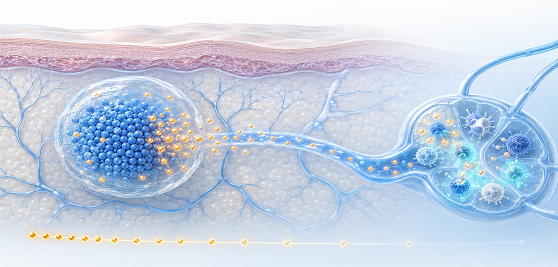
Long-Acting Injectable (LAI) Technology achieves this by forming a localized depot at the injection site from which antigen is released gradually over an extended period — typically one week to six months. The technology is compatible with diverse formulation architectures including liposomes, polymeric microspheres, emulsions, and nanoparticle-based carriers, and can be engineered to accommodate proteins, peptides, and small-molecule adjuvants while preserving their bioactivity.
From an immunological perspective, sustained antigen presentation offers distinct advantages over bolus immunization. Prolonged exposure of antigen to draining lymph nodes facilitates more extensive germinal center reactions, enhances somatic hypermutation, and supports the generation of high-affinity, class-switched antibodies. The landscape of injectable controlled-release systems for infectious disease and noted that sustained-release formulations can improve clinical outcomes not only by reducing dosing frequency but also by enhancing the quality of the adaptive immune response. For vaccine developers, LAI technology can transform multi-dose regimens into single-injection formats, improving patient compliance while potentially reducing healthcare system burden.
Abuse-Deterrent Formulation Technology — Securing High-Load Drug Delivery
While abuse-deterrent formulations (ADFs) are most commonly associated with opioid analgesics, the underlying formulation principles — physical and chemical barriers that resist tampering, extraction, and unintended routes of administration — have broader applicability in drug and vaccine delivery. The core challenge ADFs address is the ease with which conventional oral or injectable dosage forms can be manipulated to extract the active pharmaceutical ingredient for misuse. Tampering methods include crushing for inhalation, solvent extraction for intravenous injection, and thermal degradation to defeat controlled-release mechanisms.
Abuse-Deterrent Formulation (ADF) Technology employs a gel-based physical barrier strategy: the formulation matrix possesses a highly viscous or semi-solid structure capable of containing high concentrations of active compound while resisting physical manipulation. When subjected to common tampering methods — grinding, heating, or solvent extraction — the gel matrix retains its integrity, preventing dose dumping and making it substantially more difficult to isolate the active ingredient for alternative routes of administration.
Beyond its abuse-deterrent properties, the technology offers formulation advantages relevant to vaccine development, including high drug-loading capacity and near-zero-order release kinetics suitable for once- or twice-daily sustained delivery formats. A recent review of ADF technologies catalogued the spectrum of approaches — physical barriers, chemical barriers, agonist-antagonist combinations, and prodrug strategies — and highlighted the regulatory framework that increasingly incentivizes ADF development. For vaccine programs where controlled exposure of potent antigens or adjuvants is desirable, or where misuse risk is a consideration, ADF platforms provide an additional layer of control over product safety and release behavior.
Osmotic Pump-Based Release-Controlled Technology — Precision Delivery Kinetics
Among controlled-release technologies, osmotic pump-based systems occupy a unique position by offering zero-order (constant-rate) drug release that is largely independent of the physiological environment — pH, agitation, food intake, and enzymatic activity have minimal impact on release rate. This predictability stems from the fundamental driving force: the osmotic pressure gradient generated when water from the surrounding tissue is drawn across a semi-permeable membrane into a compartment containing an osmotic agent. The resulting volumetric expansion displaces the drug reservoir, expelling the payload through a precision-engineered orifice at a constant rate.
Pump® – Osmotic Pump based Release-Controlled Technology leverages this mechanism to deliver vaccines, drugs, and biologics at controlled rates for periods of up to six weeks. Unlike conventional bolus injections, which expose the immune system to a transient pulse of antigen followed by rapid clearance, osmotic pump delivery provides sustained, tunable antigen exposure. This has significant immunological implications: studies using implantable osmotic pumps for vaccine delivery have demonstrated that sustained antigen presentation can enhance germinal center formation, increase neutralizing antibody titers, and alter B-cell immunodominance hierarchies in ways that improve the breadth of antibody responses.
The technology does not require connection to external devices or repeated interventions, making it suitable for systemic as well as targeted delivery — catheters can direct output to specific tissues including the brain, vasculature, or solid organs. While osmotic pumps have historically been used primarily as research tools for probing the relationship between antigen kinetics and immune outcomes, their precision and programmability make them an attractive option for vaccine candidates where release kinetics are a critical determinant of efficacy. For preclinical development teams, integrating osmotic pump-based delivery into immunization studies can provide valuable mechanistic data on how release rate, duration, and profile shape the resulting immune response.
Integrating Formulation Technologies into Vaccine Development Programs
The technologies described above are not mutually exclusive — indeed, the most robust vaccine formulations often draw upon multiple platform capabilities in combination. A thermostable, high-concentration vaccine could be paired with a long-acting injectable depot to produce a single-dose, room-temperature-stable product suitable for mass vaccination campaigns in tropical climates. Similarly, osmotic pump delivery could be combined with abuse-deterrent matrix technology for vaccines containing controlled substances or potent adjuvants where diversion risk must be managed.
For academic research groups and biotech companies advancing novel vaccine candidates, navigating this formulation technology landscape can be challenging. Each technology imposes specific requirements on antigen compatibility, manufacturing process design, analytical characterization, and stability testing. Partnering with an experienced preclinical contract research organization (CRO) that offers integrated formulation development capabilities — spanning thermostability optimization, high-concentration formulation, controlled-release engineering, and comprehensive analytical characterization — can help research teams reduce technical risk, accelerate development timelines, and ensure that formulation strategies are aligned with the target product profile from the earliest stages of development.
Future Outlook
The next generation of vaccine products will increasingly be defined not only by the antigens they contain but by how those antigens are formulated and delivered. Regulatory agencies are placing growing emphasis on formulation robustness and stability as critical quality attributes, while global health organizations continue to advocate for thermostable, single-dose vaccine formats that can reach populations currently underserved by cold-chain-dependent products. These converging pressures make advanced formulation technologies a strategic priority, not merely an optional refinement, for vaccine development programs.
Emerging trends — including the application of machine learning to excipient screening, the development of stimuli-responsive materials for on-demand antigen release, and the integration of microneedle patch delivery with long-acting depot formulations — promise to further expand the formulation toolkit available to vaccine developers. As these technologies mature and become more accessible through specialized CRO partnerships, the gap between the vaccines we can design and the vaccines we can effectively deliver to the people who need them will continue to narrow.
Conclusion
Advanced formulation technologies are transforming the landscape of vaccine development, offering solutions to challenges that have historically constrained product stability, patient access, and immunological performance. From thermostabilization platforms that liberate vaccines from cold-chain dependence, to high-concentration technologies that enable dose-sparing and simplified administration, to long-acting and controlled-release systems that can convert multi-dose regimens into single-injection formats — each technology addresses a specific barrier to more effective and equitable vaccination.
For research teams developing next-generation vaccines, access to specialized formulation expertise can significantly accelerate program progression. Creative Biolabs offers comprehensive preclinical CRO services spanning the full range of vaccine formulation technologies discussed in this article, from early-stage feasibility assessment and prototype development through analytical characterization and stability evaluation. To learn more about how tailored formulation strategies can support your vaccine research objectives, contact our scientific team to discuss project-specific solutions.
FAQ
Q: Why is vaccine thermostability a critical challenge in global health?
A: An estimated 50% of vaccines produced globally lose potency due to temperature excursions during storage and transport. Maintaining the cold chain — a continuous refrigerated supply network from manufacture to point of administration — is costly and logistically complex, particularly in low-resource settings where reliable refrigeration infrastructure is limited. Technologies that enable room-temperature vaccine storage can dramatically reduce distribution costs and improve immunization coverage.
Q: What causes high viscosity in concentrated vaccine formulations?
A: As protein-based antigens are concentrated above approximately 100 mg per mL, increased molecular crowding promotes reversible protein-protein interactions — particularly between Fab regions — that form transient clusters. These clusters substantially increase solution viscosity, which can exceed the force limits of standard syringes and autoinjectors. Amino acid-based excipient strategies can mask surface interaction sites and reduce viscosity without compromising antigen stability.
Q: How do long-acting injectable formulations improve vaccine efficacy?
A: LAI formulations create a localized depot that releases antigen gradually over weeks to months, providing sustained antigen exposure to the immune system. Prolonged antigen presentation in draining lymph nodes supports more extensive germinal center reactions, enhances somatic hypermutation, and promotes the generation of high-affinity, class-switched antibodies — often yielding stronger and more durable immune responses than equivalent bolus immunization.
Q: What is the principle behind osmotic pump-based drug delivery?
A: Osmotic pumps use an osmotic pressure gradient as the driving force for drug release. Water from surrounding tissue is drawn across a semi-permeable membrane into a compartment containing an osmotic agent; the resulting volumetric expansion displaces the drug reservoir, expelling the payload at a constant (zero-order) rate. This release mechanism is largely independent of pH, agitation, and enzymatic activity, providing highly predictable delivery kinetics.
Q: How can partnering with a preclinical CRO support vaccine formulation development?
A: An experienced preclinical CRO can provide integrated formulation expertise — from excipient screening, stability optimization, and controlled-release engineering through analytical characterization and accelerated stability studies. Such partnerships can reduce technical risk, accelerate development timelines, and ensure that formulation strategies are aligned with the target product profile from early discovery stages.
References
- Michaelides, Kyprianos, et al. “Single administration vaccines: delivery challenges, in vivo performance, and translational considerations.” Expert Review of Vaccines 22.1 (2023): 579-595. https://doi.org/10.1080/14760584.2023.2229431