As antibody drugs continue to target complex membrane proteins and immunomodulatory targets, traditional antibody discovery methods based on recombinant proteins are facing challenges such as conformational distortion and loss of post-translational modifications. Many novel targets with clinical potential rely on natural transmembrane structures and spatial conformations, making them difficult to accurately represent through in vitro expression systems. In recent years, with the advancement of numerous first-in-human studies, a number of challenging membrane protein targets have gained significant attention.
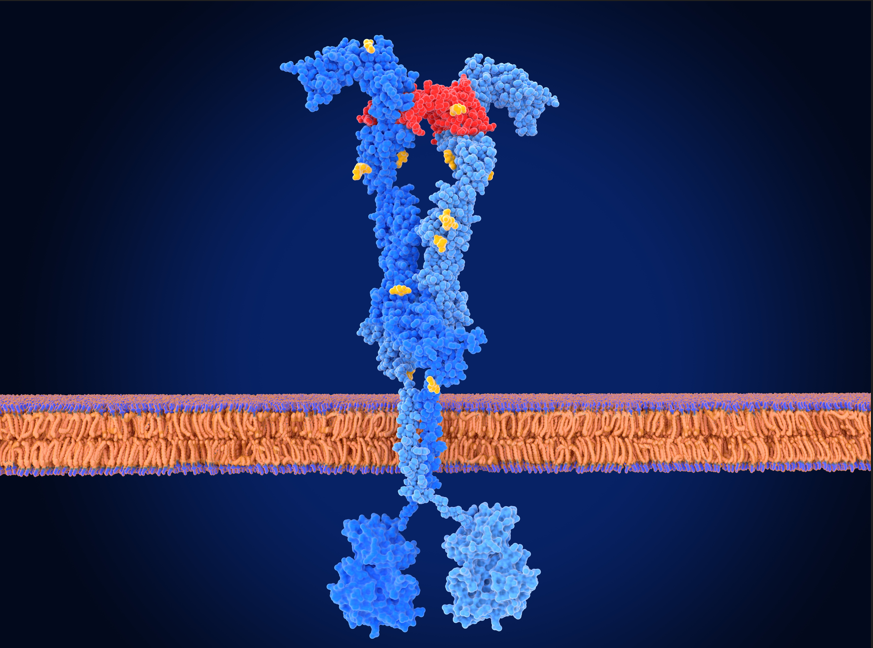
SEZ6 (Seizure-related homologous protein 6)
SEZ6 is a single-transmembrane cell membrane protein that is abnormally highly expressed in various solid tumors, particularly small cell lung cancer (SCLC), and is currently mainly classified as a tumor-associated antigen (TA).
The attention given to SEZ6 does not stem from a single basic research study, but rather from its systematic inclusion in the ADC target landscape. In the past two years, numerous reviews and industry analyses have explicitly summarized SEZ6 as a potential ADC target for SCLC, and first-in-human/early-stage clinical projects have already directly linked it to SEZ6.
Applications and Research Value:
- ADC/Immunotargeting conjugates
- Tumor-specific antibody screening
- Tumor antigen mRNA immunotherapy library preparation
DLK1 (Delta-like 1 homolog)
DLK1 is a membrane-associated protein structurally associated with Notch signaling pathway ligands and has long been considered closely related to tumor stemness and differentiation arrest. DLK1 was previously primarily used as a biomarker or prognostic molecule, but the real turning point came with the emergence of first-in-human studies of anti-DLK1 monoclonal antibodies in searchable literature starting in 2025. This signifies that DLK1 is shifting from a “mechanistic target” to a “clinically verifiable target.”
Applications and Research Value:
- Tumor stemness and drug resistance mechanisms
- Monoclonal antibody/ADC target exploration
- Rapid mRNA immunotherapy for immunogenicity verification
IGSF11 (Immunoglobulin Superfamily Member 11)
IGSF11 is a transmembrane protein of the immunoglobulin superfamily, involved in interactions between immune cells. In recent years, it has been included in discussions of the “next-generation immune checkpoint/immune regulatory axis.” A review specifically focusing on the immunoregulation of IGSF11 appeared in 2025, clearly discussing its pharmacological pathways and highlighting related antibody pipelines. This change signifies that IGSF11 has evolved from a “description of immune phenomena” to an “interventional immune node.”
Applications and Research Value:
- Novel Immune Checkpoint Antibodies
- Tumor Immune Microenvironment Regulation
- mRNA Immunotherapy for the Discovery of Transmembrane Immune Protein Antibodies
TNFR2 (Tumor Necrosis Factor Receptor 2)
TNFR2 is a type I transmembrane receptor, highly expressed in regulatory T cells (Tregs) and certain myeloid cells, and is a crucial node in the regulation of the immune microenvironment. Public information regarding TNFR2 agonist monoclonal antibodies entering first-in-human clinical trials is available by 2025, marking its formal transition from a long-discussed “concept target” to clinical validation.
Applications and Research Value:
- Immune activation/immune tolerance regulation
- Treg-targeted therapy strategies
- mRNA immunization for receptor conformation antibody screening
SLC39A8 (ZIP8)
SLC39A8 is a multitransmembrane metal ion transporter belonging to the SLC family. Its complex structure makes it extremely difficult to study using traditional protein research methods. In 2025, JCI reported an allosteric positive regulator of SLC39A8, a key case study demonstrating a shift from an “inhibition approach” to a “functional enhancement strategy” for this type of transporter, significantly increasing target attention.
Applications and Research Value:
- Transporter Function Regulation
- Discovery of Non-Traditional Membrane Protein Drugs
The emerging targets in 2025 share a highly consistent characteristic: they are membrane proteins, conformation-dependent, and strongly tied to clinical advancements or new drug formulations. Whether it’s ADCs, immune checkpoints, or transporter regulation, their success heavily depends on obtaining high-quality antibodies that recognize the native conformation.