In the current landscape of drug discovery, membrane protein targets remain the undisputed crown jewels. Whether it is G protein-coupled receptors (GPCRs), ion channels, or transporters, these proteins are inextricably linked to signal transduction, cellular communication, and the underlying mechanisms of complex diseases. Statistically, while over 60% of marketed small molecule drugs target membrane proteins, the field of antibody therapeutics has long struggled to keep pace. These targets are notoriously undruggable due to their high hydrophobicity, structural complexity, and absolute dependence on a lipid environment to maintain their native conformation. Recognizing these hurdles, Creative Biolabs offers a sophisticated suite of Membrane Protein Antibody Discovery Services, utilizing cutting-edge Nanodisc technology to bridge the gap between structural biology and therapeutic success.
The Hard Target Dilemma: Why Membrane Proteins Fail in Traditional Workflows
Membrane proteins typically collapse, lose their epitopes, or become functionally inactive once removed from their native phospholipid bilayer. This structural fragility directly impacts the two most critical stages of antibody development: Immunization and Screening.
- The Immunization Gap: If the antigen does not represent the live state of the protein in the cell, the immune system will generate antibodies against non-functional or misfolded epitopes.
- The Screening Hurdle: Traditional detergent-solubilized proteins often hide critical transmembrane or extracellular loops that are essential for signaling, leading to high-affinity binders that lack functional efficacy.
To solve this, researchers have turned to Nanodisc technology—a biomimetic lipid particle system that has evolved from a niche structural tool into a robust, replicable platform for high-end antibody engineering.
Defining the Nanodisc: A Bio-Mimetic Sanctuary
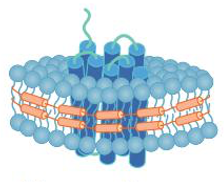
Nanodiscs are disc-shaped, lipid-bilayer systems held together by a scaffold or stabilizing agent. Their primary function is to provide a water-soluble environment that mimics the cell membrane’s lateral pressure and chemical composition, thereby preserving the protein’s native state.
The Evolution of Nanodisc Systems
Originally dependent on Membrane Scaffold Proteins (MSP) derived from apolipoprotein A-I, the Nanodisc library has expanded into diverse strategies:
- MSP-Nanodiscs: Highly stable, size-controllable (typically 9-17 nm), and well-characterized for structural studies.
- Synthetic Polymer-based Nanodiscs (SMA/DIBMA): These allow for detergent-free extraction of proteins directly from the cell membrane, keeping the native lipids intact.
- Peptide-based Nanodiscs: Offering flexibility and ease of assembly for smaller membrane fragments.
By providing a functionally unified but technologically diverse toolkit, Nanodiscs have become the universal solution for presenting multi-pass transmembrane targets in their most active forms.
Case Study: How APJ-Nanodiscs Propelled the Discovery of SdAb JN241-9
A recent landmark study published in Science Advances provides a definitive answer to whether Nanodiscs can truly shift the needle in antibody R&D. The research focused on the Apelin receptor (APJ), a Class A GPCR with high therapeutic potential for cardiovascular and metabolic diseases. Historically, APJ antibody development was stalled by the receptor’s conformational instability.
Nanodiscs as Superior Immunogens
The research team reconstituted thermo-stabilized human APJ into Nanodiscs. This APJ-Nanodisc complex was used directly to immunize alpacas to build a Single-Domain Antibody (sdAb) library.
The strategic impact was twofold:
- The immune system interacted with the full, multi-pass transmembrane architecture of the GPCR within a lipid context.
- The preservation of conformation-dependent epitopes ensured that the resulting sdAb clones recognized the active shape of the receptor, rather than just linear fragments.
Consistency: The Immunization-to-Screening Continuity
One of the most frequent causes of failure in antibody projects is the change of antigen format between the immunization phase and the phage display screening phase. In this study, the same APJ-Nanodisc format was used for both.
This consistency ensured that:
- Antibodies generated in vivo were highly compatible with the target used for in vitro
- Selection bias was steered toward clones that recognize the native, lipid-associated state of APJ.
- The gap between binding and functional activity was significantly narrowed.
The result? The discovery of JN241-9, a candidate molecule with potent agonist activity—a feat rarely achieved through traditional soluble protein immunization.
Core Services for Membrane Protein Antibody Discovery
For organizations looking to replicate these successes, Creative Biolabs provides a comprehensive infrastructure to handle the most challenging targets.
Table 1. Integrated Service Portfolio for Membrane Proteins
| Service Category | Key Offerings | Target Molecule Types |
| Antigen Preparation | Nanodisc Construction (MSP/SMA), Proteoliposomes, Virus-like Particles (VLPs) | GPCRs, Ion Channels, Transporters |
| Antibody Discovery | Phage Display, Yeast Display, Single B Cell Screening | SdAb, scFv, Fab, Full IgG |
| Protein Engineering | Affinity Maturation, Humanization, Bispecific Design | Therapeutic Candidates, Diagnostic Tools |
| Functional Validation | Ligand Competition Assays, Signaling Pathway Analysis (cAMP, Ca2+) | Agonists, Antagonists, NAMs, PAMs |
Why Nanodiscs are the Future of SdAb and Nano-Antibody Discovery
The synergy between Nanodisc technology and Single-Domain Antibody (sdAb) development is particularly noteworthy. SdAbs, due to their small size and unique paratopes (long CDR3 loops), are exceptionally good at reaching into the cryptic pockets of GPCRs or the pores of ion channels.
- Conformational Sensitivity: Nanodiscs lock these targets into specific states (e.g., active vs. inactive), allowing for the selection of antibodies that act as precise molecular switches.
- High-Throughput Compatibility: Nanodiscs are water-soluble and stable, making them ideal for automated Biopanning in phage display libraries.
- Enhanced Success for Hard-to-Target Multi-Pass Proteins: Unlike extracellular domain (ECD) fragments, Nanodiscs present the loops and transmembrane regions in their correct spatial orientation.
Decision Matrix: Nanodiscs vs. Multi-Fragment Proteins
While Nanodiscs offer superior structural fidelity, traditional methods like multi-fragment protein (truncated ECDs) expression still have a place in the industry. Choosing the right path depends on the project goals.
Table 2. Strategic Comparison of Immunogen Formats
| Feature | Nanodisc Strategy | Multi-Fragment Protein (ECD) |
| Structural Integrity | Excellent: Retains native 3D fold. | Variable: Often lacks conformational context. |
| Epitope Variety | Full range of loops and TM surfaces. | Limited to extracellular fragments. |
| Discovery Goal | Functional (Agonist/Antagonist) antibodies. | Simple binding/Detection antibodies. |
| Development Speed | Moderate (Requires precise reconstitution). | High: Rapid protein expression. |
| Success Rate | High for complex GPCRs/Ion channels. | High for simple receptors with large ECDs. |
Conclusion: Shaping the Next Generation of Therapeutics
The evolution of Nanodisc technology marks a turning point in our ability to tackle the most biologically significant but structurally daunting proteins in the human body. By preserving the delicate balance between the lipid environment and protein conformation, Nanodiscs allow us to discover antibodies—especially sdAbs—that were previously thought impossible to find.
At Creative Biolabs, we understand that every membrane protein project is a unique puzzle. Our goal is to provide the lipid-based solutions and screening expertise necessary to turn these unreachable targets into the therapies of tomorrow.
Related Recommendations & Further Reading
If you found this exploration of Nanodiscs insightful, you may be interested in our specialized platforms for other complex antigens:
- GPCR Antibody Discovery Platform: Deep-dive into our specific strategies for the Class A, B, and C GPCR families.
- Ion Channel Antibody Discovery: Learn how we overcome the challenges of voltage-gated and ligand-gated ion channels.
- Transporter Antibody Discovery: Learn how we raise superior anti-transporter antibodies using versatile approaches.
- Nanodisc based Membrane Protein Incorporation Services: Explore how we can tailor the lipid composition and scaffold size to your specific target protein.