B cell antibody technology is contributing to the production and discovery of therapeutic antibodies in a time-saving way. With years of experience and first-in-class technologies, Creative Biolabs has successfully established a special B cell sorting platform to offer global clients efficient strategies and fast single B cell antibody discovery services.
What is Single B Cell Antibody Technology?
The single B cell antibody technology is a novel approach that generates monoclonal antibodies (mAbs) from antigen-specific B cell or plasma cells. This rapid high throughput efficient strategy develops target antibodies by directly amplifying and expressing antibody genes in vitro from single B cells of the immunized host. Compared with traditional hybridoma technology and commonly used phage display, the single B cell antibody technology greatly shortens the lead-time of therapeutic antibodies, and importantly, enables the produced antibodies to possess high in vivo specificity and affinity, as well as natural heavy chain and light chain pairing. The advantages of single B cell technology-based antibody mainly including but not limited to:
-
Native paired heavy chain and light chain
-
In vivo affinity and specificity
-
The large pool of antibody candidates
-
Diverse species available
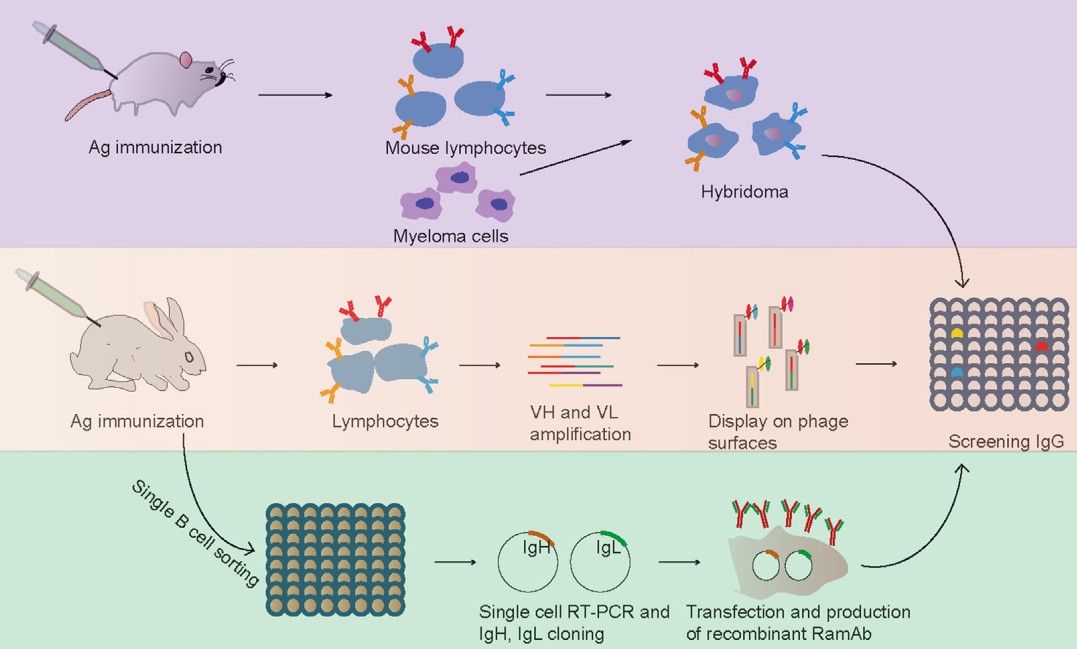 Fig.1 Scheme of the single B cell antibody technology. (Zhang, et al., 2017)
B Cell Antibody Generation
Expression Vector Construction
After sequence annotation, cloning PCR will be performed to amplify the heavy and light chain cDNA. Then the IgH and IgL amplicons are cloned into expression vectors to construct antibody expression vectors. Expression vectors play important roles in the qualities and levels of antibody expression. Alternatively, this also can be realized by constructing linear expression cassettes, which can be directly transfected into mammalian cells for antibody expression without cloning.
Antibody Production and Purification
To obtain high-quality antibodies on a large scale, it is necessary to express the constructed vectors carrying antibody genes in an appropriate expression system. There are a variety kinds of expression systems, such as commonly used bacterial systems or prokaryotic expression systems, reliable transient or stable mammalian cell systems, and recently cell-free expression systems. The expressed antibody purification can be conducted by affinity chromatography or ion-exchange chromatography.
Antibody Characterization
Antibody characterization is to determine the reactivity profile and biophysical characteristics of the produced antibody by testing in a series of assays, which extensively includes binding affinity measurement, specificity and immunogenicity test, post-translational modification mapping, and so forth. For those functional antibodies, a range of antibody functional assays are needed to further character and validate target antibodies, and for viral antibodies or other neutralizing antibodies, a neutralization test is necessary.
Creative Biolabs has extensive experience to offer a full range of custom antibody development services by single B cell technology to meet customers’ special and detailed requirements of the project. We try our best to assist our global clients in the various areas of antibody research. If you are interested, please contact us without hesitation.
Reference
-
Zhang, Zaibao, et al. "Advances in the isolation of specific monoclonal rabbit antibodies." Frontiers in Immunology 8 (2017): 494. Distributed under Open Access license CC BY 4.0, without modification.
For Research Use Only. Not For Clinical Use.
Related Sections:
ONLINE INQUIRY