ALK Cell Panel Screening Service
Introduction
Creative Biolabs, a pioneering leader in the biotechnology industry, extends its expertise in cell panel screening to explore the potential of Anaplastic Lymphoma Kinase (ALK) in cancer research and therapy. ALK is a receptor tyrosine kinase implicated in various malignancies, including non-small cell lung cancer (NSCLC), anaplastic large cell lymphoma (ALCL), inflammatory myofibroblastic tumors (IMT), and neuroblastoma. The therapeutic landscape for ALK-driven cancers has been rapidly evolving with the development of ALK inhibitors, highlighting the necessity for comprehensive screening services to advance therapeutic strategies.
Role of ALK for Immuno-Oncology
ALK's role in cancer extends beyond oncogenesis; it is increasingly recognized as a key player in immune evasion and modulation of the immune response. Recent discoveries have indicated ALK's involvement in pathways that suppress the immune system, including the upregulation of programmed death-ligand 1 (PD-L1) through the STAT3 signaling pathway. This makes ALK a critical target for immunotherapy strategies, such as CAR-T cell therapy and checkpoint inhibitors aimed at reactivating immune surveillance in ALK-positive cancers. Studies have shown enhanced efficacy when combining ALK inhibition with PD-1/PD-L1 blockades, suggesting a promising horizon for immuno-oncology treatments targeting ALK.
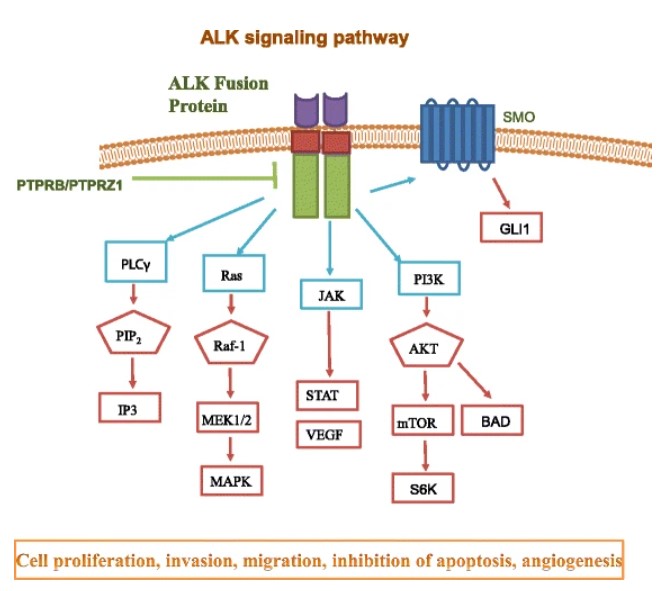 Fig.1 Signaling pathway of ALK target.1
Our ALK Cell Panel Screening Service
At Creative Biolabs, we deliver cutting-edge ALK cell panel screening services that empower researchers and clinicians to uncover critical insights into ALK-driven cancers. Our comprehensive screening panels incorporate a wide array of cancer cell lines harboring ALK fusions, mutations, and amplifications. This service is tailored to facilitate drug discovery processes, therapeutic target validation, and the exploration of secondary resistance mechanisms against ALK inhibitors.
Service Details
Our ALK cell panel screening encompasses a multi-tier approach that involves high-throughput screening platforms and sophisticated bioinformatics analyses. The screening utilizes dependable models and state-of-the-art technologies to ensure the detection of complex ALK interactions and dependencies. Key approaches include:
Cell Viability Assays: Leveraging luminescent cell viability assays to quantify cellular responses to treatments.
Phenotypic Profiling: Mapping the phenotypic spectrum of ALK-driven cell lines, offering insight into cell morphology and survival pathways under therapeutic pressure.
Genomic Characterization: Integrating genomic data to correlate mutation status and expression patterns with phenotypic outcomes.
Partner with Us
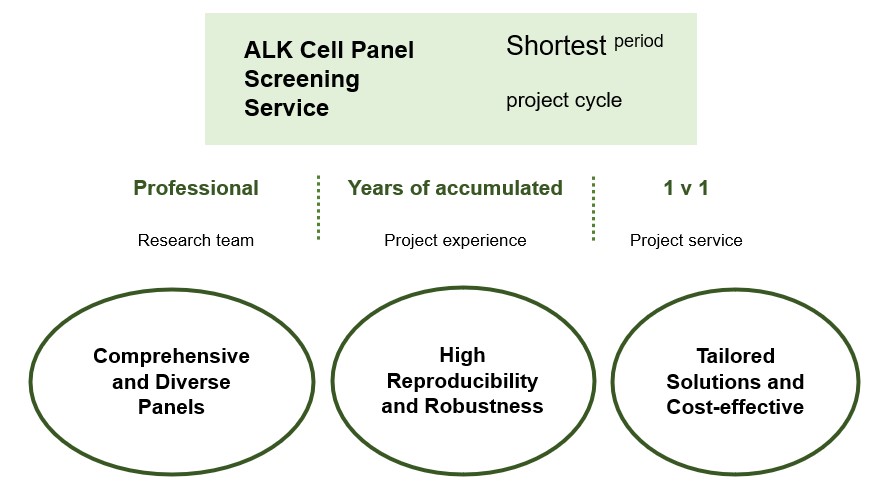
Creative Biolabs' service is distinguished by its numerous advantages designed to enhance research efficacy:
Frequently Asked Questions
Q1: How do ALK inhibitors enhance immunotherapy outcomes?
A1: By targeting ALK-mediated immune evasion pathways, such as PD-L1 upregulation, ALK inhibitors can synergistically improve the efficacy of immunotherapies, reactivating immune defenses against tumor cells.
Q2: What are the implications of ALK research in drug development?
A2: Comprehensive understanding of ALK's role in cancer and immunity guides the development of next-generation therapies, promising improved patient outcomes and reduced resistance rates.
Q3: Can the screening services adapt to specific research projects?
A3: Yes, we offer customizable protocols that align precisely with unique research objectives, ensuring relevance and specificity in the data obtained.
Creative Biolabs remains committed to advancing cancer research through its innovative ALK Cell Panel Screening Services, propelling the development of targeted therapeutics and enhancing understanding of cancer biology.
Reference
- Della Corte, Carminia Maria, et al. "Role and targeting of anaplastic lymphoma kinase in cancer." Molecular cancer 17 (2018): 1-9. Distributed under Open Access License CC BY 4.0, without modification.
 Download our brochure