BaF3 Kinase Receptor Cell Panel Screening Service
Creative Biolabs offers a cutting-edge BaF3 Kinase Receptor Cell Panel Screening Service designed to facilitate the development of therapeutic antibodies and proteins. By harnessing our proprietary Ba/F3 kinase receptor cell lines, we provide a robust platform for assessing kinase activity, evaluating potential therapeutics, and guiding the early-stage development of novel treatments.
BaF3 Cell Line: A Tool for Kinase Drug Discovery
The BaF3 cell line is a critical tool in the analysis of kinase inhibitor selectivity, widely utilized in molecular biology and pharmaceutical research. Originally derived from murine pro-B cells, BaF3 cells are known for their dependence on interleukin-3 (IL-3) for survival and proliferation. These cells can be genetically engineered to express specific kinases or mutations, enabling them to proliferate in an IL-3-independent and kinase-dependent manner. This makes BaF3 cells a valuable tool for studying kinase activity and evaluating oncogene inhibitors.
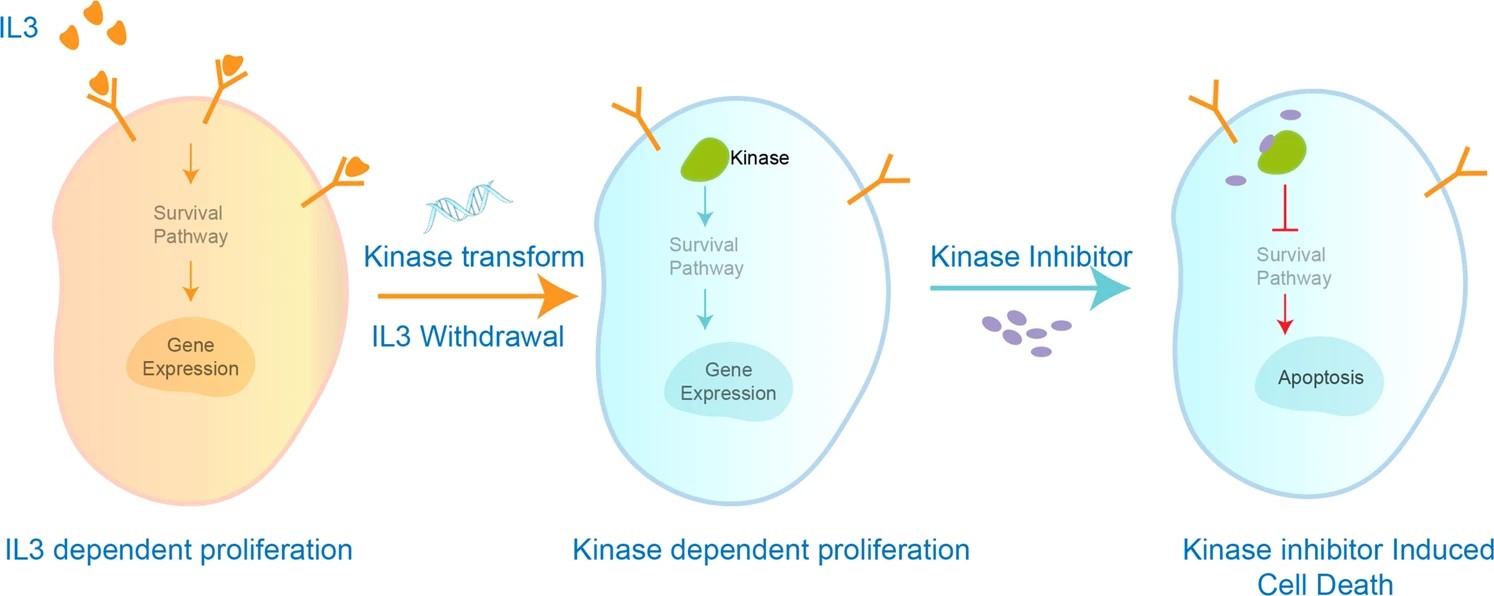 Fig.1 Kinase-engineered BaF3 kinase cells.1
At Creative Biolabs, our BaF3 kinase receptor cell panel takes this concept further, offering a diverse and robust panel to evaluate kinase activity across various genetic contexts. This makes it an invaluable resource for identifying kinase inhibitors that can target specific cancerous mutations or signaling pathways.
Our Ba/F3 Kinase Cell Panels
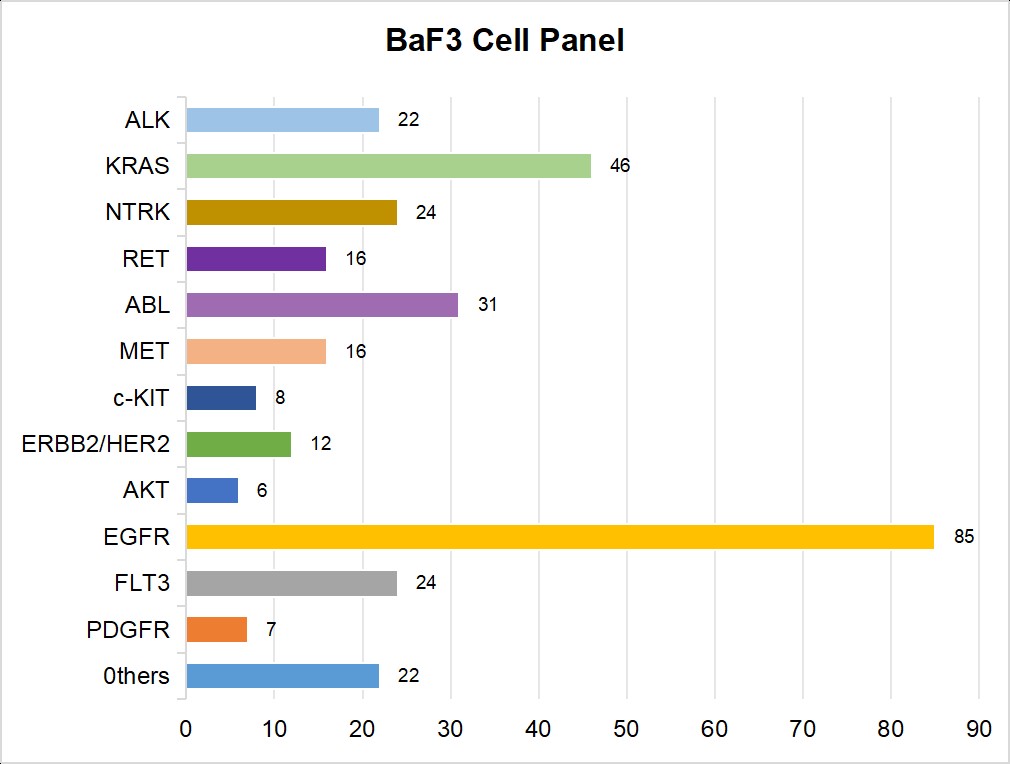
At Creative Biolabs, we offer the most comprehensive BaF3 kinase receptor cell panel screening services available. We have a robust library of over 300 kinase-overexpressing BaF3 cell lines covering a broad spectrum of kinase targets and mutations that are crucial in oncology. This diversity allows for extensive off-target screening and precise determination of kinase inhibitor specificity, addressing both the potency and selectivity of therapeutic candidates. By conducting cell proliferation assays, we offer a comprehensive analysis on how potential drug candidates influence cancer cell growth through kinase inhibition.
Our Ba/F3 kinase cell panels are invaluable for multiple applications in therapeutic development:
- Assessing the efficacy and selectivity of novel kinase inhibitors
- Assessing resistance mechanisms
- Identifying novel therapeutic targets and the development of innovative treatment strategies
- Exploring signaling pathways involved in disease progression and treatment response
Features of Our Services
- Diverse Kinase Coverage: With over 300 kinase variants, our panel covers an extensive range of mutations and targets, from EGFR and KRAS mutations to emerging targets in cancer therapy. This diversity is critical for comprehensive off-target screening and specificity testing.
- High Sensitivity and Specificity: Our engineered Ba/F3 cells are designed to exhibit high sensitivity to receptor activation, ensuring that even subtle changes in kinase activity are detected. This sensitivity allows for more accurate and reliable data, enhancing the development of high-quality therapeutics.
- High Throughput Screening: With more than 300 cell lines available, our platform supports high-throughput screening, allowing for simultaneous evaluation of multiple candidates or conditions. This capability significantly accelerates the drug discovery timeline, leading to faster, data-backed decision-making processes.
Why Choose Us
- Proprietary BaF3 cell engineering platform enables sensitive and selective kinase inhibitor screening.
- High assay sensitivity and specificity ensure reliable evaluation of therapeutic candidates.
- Extensive panel of 300+ kinase variants covers critical targets and mutations across oncology.
- Supports diverse applications including efficacy profiling, resistance mechanism analysis, and target validation.
- Robust, data-driven results accelerate early-stage drug discovery with confidence.
Contact us today to learn more about how our BaF3 kinase receptor cell panel screening service can elevate your therapeutic antibody and protein development efforts.
Reference
- Wang, Beilei, et al. "An overview of kinase downregulators and recent advances in discovery approaches." Signal Transduction and Targeted Therapy 6.1 (2021): 423. Distributed under Open Access license CC BY 4.0, without modification.
 Download our brochure