Diet-Induced Obesity (DIO) Mouse Model for In Vivo Metabolism Study
Introduction
Obesity, a global public health concern, results from an imbalance of food intake, basal metabolism, and energy expenditure. While multiple factors can contribute to obesity at an individual level, a combination of excessive caloric intake and the availability of energy-dense meals is often the primary cause. Consequently, the prevalence of obesity has escalated, necessitating comprehensive studies to understand its complicated mechanisms and related metabolic disorders.
At Creative Biolabs, we employ the Diet-Induced Obesity (DIO) Mouse Model, a robust and reliable method to study obesity and related metabolic conditions. This endorsed model provides replicable insights into the onset and progression of obesity, offering valuable data for potential therapeutic interventions.
Diet-Induced Obesity (DIO) Mouse Model for In Vivo Metabolism Study
Methodology and Model Description
The Diet-Induced Obesity (DIO) model involves feeding mice a high-fat or high-density diet to induce obesity. Typically, strains such as C57BL/6J are preferred due to their sensitivity to high-fat diets and their pronounced metabolic responses akin to human obesity. This model allows for an in-depth analysis of obesity, hyperinsulinemia, hyperglycemia, hypertension, and other metabolic dysregulations.
Studies highlight that after roughly 16-20 weeks of high-fat diet feeding, DIO mice exhibit significant increases in body weight (20-30%) compared to those on standard chow diets. These models also develop hyperglycemia within 4 weeks and pronounced insulin resistance, mimicking the stages of human obesity development.
Advantages of the DIO Model
One indispensable advantage of the DIO model is its ability to mimic human obesity's metabolic derangements more accurately than genetic models. The model's versatility allows researchers to study the interplay between dietary components and genetic predispositions, shedding light on critical mechanisms regulating obesity and its associated comorbidities.
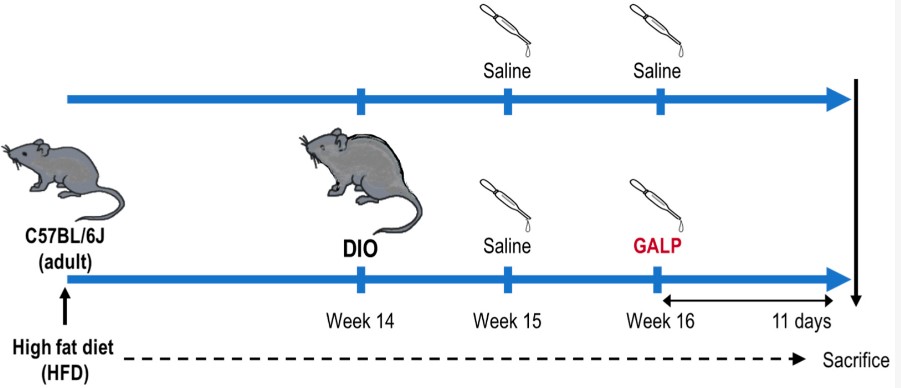 Fig.1 Experimental design of intranasal galanin-like peptide (GALP) study in diet-induced obese (DIO) mice.1, 2
Our Specific Services
At Creative Biolabs, we offer comprehensive services leveraging the DIO Mouse Model to study obesity and related metabolic disorders. Our state-of-the-art facilities and experienced team ensure precise implementation and monitoring of diet-induced obesity experiments.
Our services include:
- Protocol Development: Customizable dietary regimens tailored to specific experimental needs.
- Comprehensive Phenotyping: Thorough analysis of body weight, fat distribution (subcutaneous, visceral, and ectopic), and metabolic markers.
- Inflammation and Hormonal Profiling: Detailed assessment of inflammatory cytokines, hormone concentrations (including leptin, and insulin), blood glycemia, and lipid profiles.
- Advanced Analytical Techniques: Utilization of hyperinsulinemic-euglycemic clamps, glucose tolerance tests, and molecular assays to evaluate insulin sensitivity and other metabolic parameters.
Highlights of Diet-Induced Obesity (DIO) Mouse Model
Metabolic Insights
The model aids in understanding the role of key signaling pathways like Akt and mTOR, which are crucial in regulating cell growth and metabolism in response to dietary intake.
Versatility and Customization
The model's flexibility allows for the exploration of various dietary compositions and genetic backgrounds, providing comprehensive insights into diet-induced obesity.
Phenotypic Relevance
The DIO model exhibits phenotypes closely aligned with human obesity, such as adipocyte hyperplasia, increased fat mass, hyperglycemia, and hypertension.
Frequently Asked Questions
Q1: What makes the DIO model more relevant than other obesity models?
A: The DIO model more accurately reflects common human obesity etiology—dietary excesses and low physical activity - compared to genetic or surgical models.
Q2: How do DIO mice contribute to understanding metabolic diseases?
A2: DIO mice exhibit metabolic syndromes similar to humans, such as hyperglycemia and insulin resistance, providing insights into disease mechanisms and potential therapeutic targets.
Creative Biolabs leverages the Diet-Induced Obesity Mouse Model to offer comprehensive and precise insights into obesity and metabolic disorders. Our advanced methodologies, extensive expertise, and commitment to scientific excellence ensure impactful contributions to obesity research and potential therapeutic innovations.
References
- Takenoya, Fumiko, et al. "Transcriptomic (DNA Microarray) and Metabolome (LC-TOF-MS) Analyses of the Liver in High-Fat Diet Mice after Intranasal Administration of GALP (Galanin-like Peptide)." International Journal of Molecular Sciences 24.21 (2023): 15825.
- Under Open Access License CC BY 4.0, without modification.
 Download our brochure