EGFR Panel Screening Service
Targeting the epidermal growth factor receptor (EGFR), a crucial protein involved in cell signaling pathways that control cell growth, survival, and differentiation, our EGFR Panel Screening Service is made to offer thorough and trustworthy screening of substances. By offering a customizable and high-throughput screening platform, we help researchers identify potential EGFR inhibitors that can modulate EGFR signaling, contributing to the development of more effective cancer therapies.
EGFR Overview
One transmembrane receptor tyrosine kinase (RTK) that is essential for controlling cell division, survival, and differentiation is called EGFR. When EGFR binds to its ligands, like epidermal growth factor (EGF), it dimerizes, which activates its intrinsic kinase activity. This results in downstream signaling cascades, including the MAPK/ERK and PI3K/AKT pathways, which regulate critical cellular processes such as cell proliferation, migration, and survival.
Overexpression or mutations in EGFR are commonly observed in several cancer types, particularly NSCLC, breast cancer, and glioblastoma, making EGFR a prime target for cancer therapy. Tyrosine kinase inhibitors (TKIs) and monoclonal antibodies are examples of small molecule inhibitors that are used to block EGFR signaling and stop tumor growth. Our EGFR Panel Screening Service enables the screening of compounds against EGFR, providing valuable insights into their potential as cancer therapeutics.
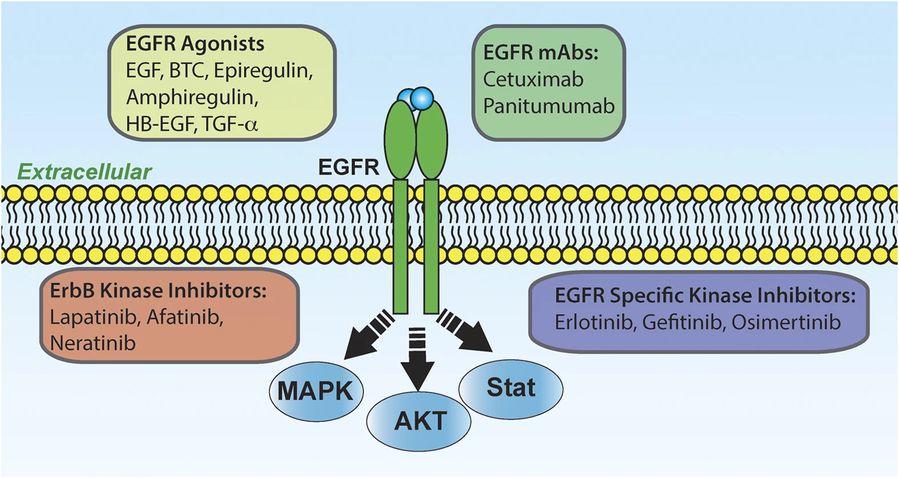 Fig.1 A schematic representation of EGFR signaling.1
EGFR Panel Screening Service at Creative Biolabs
We offer:
- EGFR Activity Assays: These assays measure the kinase activity of EGFR in the presence of its natural substrates. They help evaluate how compounds may affect EGFR's ability to phosphorylate downstream targets, providing insight into potential inhibitory effects.
- EGFR Inhibition Assays: Designed to assess the ability of small molecules, monoclonal antibodies, or biologics to block EGFR signaling, these assays measure the degree of inhibition across a range of concentrations.
- Phosphorylation Assays: To evaluate how compounds influence EGFR-mediated signal transduction, we assess the phosphorylation levels of key downstream targets like AKT, ERK, and STAT3.
- Mutant EGFR Screening: Given the importance of EGFR mutations (e.g., T790M, L858R) in drug resistance, our service includes assays to evaluate the effect of compounds on mutant EGFR forms commonly found in resistant cancer strains.
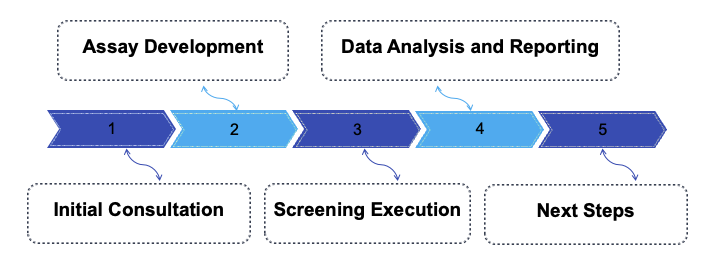
Service process:
Service Applications
- Cancer Drug Discovery: Identifying small molecules, biologics, and monoclonal antibodies that can inhibit EGFR signaling and stop the growth of EGFR-dependent tumors.
- Resistance Mechanism Exploration: Understanding how mutations in EGFR (such as T790M or L858R) contribute to resistance to first-line EGFR inhibitors and identifying novel compounds that overcome resistance.
- Combination Therapy Development: Screening for compounds that could be used in combination with existing EGFR inhibitors to enhance their efficacy and overcome resistance.
- Biomarker Identification: Using phosphorylation assays to identify biomarkers that predict response to EGFR-targeted therapies.
Frequently Asked Questions
A1: Which EGFR isoforms do you screen?
Q1: We offer assays for wild-type EGFR as well as common mutant forms (e.g., T790M, L858R, exon 19 deletions), enabling comprehensive screening for both sensitive and resistant cancer strains.
A2: Can you screen my compound library?
Q2: Yes, our service is ideal for screening large compound libraries, including small molecules, peptides, monoclonal antibodies, and biologics against the EGFR target.
A3: What type of assays are included in the screening service?
Q3: We provide activity assays, inhibition assays, and phosphorylation assays. These can be tailored to specific EGFR mutants or experimental conditions.
Contact Us
We are dedicated to giving you individualized assistance and details about our EGFR Panel Screening Service. For inquiries related to test availability, sample collection, or interpretation of results, please reach out to our dedicated team of experts who are here to assist you. Your health and satisfaction are our top priorities. We look forward to assisting you on your journey to understanding your EGFR status and the available treatment options.
Reference
- Ali, Remah, and Michael K Wendt. "The paradoxical functions of EGFR during breast cancer progression." Signal transduction and targeted therapy vol. 2 (2017): 16042–. Distributed under Open Access license CC BY 4.0, without modification.
 Download our brochure