FLT3 Cell Panel Screening Service
FLT3 and FLT3-Targeted Therapy
FLT3 is a receptor tyrosine kinase that plays a pivotal role in hematopoiesis, particularly in the development and survival of hematopoietic stem and progenitor cells. Mutations in FLT3, such as the internal tandem duplication (ITD) and point mutations in the tyrosine kinase domain (TKD), occur in approximately 30% of AML cases. These mutations lead to constitutive activation of FLT3, promoting uncontrolled cell proliferation and survival. The identification of FLT3 mutations has opened new avenues for targeted therapy in AML, with several small molecule FLT3 inhibitors developed to date.
Despite the initial success of FLT3 inhibitors in clinical trials, challenges such as limited potency and drug resistance have highlighted the need for advanced screening techniques. Next-generation FLT3 inhibitors, capable of overcoming these limitations, are urgently needed to improve patient outcomes. At Creative Biolabs, we have established a robust FLT3 cell panel screening service to address these challenges.
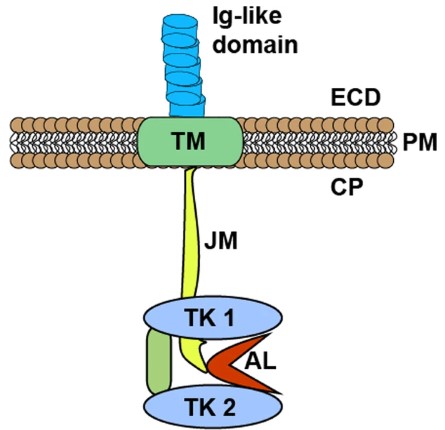 Fig.1 Schematic of monomeric FLT3 structure.1,3
FLT3 Cell Panel Screening Service
Our FLT3 cell panel screening service is a comprehensive approach to evaluate the efficacy and specificity of FLT3-targeted therapies. Utilizing a panel of AML cell lines harboring various FLT3 mutations, we provide detailed insights into drug activity, resistance mechanisms, and potential combination strategies. Our service is designed to support drug discovery efforts and streamline the development of next-generation FLT3 inhibitors.
Services Content
Our cell panel screening involves a series of advanced assays, such as the following items:
- Biochemical kinase assays to assess FLT3 inhibitory activity.
- Proliferation assays using FLT3-ITD and TKD mutant cell lines to evaluate anti-leukemic efficacy.
- Apoptosis assays to determine the impact on cell survival.
- Pharmacokinetic and pharmacodynamic studies to ensure drug stability and sustained activity.
Scientific Backing
Several researches and validation studies has showed the pivotal role of FLT3 mutations in AML pathogenesis and the therapeutic potential of FLT3 inhibitors, antibodies using cell-based panel screening. In this study, the researchers tested the potential role of FLT3 antibodies by conducting experiments based on the leukemia tumor cell line models, elucidating the related mechanisms and therapy response.
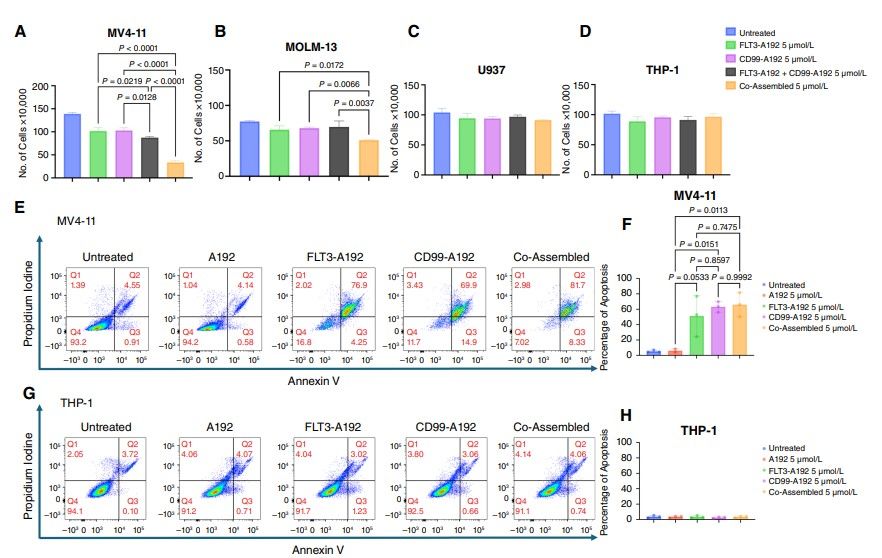 Fig.2 FLT3 antibody induce apoptosis and cell death using cell-based assays.2,3
Frequently Asked Questions
Q1: How does your service help in overcoming resistance in FLT3-inhibitors?
A1: By providing insights into mutation-specific resistance mechanisms and offering combination screening options, we guide the development of more refined therapeutic strategies.
Q2: Can the service be customized for specific research needs?
A2: Yes, our flexible approach allows customization of cell line selection and assay parameters to align with specific research goals.
Benefits for You
- Precision and Reliability: Our assays are meticulously designed to provide high-resolution data on FLT3 inhibitor performance.
- Comprehensive Analysis: We offer a full spectrum of testing capabilities, from initial screening to in-depth mechanistic studies.
- Expertise and Innovation: Our team of experienced scientists drives continuous innovation to enhance screening capabilities and therapeutic outcomes.
Creative Biolabs' FLT3 cell panel screening service represents a pivotal resource in the advancement of targeted therapy for AML, supporting the development of more effective and durable treatments for patients worldwide.
References
- Gebru, Melat T., and Hong-Gang Wang. "Therapeutic targeting of FLT3 and associated drug resistance in acute myeloid leukemia." Journal of Hematology & Oncology 13.1 (2020): 155.
- Ali, Atham, et al. "FLT3/CD99 Bispecific Antibody–Based Nanoparticles for Acute Myeloid Leukemia." Cancer Research Communications 4.8 (2024): 1946-1962.
- Distributed under Open Access License CC BY 4.0, without modification.
 Download our brochure