MET Cell Panel Screening Service
Introduction to MET and MET-Targeted Therapy
The MET proto-oncogene encodes the receptor tyrosine kinase, c-MET, a crucial player in cell signaling pathways that govern cellular processes including growth, survival, and division. Aberrant MET signaling has been implicated in a variety of cancers, promoting tumor growth and metastasis. Since MET amplification or overexpression can lead to aggressive tumor behavior, making it a promising target for therapeutic intervention.
MET-targeted therapies, including monoclonal antibodies and inhibitors, have been developed to inhibit aberrant MET signaling pathway. These therapies aim to block the ligand-dependent and independent pathways of MET activation, thus potentially controlling tumor progression. However, identifying the right candidates for MET-targeted therapies requires precise and accurate screening methods to characterize MET-driven tumors.
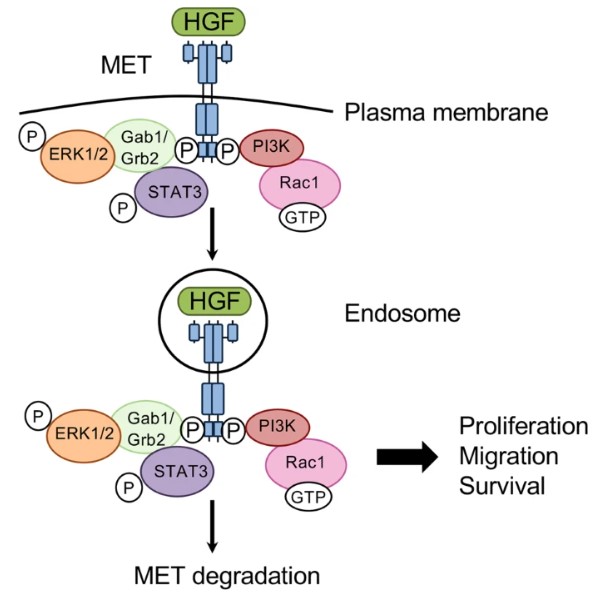 Fig.1 MET signal pathway.1,3
MET Cell Panel Screening Assays
At Creative Biolabs, MET cell panel screening assays are a central component of our precision oncology services. These assays are designed to assess the efficacy of MET-targeted therapies across different cancer cell lines. By utilizing a broad spectrum of cell lines, including those with known MET amplification or overexpression, these assays provide critical insights into the potential efficacy of therapeutic candidates.
The MET cell panel screening involves detailed profiling of cancer cell lines to assess their sensitivity to MET inhibitors. This involves measuring key indicators such as cell viability, proliferation rates, and signal transduction changes in response to MET-targeted treatments. Technologies such as high-content imaging, flow cytometry are used to capture these dynamics accurately.
Service Contents
Creative Biolabs offers comprehensive services for MET cell panel screening. Our offerings include:
Profiling MET-Driven Tumors:
Using advanced bioinformatics and comprehensive cell line panels, we characterize the dependency of tumors on MET signaling pathways.
Customized Screening Solutions:
Tailored assays are developed to meet the specific needs of different therapeutic candidates, ensuring precise targeting and evaluation.
Data Analysis and Interpretation:
In-depth analysis of assay results provides actionable insights, facilitating effective decision-making in drug development processes.
Technology and Platform Features
Our MET cell panel screening services are supported by state-of-the-art technological platforms. These include:
High-Throughput Screening:
Capable of processing large volumes of samples quickly, ensuring rapid turnaround times for assay results.
Advanced Imaging Systems:
Utilize high-resolution imaging to observe cellular responses in real-time, capturing critical data on treatment impacts.
Robust Bioinformatics Support:
Sophisticated data analytics tools to process complex datasets and extract meaningful patterns related to MET pathway activities.
Potential Applications of MET Cell Panel Screening
The applications of MET cell panel screening assays are vast and critical in the field of oncology:
- Drug Development: These assays assist in the identification of efficacious MET inhibitors, accelerating the transition from research to clinical trials.
- Personalized Medicine: By precisely targeting MET-driven tumors, treatments can be personalized to individual patients more effectively, improving efficacy and minimizing side effects.
- Research and Academia: Provides invaluable tools and methodologies for academic research, aiding in the understanding of MET's role in cancer biology.
Scientific Backing
| Summary | Academic studies highlight the development of various cell-based assays for MET target as a crucial part of drug discovery. These assays are utilized to assess the efficacy and safety of compounds by studying cellular interactions, proliferation, and signaling pathways. The piece emphasizes the adaptability of these assays to suit specific research needs, from high-throughput screening to the employment of complex in vitro co-culture systems for a realistic representation of target tissue environments. It also stresses the essential role of comprehensive phenotypic screening for better biomarker discovery and disease modeling, crucial for informing drug development strategies. |
| Result: |
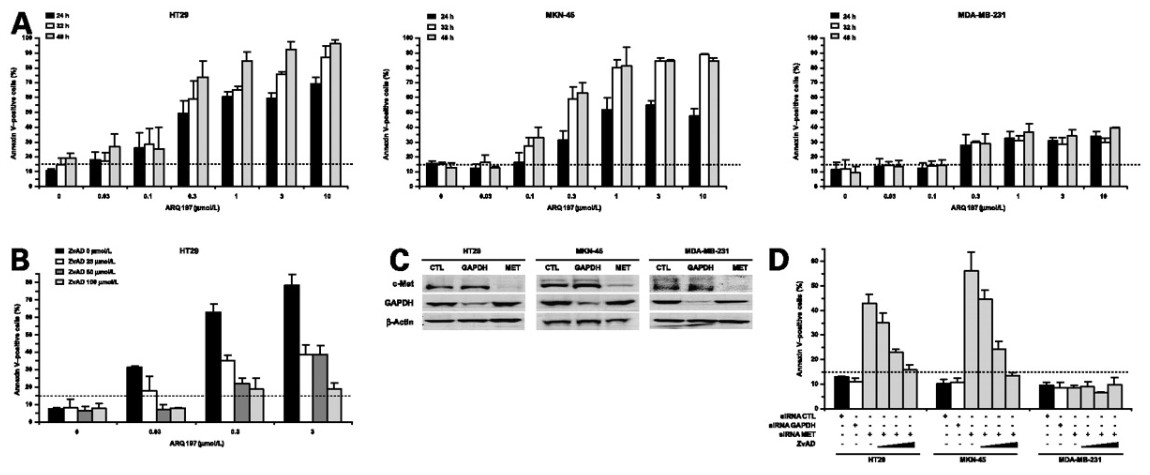 Fig.2 Effect of human c-Met inhibitor on apoptosis of human cancer cells.2,3 |
Frequently Asked Questions
Q1: What is the significance of MET in cancer therapy?
A1: MET is a crucial component of oncogenesis in various cancers due to its role in cell signaling pathways that regulate key processes like growth and survival. Targeting MET provides therapeutic opportunities to interrupt these pathways and control tumor progression.
Q2: What are the criteria for selecting cell lines for MET panel assays?
A2: Our selection criteria are based on the genetic background of the cells, specifically MET expression levels, and the presence of relevant mutations or amplifications. This ensures the choice of models that best represent the clinical scenarios being studied.
Creative Biolabs remains at the forefront of MET research, offering unparalleled expertise and innovative solutions in cancer therapeutics development. Our comprehensive MET cell panel screening services are designed to yield transformative insights that empower cancer researchers worldwide.
References
- Wood, Georgina E., et al. "The role of MET in chemotherapy resistance." Oncogene 40.11 (2021): 1927-1941.
- Munshi, Neru, et al. "ARQ 197, a novel and selective inhibitor of the human c-Met receptor tyrosine kinase with antitumor activity." Molecular cancer therapeutics 9.6 (2010): 1544-1553.
- Distributed under Open Access License CC BY 4.0, without modification.
 Download our brochure