Werner Syndrome ATP-dependent Helicase (WRN) Panel Screening Service
Introduction: WRN – A Sentinel of Genomic Integrity and a Key to Understanding Progeria and Cancer
The Werner Syndrome ATP-dependent Helicase (WRN) gene is a cornerstone of genomic stability, encoding a remarkable protein characterized by its dual enzymatic functionalities: a 3'-5' DNA helicase and a 3'-5' exonuclease. Inactivation or functional impairment of WRN, whether through inherited mutations or somatic alterations, directly contributes to chromosomal instability, a pervasive hallmark of numerous malignancies. At Creative Biolabs, our extensive two-decade legacy in biological diagnostics has fostered a deep and nuanced understanding of these intricate molecular pathways, underpinning our development of advanced diagnostic and prognostic tools that translate complex genomic science into actionable clinical insights.
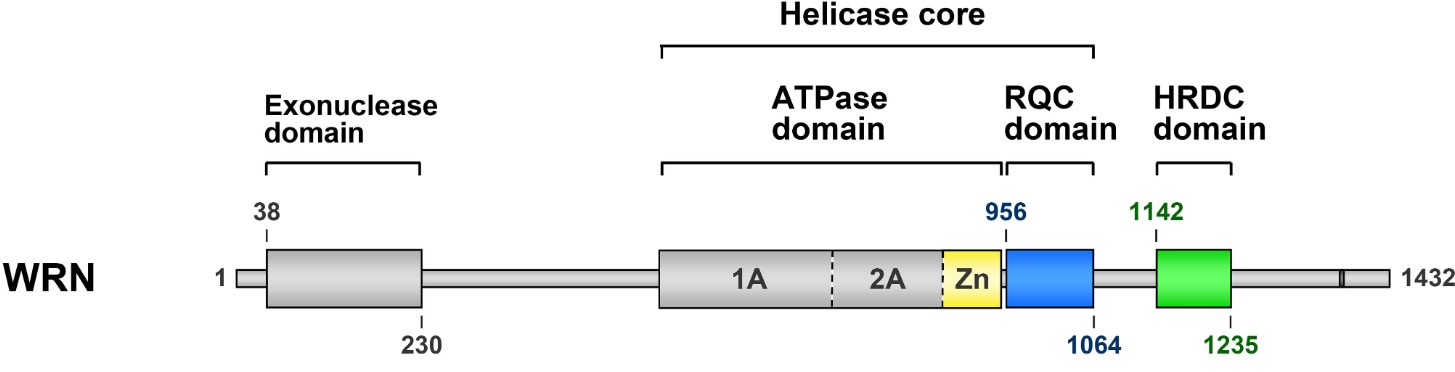 Fig.1 Domain diagrams of human WRN.1
Our Werner Syndrome ATP-dependent Helicase (WRN) Panel Screening Service
Creative Biolabs, with over 20 years of dedicated experience at the forefront of biological diagnostics, proudly offers a state-of-the-art Werner Syndrome ATP-dependent Helicase (WRN) Panel Screening Service. This specialized genetic test has been meticulously designed to accurately detect pathogenic mutations and clinically significant copy number variations within the WRN gene. Our service stands as a cornerstone for precision diagnostics, providing invaluable insights for the definitive diagnosis of Werner Syndrome, comprehensive genetic risk assessment for at-risk individuals and their families, and a deeper, more granular understanding of cancer predisposition.
This advanced screening service embodies Creative Biolabs' unwavering commitment to leveraging cutting-edge genomic technologies to deliver actionable information to clinicians and patients. By precisely identifying specific genetic alterations in WRN, we empower healthcare providers and individuals with the critical knowledge necessary to make highly informed decisions regarding medical management, the implementation of proactive surveillance strategies for age-related complications and cancers, and, in certain oncological contexts, the exploration of potential therapeutic avenues that exploit the unique vulnerabilities conferred by WRN status. Our robust methodology, coupled with the rigorous analysis performed by our expert team, ensures that the results are not only of the highest accuracy but also possess profound clinical meaningfulness, thereby reflecting Creative Biolabs' enduring legacy of excellence and innovation in biological diagnostics.
Service Content
Our WRN Panel Screening Service employs a multi-faceted and integrated approach to ensure a thorough and accurate assessment of the WRN gene's integrity and function. Our comprehensive analysis includes:
High-Resolution Gene Sequencing for Variant Detection
This core component involves the meticulous analysis of the entire coding region and critical splice sites of the WRN gene. Leveraging advanced next-generation sequencing technologies, we achieve an unparalleled level of resolution to precisely identify:
- Point Mutations: Single nucleotide changes (e.g., missense, nonsense, silent mutations) that can alter protein structure, function, or expression.
- Small Insertions and Deletions (Indels): Minor additions or removals of DNA bases that can lead to frameshift mutations, premature stop codons, or altered splicing, significantly impacting the integrity and functionality of the WRN protein.
This detailed sequencing ensures the robust detection of even subtle genetic alterations that may underpin Werner Syndrome or contribute to an elevated cancer risk.
Copy Number Variation Analysis for Structural Integrity
Beyond sequence-level changes, larger genomic rearrangements can profoundly disrupt WRN gene function. Our service incorporates sophisticated Copy Number Variation (CNV) analysis to detect significant structural alterations, including:
- Deletions: The absence of entire exons or larger segments of the WRN gene, leading to loss of genetic material.
- Duplications: The presence of extra copies of exons or gene segments, which can result in altered gene dosage.
- CNVs can significantly impact gene dosage and protein production, and their accurate detection is critical for a complete genetic diagnosis, especially given that these larger structural variants might be overlooked by standard sequencing methodologies alone. The seamless integration of CNV analysis ensures that Creative Biolabs provides a truly comprehensive genetic profile of the WRN gene, minimizing the risk of false negatives.
Potential for Functional WRN Assays (Research and Future Development)
While our primary panel focuses on genetic analysis, Creative Biolabs is actively engaged in research and development involving WRN assays to further characterize protein activity. These biochemical tests, which measure the helicase and/or exonuclease activity of the WRN protein, are invaluable for:
- Understanding Pathogenic Mechanisms: Delving deeper into how specific WRN mutations impair protein function in Werner Syndrome.
-
Inhibitor Screening: Identifying and characterizing small molecule inhibitors that can modulate WRN's enzymatic activity, which holds immense promise for developing targeted cancer therapies, particularly for MSI-H tumors.
Examples of such assays, which may be integrated into future service offerings or used in collaborative research, include fluorescence-based HTS assays, ATPase assays, and traditional gel-based assays. This ongoing commitment to functional analysis underscores Creative Biolabs' dedication to a holistic understanding of WRN biology.
Our Advantages
At Creative Biolabs, our two decades of leadership in biological diagnostics translate directly into unparalleled advantages for our clients and patients, setting us apart as a trusted partner in genomic health:
- Unrivaled Expertise and Scientific Acumen
- State-of-the-Art Technological Infrastructure
- Comprehensive Analytical Scope for Definitive Results
- Actionable Insights and Clinically Relevant Reporting
FAQs
Q1: What does a positive result from the Creative Biolabs WRN panel screening signify?
A1: A positive result from our WRN panel typically indicates the presence of a pathogenic WRN gene mutation or a significant copy number variation. This finding can molecularly confirm a diagnosis of Werner Syndrome, identify an individual as a carrier of the mutation, or highlight an increased genetic predisposition to certain cancers. The specific clinical implications will be thoroughly detailed and explained within the comprehensive interpretive report provided by Creative Biolabs.
Q2: What are the primary clinical benefits of undergoing this advanced screening?
A2: The key benefits derived from Creative Biolabs' WRN Panel Screening include obtaining a definitive molecular diagnosis of Werner Syndrome, enabling precise risk assessment for at-risk family members, gaining a deeper understanding of individual cancer predisposition, and, significantly, potentially guiding personalized treatment decisions.
Q3: Is genetic counseling a necessary step after receiving the results from Creative Biolabs?
A3: Yes, genetic counseling is highly recommended and considered an integral part of the diagnostic process. A certified genetic counselor possesses the expertise to accurately interpret complex genetic findings, elucidate their clinical implications, discuss potential risks for other family members, and provide invaluable guidance on medical management, surveillance strategies, and informed family planning decisions. Creative Biolabs strongly advocates for this crucial consultative step.
Contact Us
For further detailed inquiries regarding the Creative Biolabs Werner Syndrome ATP-dependent Helicase (WRN) Panel Screening Service, or to explore how our advanced diagnostic solutions can comprehensively support your clinical practice or research initiatives, please do not hesitate to contact us. Our dedicated team of experts is readily available to provide the information, guidance, and support you require.
Reference
- Kitano, Ken. "Structural mechanisms of human RecQ helicases WRN and BLM." Frontiers in genetics vol. 5 366. 29 Oct. 2014, doi:10.3389/fgene.2014.00366. Distributed under Open Access License CC BY 4.0, without modification.
 Download our brochure