Chromogenic In Situ Hybridization (CISH) based Tumor Profiling Service
Chromogenic In Situ Hybridization
Chromogenic in situ hybridization (CISH) is a cytogenetic technique that allows for the precise localization of a specific segment of nucleic acid within a histologic section. Instead of direct fluorescence labeling of the probe, CISH probes are labeled with biotin or digoxigenin and can be detected using a bright-field microscope. Unlike the majority of fluorescent detection reagents used in most FISH methods, chromogenic agents are chemically stable and do not fade over time, allowing easy storage and repeated re-examination of samples. In order to better understand tumor characteristics and support personalized treatment, Creative Biolabs provides CISH-based tumor profiling services that are designed to capture your study and validation requirements.
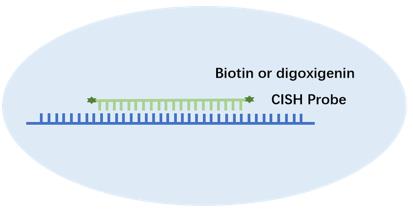 Fig.1 CISH technology. (Creative Biolabs)
CISH-based Tumor Profiling Services
CISH has been introduced into the molecular pathology and molecular oncology field. CISH methodology may be used to evaluate gene amplification, gene deletion, chromosome translocation, and chromosome number. As a leading innovator in molecular profiling, Creative Biolabs is dedicated to providing reliable, high-quality tumor profiling information to guide precise and individualized treatment decisions. We offer CISH-based tumor profiling services that are ideal for a wide range of discovery, research, and clinical applications with excellent morphological details.
We offer CISH technology in single, double, and triple labeling methods that are ideal for a wide range of discovery, research, and clinical applications with excellent morphological details. We provide specialized and custom approaches to complex CISH needs while offering expedited timelines and high-quality, reliable data.
Advantages of CISH

Our CISH Capabilities
With decades of experience developing and implementing leading-edge tests, Creative Biolabs delivers a range of solutions to meet your laboratory needs. Our scientists have expertise in tumor profiling detection and analysis methods and can mix and match these techniques to get you the information you need. By employing these techniques, we provide
- CISH analysis in various sample types including formalin-fixed, paraffin-embedded (FFPE) tissues, blood or bone marrow smears, metaphase chromosome spreads, and fixed cells.
- Custom CISH development, validation, and testing.
- Single, double, and triple CISH assays and analysis as required.
- A dual ISH-IHC service to combine both assays on the same sample slide.
Let The Experts Start Your Project
Creative Biolabs provides customized CISH-based tumor profiling services to reveal a lot about a tumor. To help you get the most out of your CISH, our specialists are trained and experienced in the methods themselves. Our standard workflow shows as follows.

Quotation and Ordering
We offer comprehensive tumor profiling services. Our team offers standard and customized FISH/CISH services to help you understand fully the biology of the tumor. Based on your specific project, we will agree on a project roadmap and make a turnaround time estimate. For more details, please contact us and we will discuss your needs and what we can offer.
Published Data
Data 1: Dual-color CISH for determination of HER2 status in breast cancer
Sample type: formalin-fixed, paraffin-embedded, 5-μm tissue slides
Tumor: human breast cancer
Technology: Dual-color CISH
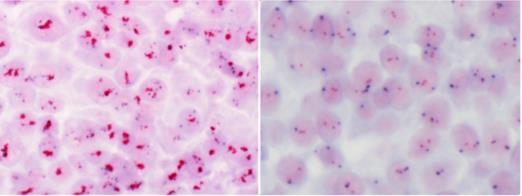 Fig.2 The dual-color CISH results of breast cancer.1
Frequently Asked Questions
Q1: How many colors can you stain in a single specimen?
A1: Currently, we can stain up to 3 colors.
Q2: What is the turnaround Time?
A2: It commonly takes 2-3 weeks.
Q3: How do I decide between fluorescent and chromogenic ISH?
A3: Since both have advantages and disadvantages, the choice needs to be made based on the project goal.
Reference
- Mollerup, Jens, et al. "Dual color chromogenic in situ hybridization for determination of HER2 status in breast cancer: a large comparative study to current state of the art fluorescence in situ hybridization." BMC clinical pathology 12 (2012): 1-7. Distributed under Open Access license CC BY 4.0, without modification.
 Download our brochure