Custom design and engineering of cytokine constructs (muteins, switch receptors, orthogonal pairs) tailored to client-specific cell therapeutic platforms (CAR-T, TIL, NK) and target solid/liquid tumor indications.
Cytokine Engineering Services for Cell Therapy
Creative Biolabs provides custom-designed genetic and protein modifications that overcome the major hurdles in advanced cell therapy research, namely low in vivo persistence and off-target toxicity. We provide fully characterized cytokine constructs, optimized cell transduction protocols, and comprehensive pre-clinical data packages. Clients gain assets with enhanced tumor-specific efficacy, maximized cellular persistence via stemness maintenance, and significantly de-risked safety profiles through highly selective or inducible signaling pathways, accelerating their path toward translational success.
Introduction What We Can Offer Types of Our Services Why Creative Biolabs Customer Reviews FAQs Related Services Contact Us
Precision Cytokine Engineering for Enhanced Cell Therapies
Cytokine Engineering is the strategic modification of native cytokines or their receptors to achieve targeted, potent, and safe signaling exclusively at the tumor site for research purposes. This approach is validated by numerous cited literature summaries showing that augmenting T-cell signal 3 by transgenic cytokine expression or engineered receptors significantly improves in vivo anti-tumor activity and cell persistence.
Explore our solutions - Schedule your consultation.
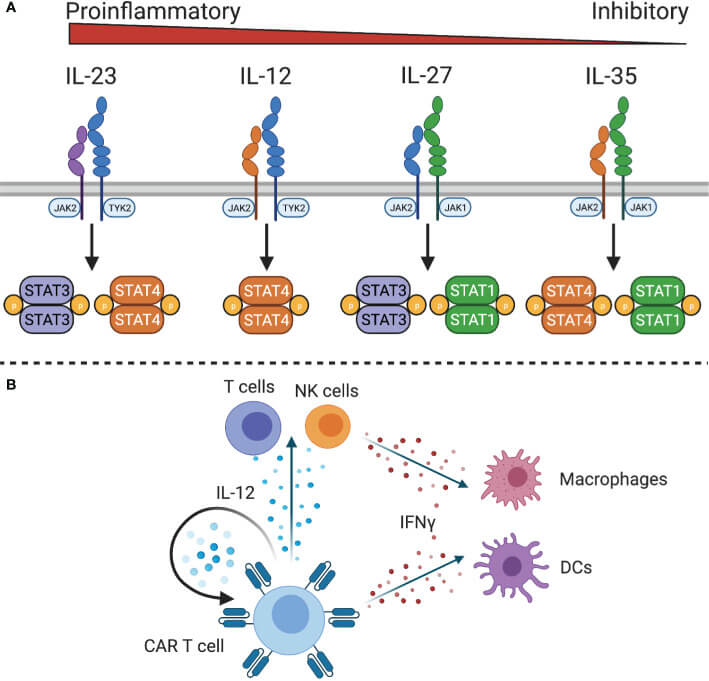 Fig.1. Engineered cytokine signaling to improve CAR T cell effector function. 1
What We Can Offer
Custom Construct Design
Inducible Safety Circuits
Implementation of advanced genetic safety circuits (e.g., NFAT-responsive promoter) for inducible, tumor-conditional cytokine expression (e.g., IL-12), offering best-in-class safety profiles and minimizing systemic toxicity.
Memory Phenotype Boost
Optimization for long-term cell persistence through membrane-bound IL-15 formats, ensuring engineered T-cells maintain the critical stem cell-like memory phenotype required for sustained in vivo efficacy and lasting remission.
Cytokine Engineering Services for Cell Therapy at Creative Biolabs
Cytokine enhanced ACT Development
This service encompasses the design of "armored" cells that are self-sufficient. We genetically modify your ACT product (CAR-T, TIL, etc.) to intrinsically express or secrete engineered cytokines.
Learn More →IL-2 Variant H9T enhanced T Cell Engineering
Focuses on engineering locus mutations (muteins) to eliminate undesirable binding to IL-2Rα (CD25), thereby preventing the activation and proliferation of regulatory T cells (Tregs) while strongly activating effector T cells.
Learn More →Selective T Cell Targeting
We engineer both the cytokine (the ligand) and a component of its receptor (e.g., IL-2Rβ) so that the ortho-cytokine only recognizes and activates the ortho-receptor expressed on your research cells.
Learn More →Why Choose Us?
| Core Features | Key Advantages |
|---|---|
| Precision and Safety | Our expertise in cytokine muteins eliminates binding to toxic, low-affinity receptor subunits, drastically lowering systemic toxicity profiles. |
| TME Overcome | We specialize in chimeric cytokine receptors that convert immunosuppressive signals (e.g., IL-4 or TGF-β) prevalent in solid tumors into beneficial proliferative signals (e.g., IL-7 signaling), turning the TME against itself. |
| Safety Control | For high-potency molecules like IL-12, we employ NFAT-responsive promoter gene circuits to ensure expression is strictly conditional upon tumor engagement, preventing systemic toxicity. |
Leverage our Capabilities - Receive a detailed quote.
Customer Reviews
-
Persistence Boost
Utilization of Creative Biolabs' services for cell therapy significantly enhanced the in vivo persistence of our CAR-T cells. The selection of the membrane-bound IL-15 format over the secreted counterpart resulted in cells demonstrating superior stem cell-like memory markers, which strongly correlated with sustained efficacy observed in long-term tumor challenge models. - L***a C. -
TME Conversion
Implementation of Creative Biolabs' services substantially facilitated our ability to address a challenging pancreatic cancer model. The integration of the IL-4/IL-7 switch receptor successfully armed our CAR-T cells against the high IL-4 concentration within the tumor, thereby preserving proliferation and cytotoxicity in conditions where non-engineered CARs rapidly experienced failure. - J***n P.
FAQs
Q: How is systemic toxicity mitigated, particularly concerning a potent cytokine like Interleukin-12?
A: Safety is prioritized through the deployment of Inducible Expression systems, such as the NFAT-responsive promoter. This genetic circuit strictly correlates IL-12 production with T-cell activation status, ensuring cytokine secretion is localized and dependent upon tumor antigen engagement. This targeted action dramatically reduces the risk of systemic inflammation relative to constitutive expression.
Q: Can these services enable a CAR-T asset to overcome the immunosuppressive environment characteristic of solid tumors?
A: Affirmative. Our advanced chimeric cytokine receptors are specifically engineered for this purpose. These receptors bind to inhibitory TME signals (e.g., IL-4 or TGF-β) but convert the signal into a pro-proliferative Signal 3 (e.g., IL-7 signaling). This mechanism effectively repurposes the tumor's defensive response.
Related Services
In Vivo Pre-Clinical Efficacy Testing
Comprehensive evaluation utilizing established mouse models to validate the enhanced persistence and anti-tumor activity of the armored cell asset.
Learn More →TCR Generation and Optimization
Advanced engineering includes in silico modeling and genetic strategies to boost TCR avidity and specificity, thereby improving cell surface expression and functional sensitivity to low antigen levels.
Learn More →How to Contact Us
Creative Biolabs' cytokine engineering services for cell therapy represent a pivotal next step in advancing the susceptibility of solid tumors to adoptive cell therapy. To initiate a confidential discussion regarding your specific cellular research challenge and to explore how our custom engineering solutions may benefit your program, please contact us.
Reference
- Bell, Matthew, and Stephen Gottschalk. "Engineered Cytokine Signaling to Improve CAR T Cell Effector Function." Frontiers in immunology vol. 12 684642. 4 Jun. 2021. Distributed under an Open Access license CC BY 4.0, without modification. https://doi.org/10.3389/fimmu.2021.684642
 Download our brochure
Loading case studies...
Online Inquiry