Therapeutic Pressure Impact Analysis Service for Bacterial Community
Are you currently investigating how therapeutic interventions reshape bacterial communities? Creative Biolabs' effect analysis service for therapeutic pressures on the bacterial community leverage state-of-the-art multi-omics technologies to decipher drug-microbe interactions at molecular resolution, quantify both compositional and functional shifts in the microbiota, which is useful for you to accelerate drug-development pipeline.
Introduction
Therapeutic interventions, including antibiotics, metformin, and polypharmacy, significantly reshape microbial abundance, diversity, and functional potential by selecting for resistant or metabolically adapted taxa while depleting keystone commensals. Dose and combination effects compound these shifts, often outweighing disease-driven dysbiosis. Therefore, it is important to balance therapeutic efficacy with microbiome integrity. When mining microbiome biomarkers or engineering microbiota-targeted therapies, it is necessary to analyze drug identity, dose, duration, and combinatorial context from disease signal.
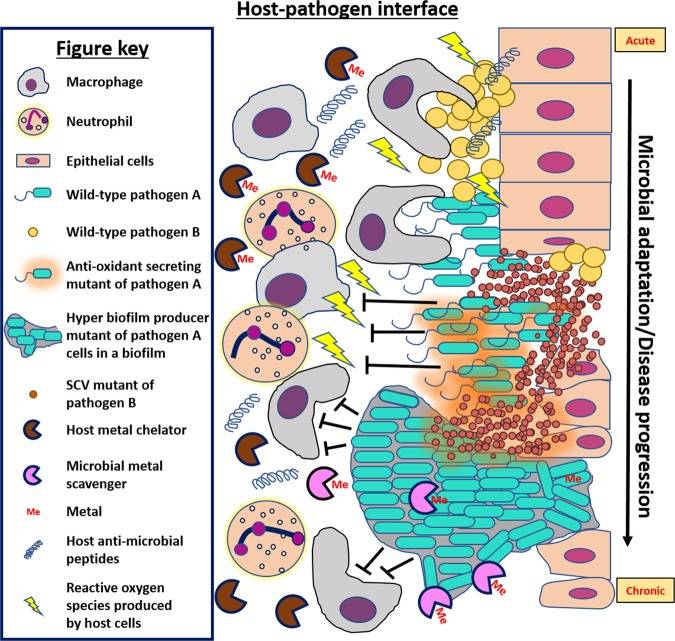 Fig.1 Host-pathogen interplay shapes adaptive microbial trajectories.1
Effect Analysis Service for Therapeutic Pressures on the Bacterial Community at Creative Biolabs
Creative Biolabs' effect analysis service for therapeutic pressures on the bacterial community helps you understand how a drug or therapeutic intervention impacts the microbial ecosystem of the host. We not only provide simple sequencing but also offer an integrated analysis of microbial shifts, functional changes, and their downstream effects on host metabolism, which is beneficial for you to identify potential side effects, discover new mechanisms of action, and validate microbial biomarkers.
What We Can Offer?
- We leverage robust multi-omics integration technology to facilitate the construction of drug-host-microbe interaction networks.
- Our high-resolution, high-throughput sequencing platforms enable the discovery of signature microbial species and the exploration of novel functionalities.
- We provide comprehensive evaluation of therapeutic impacts on the microbiome, including safety assessments.
Our Service Process
Required Starting Materials:
- Biological samples from patients before and after therapeutic intervention
- Detailed information on the drug or treatment
- Relevant clinical data
Key Steps:
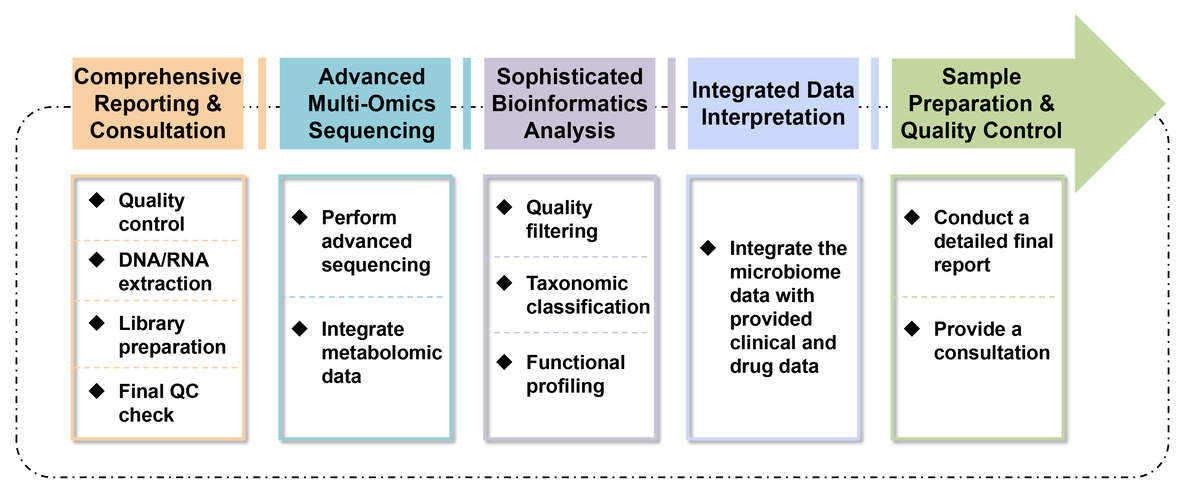
Final Deliverables:
- A comprehensive Data Package including all raw and processed data files
- A detailed Bioinformatics Report with visualizations of microbial community changes
- A Summary of Key Findings highlighting significant drug-microbiome interactions
Key Advantages
- Broad Sample Type Expertise: Our refined workflows are designed to accommodate a wide range of sample types, including complex matrices, thereby ensuring consistent and reproducible outcomes throughout your project lifecycle.
- A One-Stop Solution: We offer a cohesive solution that encompasses every step from sample processing to delivering a detailed and consultative report, which streamlines your workflow and expedite your research progress.
- Dedicated Bioinformatics Experts: Our dedicated bioinformatics scientist helps you architect and deploy bespoke analytical frameworks that translate your hypotheses into actionable insights.
FAQs
Q1: Which classes of therapeutic stressors are amenable to your analytical methods?
A1: Our service has great advantages in analyzing the effects of distinct therapeutic pressures, including antibiotics, antifungals, chemotherapies, immunotherapies, and other non-antibiotic drugs. Moreover, we also explore the impact of dietary interventions and probiotics on bacteria.
Q2: Can you handle different sample types?
A2: Certainly. We have optimized our protocols to process and analyze microbial communities from various sources, including stool, saliva, oral swabs, skin swabs, and tissue biopsies.
Q3: Do you support both pre-clinical and clinical investigations?
A3: Absolutely. Our services are flexible and can be customized to support projects ranging from early-stage preclinical studies to large-scale clinical trials.
Why Choose Us?
Creative Biolabs is the leader in the field of microbiome research. Our team has a robust scientific foundation, cutting-edge technologies, and a powerful multi-omics analytical capability, which empowers you better explore the impact of therapeutic interventions on microbial communities, elucidate underlying mechanisms, and develop novel therapeutic strategies.
Customer Reviews
"Using Creative Biolabs' Effect Analysis Service for Therapeutic Pressures on the Bacterial Community has significantly improved our understanding of how our drug affects host metabolism. The integration of metabolomics and sequencing data was seamless and provided a level of detail we couldn't achieve with our in-house methods. " Ean K*i
"We were tasked with a longitudinal study to monitor the long-term effects of a therapeutic on the gut microbiome. The team at Creative Biolabs provided excellent support, from sample processing to the final bioinformatic analysis. We were able to track the microbial normalization in our patients over six months, which was critical for our research. The data provided was of the highest quality and confirmed our initial hypotheses." Ry S*e
"Creative Biolabs' service was instrumental in helping us validate a new microbial biomarker for predicting a patient's response to an antifungal treatment. Their high-resolution 16S sequencing identified a specific decrease in a key fungal species that correlated perfectly with clinical improvement. The service was far more reliable and cost-effective than using multiple, less sensitive methods. We will definitely be using their service again for our next project." Je M*r
Contact us for a personalized project assessment.
Reference
- Baishya, Jiwasmika, and Catherine A Wakeman. "Selective pressures during chronic infection drive microbial competition and cooperation." NPJ biofilms and microbiomes vol. 5,1 16. 7 Jun. 2019. Distributed under Open Access License CC BY 4.0, without modification. DOI: https://doi.org/10.1038/s41522-019-0089-2
 Download our brochure