Transcriptomic based Metastatic Tumor Microbiome Analysis Service
Do you encounter difficulties in deciphering the intricate influence of the microbiome in cancer progression and metastasis, or struggle to develop effective treatments that account for these microbial interactions? Creative Biolabs' transcriptomic-based metastatic tumor microbiome analysis service helps you uncover the microbial influence on tumor behavior through advanced transcriptomic analysis of the intra-tumoral microbiome. This service provides a detailed look at gene expression to reveal how bacteria within a tumor impact metastasis and drug resistance.
Introduction
The intra-tumoral microbiome has emerged as a critical modulator of oncogenesis and metastatic dissemination. Resident microbiome drives oncogenic signaling pathways activation, sculpts the immune microenvironment, and potentiates therapeutic resistance, thereby fundamentally influencing tumor initiation, progression and prognosis. Transcriptomic sequencing can couple host gene-expression landscapes with microbial signatures. Our service focuses on the role of microbiome, using transcriptomics to provide a functional and mechanistic view of this host-microbe interplay.
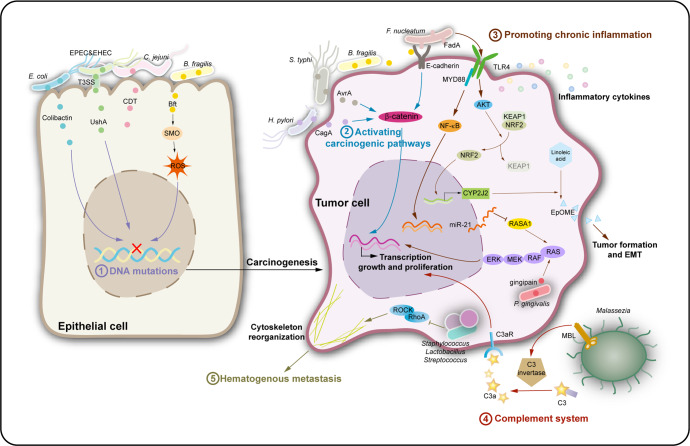 Fig.1 The role of microbiome in carcinogenesis and tumor development.1
Transcriptomic-based Metastatic Tumor Microbiome Analysis Service at Creative Biolabs
Creative Biolabs' transcriptomic based metastatic tumor microbiome analysis service offers an exhaustive investigative framework dedicated to exploring the important role of tumor-associated microbiome in metastatic processes. We furnish actionable insights that propels your research initiatives, ranging from pinpointing innovative therapeutic targets to enhancing the prognostic precision of clinical endpoints. Through a meticulous analysis of the intricate relationship between the intra-tumoral microbiota and the gene expression profile of host, we provide you with an in-depth understanding of the fundamental mechanisms driving cancer progression and the development of drug resistance.
What We Can Offer?
- Beyond simple species identification, we provide sophisticated cross-species transcriptomic analysis. This analysis is helpful for you to uncover the functional interactions between the microbial community and the host tumor.
- We employ proprietary algorithms and cutting-edge computational methodologies to extract profound and actionable insights from intricate datasets.
- We provide tailored consultation services designed to assist you in comprehending your results, deciphering their implications, and strategizing the subsequent phases of your research or therapeutic development initiatives.
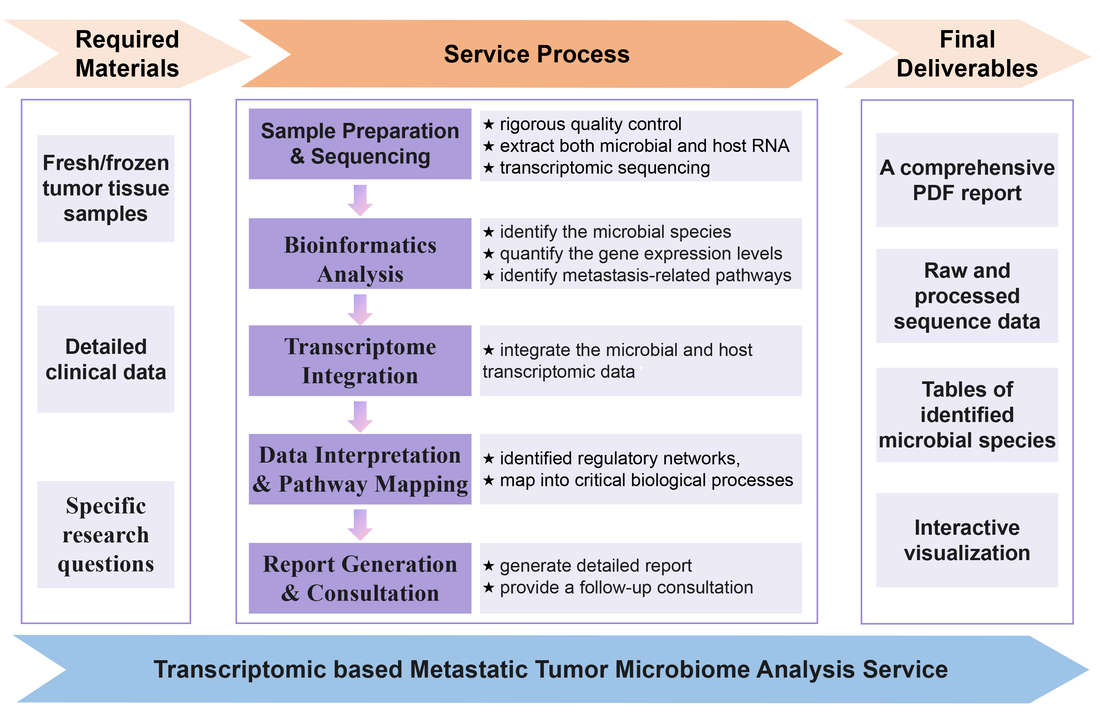
Our Service Process
Our project workflow is clarity and efficiency, providing you with a step-by-step path from sample submission to final data analysis.
Key Advantages
- Customized Project Design: We collaborate intimately with you to craft a bespoke analytical strategy that is aligned with your distinct research inquiries, thereby optimizing the utility of your sample materials.
- High-Quality and Actionable Deliverables: We provide not just raw data, but also comprehensive reports and interactive visualizations, which are applicable to your downstream research.
FAQs
Q1: What biological specimens are suitable for this analysis?
A1: We recommend the use of fresh or rapidly frozen tumor tissues, ideally including both primary and metastatic lesion samples. Furthermore, we will assess the feasibility of other biological specimens such as serum or liquid biopsy samples based on practical conditions.
Q2: How does this approach differ from traditional 16S rRNA sequencing?
A2: Compared with standard 16S rRNA sequencing, our transcriptomic methodology provides a deeper functional understanding by not only identifying the microbial species but also quantifying the gene expression levels of both the intratumoral microbiota and the host tumor. This dual-transcriptome analysis makes it possible to explore the impact of bacterial community on tumor progression, which is paramount for the development of novel therapeutic strategies.
Q3: What specific biological insights can be derived from the analysis?
A3: The primary aim of this analysis is to elucidate the intricate interactions between the host and microbes within the tumor microenvironment. Moreover, it can help you to elucidate previously uncharacterized associations between microbial gene expression and key host pathways linked to oncogenesis and metastasis.
Why Choose Us?
Creative Biolabs is your trusted partner for exploring the important of microbiome in tumor metastasis. Our transcriptomic based metastatic tumor microbiome analysis service goes beyond simple species identification to uncover the function of the intra-tumoral microbiome, providing a significant advantage in a competitive research landscape.
Customer Reviews
"Using Creative Biolabs' Transcriptomic based Metastatic Tumor Microbiome Analysis Service, we were able to pinpoint a specific circRNA/miRNA network modulated by the intra-tumoral microbiome, which provided a clear functional link to our observed metastatic phenotype. This has completely reshaped our understanding of the disease." -M. S*****
"The detailed report and data visualization helped us understand why our compound was effective in some preclinical models but not others. We now have a clear biomarker and a more robust strategy for patient stratification." -D. P. G*****
"The advanced sequencing and detailed reports from Creative Biolabs not only identified the key bacterial species in our samples but also their active genes, which was crucial for developing our hypothesis on a new therapeutic approach." -M. K. A*****
Contact us for further details and to explore your project.
Reference
- Yang, Li et al. "Intratumoral microbiota: roles in cancer initiation, development and therapeutic efficacy." Signal transduction and targeted therapy vol. 8,1 35. 16 Jan. 2023. Distributed under Open Access License CC BY 4.0, without modification. DOI: https://doi.org/10.1038/s41392-022-01304-4
 Download our brochure