B Cell Proliferation Assay Service
Unlock B Cell Insights – Precision Proliferation Assays
B cells are integral to the immune system and responsible for generating antibodies that target and neutralize pathogens. Investigating B cell proliferation is essential for understanding immune responses, evaluating drug effects, and developing new therapies. Creative Biolabs is pleased to introduce our B cell proliferation assay service, designed to offer precise and comprehensive analysis of B cell growth and activity. Our advanced assay provides reliable data, helping you make informed decisions in your research on immune modulation, vaccine development, and autoimmune diseases.
Technical Methods
|
Assay Type
|
Cell Type
|
Model
|
Detection Method
|
Control Inhibitor
|
|
Functional
|
B cells
|
Agonist & Antagonist
|
Luminescence
|
Cyclosporin A
|
Our B cell proliferation assay employs advanced flow cytometry and luminescence techniques to provide detailed insights into B cell proliferation. The process involves:
1
Cell Preparation
B cells are isolated from suitable sources and exposed to test compounds under controlled conditions.
2
Incubation and Detection
Following incubation, a luminescent reagent is added to detect cell proliferation and measured using a microplate reader.
3
Data Analysis
The assay distinguishes between stimulatory and inhibitory effects based on changes in luminescence relative to controls, such as LPS.
Positive controls: Lipopolysaccharide (LPS) is used to ensure the assay's sensitivity and accuracy, providing a benchmark for assessing compound effects.
This method offers a flexible and reliable approach to studying B cell responses across various experimental conditions.
Advantages
-
Detailed cell-by-cell analysis: Provides precise measurements of individual B cells, giving a clear view of how test compounds impact cell proliferation.
-
High sensitivity and accuracy: Luminescence detection allows for accurate and sensitive quantification of B cell growth, even in small or complex samples.
-
Customizable protocols: The assay can be adapted to different conditions, including varying incubation times and compound concentrations, to fit your specific research needs.
-
Broad applications: Ideal for diverse research areas, such as drug development, vaccine assessment, and studies of autoimmune disorders.
-
Efficient and scalable: Designed for both small-scale and large-scale studies, ensuring reliable results while accommodating high-throughput needs.
Applications
-
Immunotherapy: Assessing how novel drugs or biologics influence B cell activity, critical for developing new treatments for autoimmune diseases and cancer.
-
Vaccine development: Evaluating how vaccines stimulate B cell proliferation and antibody production, aiding in the development of more effective vaccines.
-
Autoimmune diseases: Investigating abnormal B cell proliferation in conditions like lupus or rheumatoid arthritis to identify potential therapeutic targets.
-
Toxicology: Screening the effects of chemicals or drugs on B cell health and function, essential for safety testing and regulatory compliance.
Publication Sharing
This study investigates the impact of staphylococcal lipoteichoic acid (LTA) on LPS-induced B cell proliferation. It demonstrates that LTA inhibits the proliferation of B cells triggered by LPS by interfering with ERK phosphorylation, a key signaling event necessary for B cell activation and proliferation. The findings highlight that LTA's antagonistic effect on LPS-induced proliferation is mediated through the modulation of ERK signaling pathways, providing insights into how bacterial components can influence immune responses by altering cellular signaling mechanisms. This study underscores the complex interactions between bacterial factors and B cell activation, offering valuable information for understanding immune modulation.
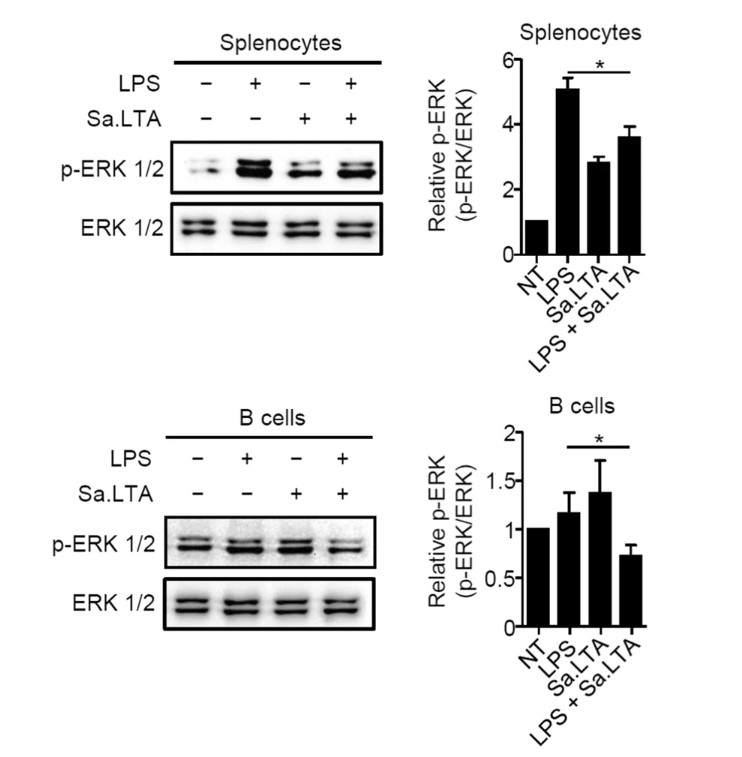 Fig.1 Splenocytes or purified B cells were stimulated with LPS.1
Frequently Asked Questions (FAQs)
Q1: What sources of B cells are suitable for this assay?
A1: The assay can utilize B cells from various sources, including mouse spleens and human blood, depending on your research requirements.
Q2: How is the proliferation measured?
A2: The assay employs luminescence measurement, where the strength of the luminescence correlates with the number of proliferating B cells, delivering precise and quantitative results.
Q3: Can the assay assess both stimulating and inhibiting effects on B cell proliferation?
A3: Yes, the assay is designed to evaluate both agonistic and antagonistic effects, giving a comprehensive view of compound impacts.
Q4: What control measures are used?
A4: LPS is used as a positive control to validate the assay's performance and ensure reliable measurement of B cell proliferation.
Enhance your research with Creative Biolabs' B cell proliferation assay service. Whether you're investigating B cell responses to new compounds or evaluating therapeutic interventions, our service provides the precision and reliability needed for impactful results. Contact us today to learn how we can support your specific research needs and advance your studies in B cell proliferation.
Reference
-
Kang, Seok-Seong, et al. "Staphylococcal LTA antagonizes the B cell-mitogenic potential of LPS." Scientific Reports 8.1 (2018): 1496. Distributed under Open Access license CC BY 4.0, without modification.
For Research Use Only | Not For Clinical Use


 Download our brochure