BA/F3 based Kinase Target Screening Service
Introduction: The Pivotal Role of Kinases and the BA/F3 Screening Platform
Protein kinases, orchestrating a vast array of cellular processes, have emerged as one of the most critical classes of drug targets, particularly in oncology and inflammatory diseases. The human kinome comprises over 500 members, and their dysregulation through mutation, overexpression, or aberrant activation is a common driver of pathogenesis. Consequently, the development of selective kinase inhibitors has revolutionized treatment paradigms for numerous conditions. However, the journey of a kinase inhibitor from bench to bedside is fraught with challenges, including achieving target specificity within the highly conserved ATP-binding pocket, overcoming acquired resistance mechanisms, and ensuring robust cellular activity.
The Ba/F3 cell line system, a murine interleukin-3 (IL-3)-dependent pro-B cell line, offers a powerful and versatile platform to address these complexities in kinase drug discovery. These cells can be genetically engineered to express a specific kinase, rendering their proliferation and survival dependent on the activity of this ectopically expressed kinase rather than IL-3. This engineered dependency creates a clean and sensitive cellular system for evaluating the potency and selectivity of potential kinase inhibitors. At Creative Biolabs, we have harnessed the robust capabilities of the Ba/F3 system to provide comprehensive kinase target screening services, accelerating the identification and characterization of next-generation kinase inhibitors.
BA/F3-Based Kinase Target Screening Service at Creative Biolabs
The fundamental principle underlying Creative Biolabs' BA/F3-based kinase target screening service is the conversion of Ba/F3 cells from IL-3 dependence to a specific kinase dependence. This is typically achieved by stably transfecting or transducing Ba/F3 cells with a construct encoding the kinase of interest. This can be a wild-type kinase, a constitutively active mutant, a clinically relevant oncogenic variant, or a known drug-resistant mutant.
Upon successful expression and functional coupling of the target kinase to downstream proliferation pathways, the engineered Ba/F3 cells no longer require exogenous IL-3 for survival and growth in culture. Instead, their proliferation becomes directly proportional to the activity of the introduced kinase. When these kinase-dependent Ba/F3 cells are exposed to a compound that inhibits the target kinase, the proliferative signaling is abrogated, leading to growth arrest or apoptosis. The magnitude of this effect, typically measured via cell viability assays, provides a quantitative assessment of the inhibitor's potency (IC50 value) in a relevant cellular context.
This system is particularly advantageous because the parental Ba/F3 cells provide a null background, lacking the complex, often redundant, signaling networks present in many cancer cell lines. This simplifies data interpretation and allows for a more direct assessment of a compound's on-target effect.
Comprehensive Service Content at Creative Biolabs
Creative Biolabs offers a flexible and comprehensive suite of BA/F3-based screening services tailored to meet the diverse needs of kinase drug discovery programs:
Extensive Portfolio of Ready-to-Use BA/F3 Stable Cell Lines
We maintain an expanding portfolio of meticulously validated Ba/F3 stable cell lines. These lines express a broad spectrum of human kinases, including:
Tyrosine Kinases: EGFR (various mutants including exon 20 insertions, T790M, C797S), ALK, ROS1, MET, JAK family, ABL, SRC family, FGFR family, and many more.
Serine/Threonine Kinases: BRAF (e.g., V600E), MEK, AKT, CDKs, AURKA/B/C, PIM kinases, and others.
Clinically Relevant Mutants: A significant focus is placed on providing Ba/F3 lines harboring mutations known to confer oncogenic activity or drug resistance observed in patients. This allows for the direct assessment of inhibitor efficacy against these challenging targets.
Fusion Kinases: Models for oncogenic fusion proteins such as EML4-ALK or BCR-ABL.
Custom BA/F3 Cell Line Generation
Should your kinase target of interest not be in our current inventory, Creative Biolabs' expert cell engineering team provides bespoke Ba/F3 cell line development services. Leveraging advanced gene delivery systems (lentiviral, retroviral) and rigorous clonal selection and validation processes, we can generate stable Ba/F3 cell lines expressing virtually any kinase, including novel mutants or specific isoforms, tailored to your precise research requirements.
Assay Formats and Screening Cascades
Our BA/F3 platform supports a variety of screening applications:
Single-Point Inhibition Screening: High-throughput screening of compound libraries at a single concentration to identify initial hits.
IC50 Potency Determination: Dose-response studies to accurately quantify the potency of lead compounds. This typically involves 8~10 points concentration curves.
Selectivity Profiling: Screening compounds against a panel of Ba/F3 cell lines expressing different kinases (e.g., family members or common off-targets) to determine their selectivity profile. This is crucial for minimizing off-target toxicities.
Resistance Mutation Profiling: Assessing the activity of inhibitors against Ba/F3 cells expressing known drug-resistant kinase mutants (e.g., EGFR T790M, ALK L1196M). This service is invaluable for developing next-generation inhibitors designed to overcome resistance.
Combination Studies: Evaluating the synergistic, additive, or antagonistic effects of combining two or more inhibitors.
Scientific Backing
| Summary | Research has consistently demonstrated the utility of Ba/F3 cells for high-throughput screening of small molecule kinase inhibitors and for studying the transforming capabilities of various kinases, as well as identifying mechanisms of resistance. For instance, studies have shown that Ba/F3 models can reproducibly detect resistance mutations found in clinical cases, and sensitivity data generated with these models correlates well with clinical responses, underscoring their translational relevance. |
| Result |
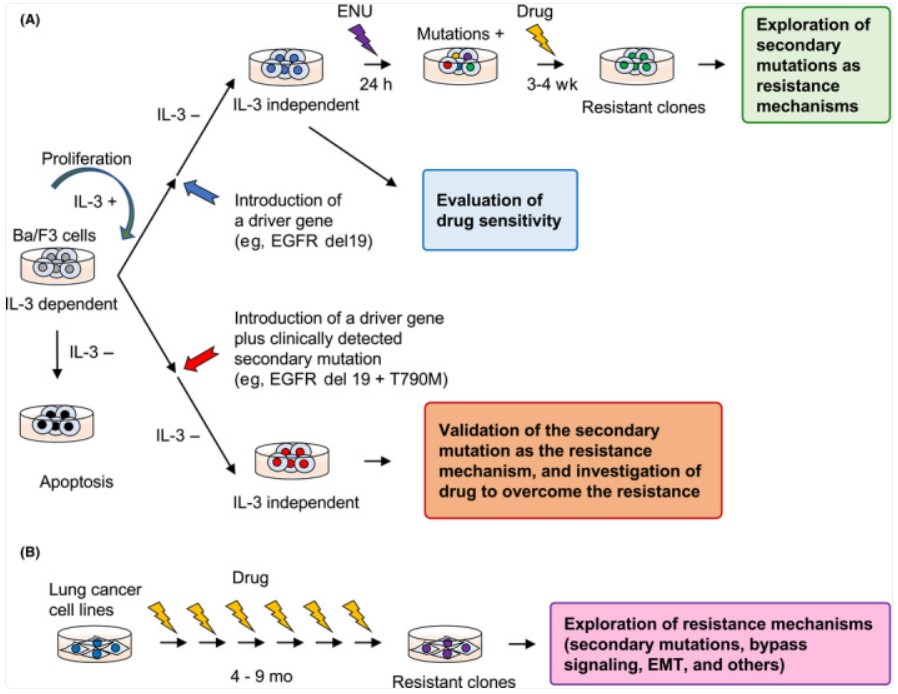 Fig.1 Ba/F3 model used in the molecular targeted drugs study for lung cancer.1 |
Benefits of Our Service
Choosing Creative Biolabs for your BA/F3-based kinase target screening provides several distinct advantages:
- Vast and Validated Cell Line Inventory
- Expertise in Custom Cell Line Engineering
- Scientific Rigor and Reproducibility
- High-Throughput Capabilities & Rapid Turnaround
FAQs
Q1: What types of kinases can be studied using Creative Biolabs' BA/F3 platform?
A1: Our platform is suitable for a wide range of kinases, including tyrosine kinases (receptor and non-receptor), serine/threonine kinases, and lipid kinases. We have extensive experience with wild-type kinases, constitutively active mutants, oncogenic fusion proteins, and clinically relevant drug-resistant variants.
Q2: How are the BA/F3 cell lines generated and validated at Creative Biolabs?
A2: Ba/F3 cell lines are generated using established viral (lentiviral, retroviral) or non-viral transfection methods to ensure stable integration and expression of the target kinase. Clonal selection is performed to isolate high-expressing and functionally responsive clones. Validation includes confirmation of target kinase expression (e.g., by Western blot or qPCR) and functional validation of IL-3 independence and specific inhibitor sensitivity.
Q3: Can Creative Biolabs assist in designing the screening cascade or selecting appropriate Ba/F3 models?
A3: Absolutely. The scientific team at Creative Biolabs offers expert consultation to help you design the most effective screening strategy, select the most relevant Ba/F3 cell line models for your specific kinase targets and research goals, and plan follow-up studies.
Q4: How does data from Ba/F3 cell proliferation assays correlate with in vivo efficacy or clinical outcomes?
A4: Ba/F3 cell-based assays serve as a robust and physiologically relevant in vitro system. While no in vitro assay can perfectly predict in vivo efficacy or clinical success, numerous studies have demonstrated a strong correlation between inhibitor potency in engineered Ba/F3 cells and their activity in more complex preclinical models and even clinical responses, particularly for oncogene-addicted cancers. Data from Creative Biolabs' Ba/F3 assays provide critical insights for ranking compounds and making informed decisions for further development.
Contact Us
To explore how Creative Biolabs' BA/F3-Based Kinase Target Screening Services can empower your drug discovery pipeline, please contact our scientific liaisons. We are dedicated to providing tailored solutions and high-quality data to advance your research.
Reference
- Koga, Takamasa et al. "Utility of the Ba/F3 cell system for exploring on-target mechanisms of resistance to targeted therapies for lung cancer." Cancer science vol. 113,3 (2022): 815-827. DOI: 10.1111/cas.15263. Distributed under Open Access License CC BY 4.0, without modification.
 Download our brochure