We offer both radiometric and non-radiometric assays to measure the inhibitory activity of your compounds against the CSF1R kinase domain. This is essential for determining IC50 values and understanding a compound's potency.
CSF1R Assay Portfolio Service
Creative Biolabs offers a specialized CSF1R assay portfolio service for targeted cancer therapy and diagnosis. We employ advanced technologies and experienced scientists to precisely assess the signaling axis involving colony-stimulating factor 1 (CSF1) and its receptor, CSF1R. This pathway is crucial because it governs the survival, proliferation, and differentiation of tumor-associated macrophages (TAMs), which are major drivers of immunosuppression and tumor metastasis. Our service provides the essential data to validate CSF1R as a therapeutic target for disrupting the tumor microenvironment (TME).
Background What We Can Offer Publication Why Choose Us FAQs Customer Review Related Services Contact Us
The CSF1R Signaling Pathway: A Critical Target in Immuno-Oncology and Beyond
CSF1R (also known as CD115 or macrophage colony-stimulating factor receptor, M-CSFR) is a type III protein tyrosine kinase receptor. Its biological functions are initiated by binding to competing ligands, CSF-1 or interleukin 34 (IL-34), which induces receptor homodimerization and activation of downstream signaling. This signaling is crucial for the survival and differentiation of macrophages and other myeloid cells within the TME, such as TAMs. The CSF-1/CSF1R axis is the primary growth factor regulating these cells, and CSF-1-educated TAMs are known to support tumor cell survival, proliferation, and drug resistance, while also suppressing anti-tumor immunity. Expression of this axis has been found in several human malignancies, including breast, cervical, and ovarian cancer, and elevated serum levels of CSF-1 have been demonstrated in some cancers.
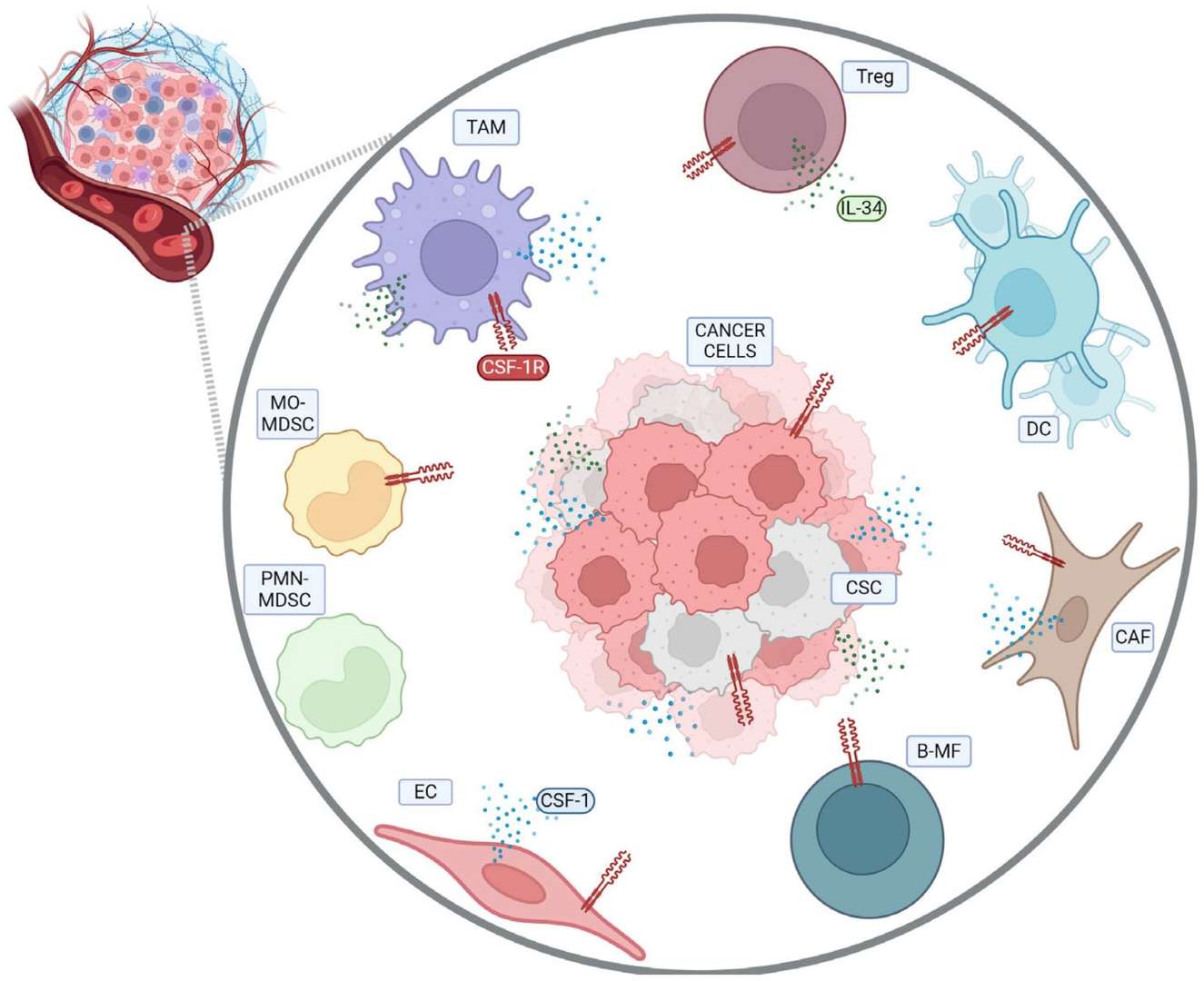 Fig.1 Cellular expression of CSF-1R in the TME. 1, 3
Our Comprehensive Assay Portfolio
Our service portfolio is meticulously designed to provide you with the critical data you need, from initial hit identification to lead optimization. Key offerings include:
Kinase Activity Assays
Ligand Binding Assays
We use advanced techniques like surface plasmon resonance (SPR) to quantitatively analyze the binding kinetics of your inhibitors or antibodies to the CSF1R protein.
Cell-Based Functional Assays
Our cellular assays provide insights into a compound's activity in a living cellular context. These assays monitor key downstream signaling events, such as the phosphorylation of CSF1R and its signaling effectors like STAT1.
Macrophage Differentiation and Repolarization Assays
We monitor the effect of your compounds on the differentiation of monocytes into macrophages and their subsequent polarization towards the M1 or M2 phenotype.
High-Throughput Screening (HTS)
Our high-content screening (HCS) platforms are optimized for the rapid screening of large compound libraries, allowing for efficient identification of novel inhibitors and modulators of the CSF1R pathway.
Contact us today to discuss how we can help you unlock the full potential of your CSF1R-targeted therapy.
Publication
This review explores the expanding role of the CSF-1R. Historically, CSF-1R was known for its function in regulating macrophages within the tumor microenvironment. However, recent evidence shows it is also expressed on cancer cells themselves. The article synthesizes findings that CSF-1R signaling directly promotes malignant hallmarks, including enhanced proliferation, migration, invasion, and chemoresistance. This autocrine or paracrine signaling activates downstream pathways like MEK/ERK and PI3K/AKT. The authors review the therapeutic implications, highlighting that CSF-1R inhibitors, originally designed to target the microenvironment, can also directly curb tumor cell growth, offering a promising dual-targeted approach.
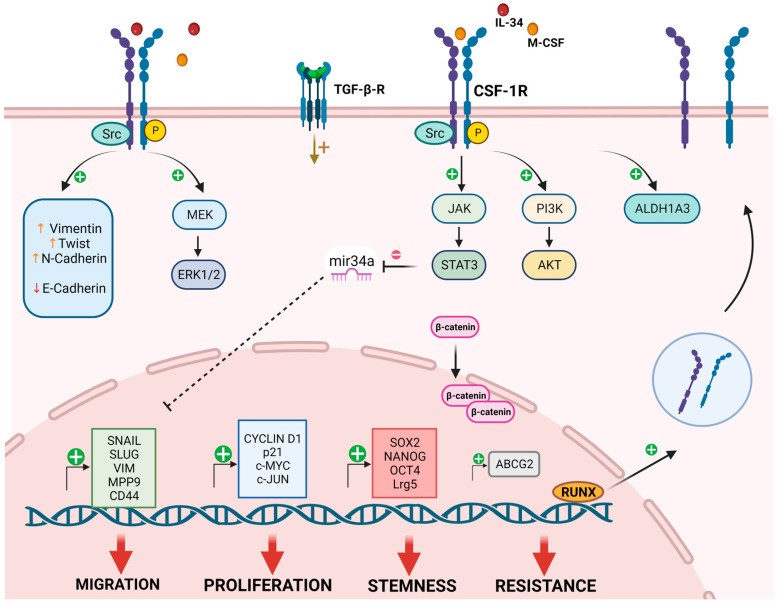 Fig.2 CSF-1R signaling and functional roles in diverse cancer cells. 2, 3
Why Choose Us?
With a legacy of two decades of experience, Creative Biolabs brings unparalleled expertise to your project. Our commitment to quality, a deep understanding of the CSF1R pathway, and a proven track record set us apart. We don't just provide data; we provide a strategic partnership to accelerate your program and de-risk your investment. Our comprehensive portfolio ensures that we can address the nuanced and diverse roles of CSF1R in multiple cell types within the TME, from TAMs to cancer-associated fibroblasts (CAFs) and cancer stem cells (CSCs). This breadth of knowledge is crucial for developing robust and effective therapies.
Experience the Creative Biolabs Advantage - Get a Quote Today
FAQs
Q1: What is the main application of the CSF1R assay portfolio service?
A1: Our service is primarily used to evaluate the efficacy and safety of drug candidates targeting the CSF1R signaling pathway. This helps you identify potent inhibitors, understand their mechanism of action, and advance the most promising compounds in your drug discovery program.
Q2: What precautions should I consider before submitting my compounds for screening
A2: We recommend providing a comprehensive chemical profile of your compounds to ensure compatibility with our assays. Our team can also advise on potential off-target effects and guide you on the optimal concentration range to test to get the most reliable data.
Q3: Is your service suitable for both small-molecule and antibody-based therapies
A3: Yes, our comprehensive portfolio is equipped to handle both small molecules and antibody-based therapeutics. We have specific assays tailored to evaluate the unique binding and functional characteristics of each type of therapeutic.
Customer Review
-
High-Quality Kinase Data
Using Creative Biolabs' CSF1R kinase activity assay in our research has significantly improved the efficiency of our initial hit validation. The data was clean, reproducible, and delivered ahead of schedule. - J****** P -
Precise Cellular Insights
The macrophage polarization assays were a game-changer for us. Using Creative Biolabs' cellular services, we were able to tangibly demonstrate our compound's ability to reprogram M2 macrophages to an M1 phenotype, providing critical evidence for our program. - A***** M
Related Services
To further support your drug development efforts, you may also be interested in our complementary services:
Immunogenicity Prediction
Creative Biolabs has developed sensitive immunogenicity assessment technology (SIAT) to help clients address potential drug immunogenicity issues. This technology is effective for a wide range of applications.
Learn More →Purification Development
Creative Biolabs has extensive experience in process development, scaling up, and cGMP manufacturing. The company works closely with clients to reduce timelines and costs while improving process performance, providing the best service to fit their specific requirements.
Learn More →Contact Us
To learn more about how our CSF1R assay portfolio service can benefit your project, please contact us for a detailed discussion. We look forward to helping you unlock the full potential of your CSF1R-targeted therapy.
References
- Tomassetti, Caterina, et al. "Insights into CSF-1R expression in the tumor microenvironment." Biomedicines 12.10 (2024): 2381. https://doi.org/10.3390/biomedicines12102381
- Cersosimo, F., et al. "CSF-1R in Cancer: More than a Myeloid Cell Receptor." Cancers 2024, 16, 282. https://doi.org/10.3390/cancers16020282
- Distributed under Open Access license CC BY 4.0, without modification.
 Download our brochure
Loading case studies...
Online Inquiry