Human Colon Cell DLD-1-based Proliferation Assay Service
At Creative Biolabs, we specialize in offering a proliferation assay utilizing human colon cells DLD-1. This assay is designed to measure the rate at which these cells divide and grow, providing valuable insights into their growth dynamics. Our team of experts is dedicated to providing high-quality, reliable data to support your research efforts and advance scientific discovery. Let us help you optimize your experiments and accelerate your research with our specialized proliferation assay based on human colon cells DLD-1.
DLD-1 Cell Line
The DLD-1 cell line is a human colorectal adenocarcinoma cell line that was derived from a 72-year-old male patient in 1977. It is commonly used in cancer research studies because it closely resembles the characteristics of human colorectal cancer cells. The DLD-1 cell line is known to be responsive to treatments such as chemotherapy and radiation therapy, making it a valuable tool for studying the efficacy of different cancer treatments. Researchers use the DLD-1 cell line to investigate various aspects of cancer biology, such as cell signaling pathways, drug resistance mechanisms, and tumor growth. Additionally, the DLD-1 cell line has been used in drug screening studies to identify potential anti-cancer agents.
DLD-1-based Proliferation Assay at Creative Biolabs
Our DLD-1-based Tumor Cell Proliferation Assay service offers a comprehensive analysis of cell proliferation in DLD-1 colorectal cancer cells. This assay can provide valuable insights into the growth and proliferation of tumor cells, helping researchers to study the efficacy of potential therapeutic agents and investigate the mechanisms underlying cancer progression.
Key Features
-
High throughput screening of potential anti-cancer compounds
-
Assessment of cell viability, proliferation, and growth kinetics
-
Customized experimental design to meet specific research needs
-
Reliable and reproducible results provided in a timely manner
-
Expert data analysis and interpretation to help researchers draw meaningful conclusions
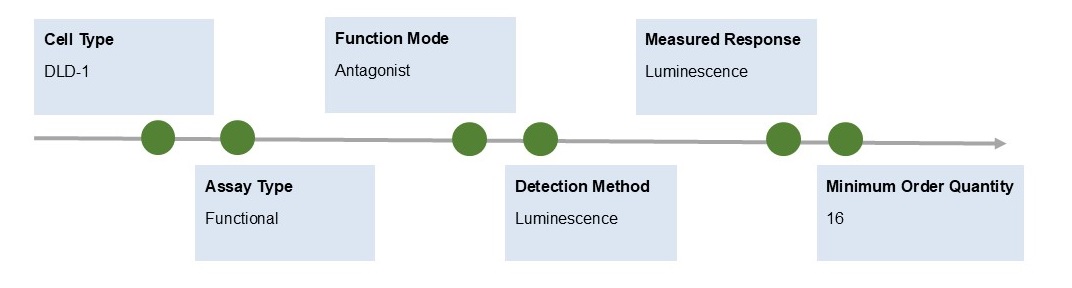
Assay Information
Assay Procedure
The process of our DLD-1-based Tumor Cell Proliferation Assay involves several key steps:

Cell culture: DLD-1 cells, a human colorectal cancer cell line, are cultured in appropriate media and conditions to ensure optimal growth and viability.
Treatment: The DLD-1 cells are treated with various compounds or drugs to assess their effects on tumor cell proliferation. This can include testing different concentrations of compounds to determine their efficacy.
Proliferation assay: The proliferation of DLD-1 cells is assessed using a variety of techniques, such as MTT assay or BrdU incorporation assay. These assays measure the ability of the cells to divide and grow in the presence of the compounds being tested.
Data analysis: The results of the proliferation assay are analyzed to determine the effects of the compounds on DLD-1 cell proliferation. This includes calculating proliferation rates, IC50 values, and other relevant parameters.
Report: A detailed report is prepared by us summarizing the results of the assay, including the efficacy of the compounds tested and any underlying mechanisms of action.
Applications of Our Assay
This assay can help determine the effectiveness of a drug in inhibiting the proliferation of DLD-1 tumor cells, providing valuable information for drug development.
By examining the effect of various compounds on DLD-1 tumor cell proliferation, researchers can gain insights into the pathways involved in tumor growth and potential targets for therapeutic intervention.
By comparing the proliferation of DLD-1 tumor cells in the presence of different compounds, researchers can identify genes or proteins that are involved in drug sensitivity or resistance.
By measuring the effect of compounds on DLD-1 tumor cell proliferation, researchers can determine the therapeutic window of a drug and identify potential side effects.
Frequently Asked Question
Q1: Why use DLD-1 cells for the proliferation assay?
A1: DLD-1 cells are commonly used for proliferation assays because they are a well-characterized, well-established human colon cancer cell line. They have been extensively studied and are known to exhibit rapid and robust proliferation rates, making them ideal for studying cell growth and proliferation in response to different treatments or conditions. Additionally, DLD-1 cells are easy to culture and maintain, making them a practical choice for conducting proliferation assays in the laboratory.
Contact Us
Our team of experienced scientists is dedicated to providing high-quality services and support to customers in their cancer research endeavors. Contact us today to learn more about our DLD-1-based Tumor Cell Proliferation Assay service and how it can benefit your research projects.
For Research Use Only | Not For Clinical Use


 Download our brochure