Engineering Lung Cancer Cell SW900 for Self-destruction
The SW900 is a non-small cell lung cancer (NSCLC) cell line initiated by A. Leibovitz in January 1975 from biopsy tissue of squamous cell carcinoma. It originated in the lung of a 53-year-old male Caucasian. Creative Biolabs offers state-of-the-art services for engineering the lung cancer cell SW900 for self-destruction that meet your specific tumor research needs. Besides, we also offer immune reactivity assessment services and toxicity assessment services after engineering.
Lung Cancer Cell SW900
Cancer is a heterogeneous group of diseases that results from abnormal, autonomous and uncontrolled cell growth and differentiation, promoting tumor formation and metastasis.
-
Characteristics of cancer
✔ Insensitivity to anti-growth signals
✔ Evasion of apoptosis
✔ Self-sufficiency in growth signals
✔ Sustained angiogenesis
✔ Limitless replicative potential
✔ Tissue invasion and metastasis
✔ Deregulation of the cellular energetics
✔ Avoidance of immune destruction
Lung cancer is the world leading cause of cancer-related mortality in both genders. It is divided into two major types: small-cell (SCLC) and NSCLC. The SW900 cells grow adherently in monolayer and are hypotriploid epithelial cells. The cell line was established in 1975 by A. Leibovitz through a biopsy tissue of a grade IV squamous carcinoma from a 53-year-old Caucasian male and is a cell line commonly used as a squamous carcinoma model. Inactivation of the tumor suppressor CDKN2A gene locus is present in both cell lines. The CDKN2A gene produces three different transcripts: p16INK4α, p14ARF and p12.
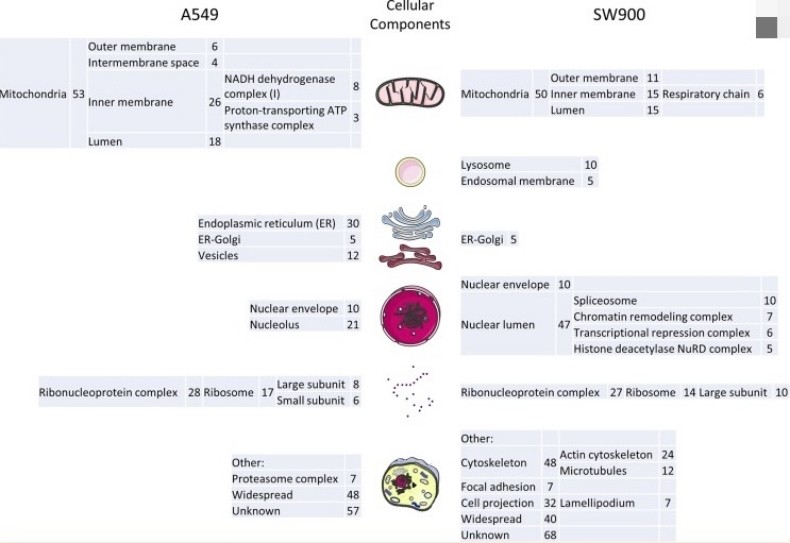 Fig.1 GO analysis of the specific proteins of A549 and SW900: cell components.1
Engineering Lung Cancer Cell SW900 for Self-destruction
Creative Biolabs provides full-scale self-destruction services which exploit and manipulate lung cancer cell SW900 to promote anti-lung cancer immunity. The self-destruction method does not directly stimulate the SW900 cells, thereby avoiding the risk of increasing SW900 cell-dependent metastases. Self-destruction means the strategy which transfects overexpressed cytokines into cancer cells by different technologies, thereby achieving the purpose of engineering SW900 cells. Besides, Creative Biolabs also offers Immune Reactivity Assessment services and Toxicity Assessment services after engineering.
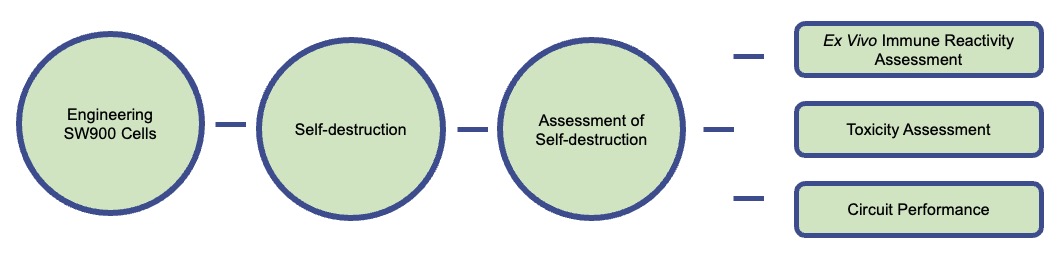 Fig.2 The workflow of engineering lung cancer cell SW900 for self-destruction.
Self-destruction Assays
Creative Biolabs provides different assays, such as lymphangiogenesis analysis, kinetics analysis, naïve T cell infiltration analysis, and so on, to help you engineer SW900 cells.
You can find the exact strategies and assays in the following units:
With a team of scientists who come from different research backgrounds, Creative Biolabs guides you all the way from project inception to high-quality results. If you have interest, please do not hesitate to contact us.
Reference
-
Korrodi-Gregorio, Luis, et al. "From proteomic analysis to potential therapeutic targets: functional profile of two lung cancer cell lines, A549 and SW900, widely studied in pre-clinical research." PLoS One 11.11 (2016): e0165973. Distributed under Open Access license CC BY 4.0, without modification.
For Research Use Only | Not For Clinical Use


 Download our brochure