Our scientific team collaborates with you to define objectives, select optimal cell lines, and design screen-specific conditions such as treatment timing, MOI, and phenotype definition.
Genome-Scale In Vivo Screening Service
Introduction Strategies What We Can Offer Workflow Required Materials Highlights Publication FAQs Customer Reviews Extended Services
Unlock Functional Insights in Mammalian Cells with Precision!
Traditional in vitro screening methods often fall short in capturing the complexity of cellular behavior, leading to data that lack translational value. Genome-scale in vivo screening, redefined at the mammalian cell level, preserves the natural state of cells and allows for precise functional interrogation of the entire genome. Recent landmark studies demonstrated increased screening sensitivity using empirically designed sgRNA libraries in human cell lines, while other groups identified stress-responsive and drug-resistance genes in live cell systems using pooled CRISPR screening. The strategy integrates the robustness of in vivo conditions with the scalability of high-throughput screening, delivering results that reflect true gene function within intact cells.
Are you grappling with inconsistent in vitro results, poor biological relevance, or limited gene function data in complex cell systems? Our genome-scale in vivo screening service at Creative Biolabs enables high-throughput discovery of critical gene functions in live mammalian cells, preserving native regulatory landscapes, cellular heterogeneity, and context-specific phenotypes. Powered by high-coverage CRISPR libraries, physiologically relevant cell models, and robust readout technologies, this platform brings you closer to real biological outcomes, without relying on animal models.
By capturing gene function in complex yet controllable systems, we bridge the gap between genomic exploration and therapeutic innovation.
- Pharma and Biotech clients can identify novel drug targets and biomarkers that reflect true cellular biology.
- Academic and Translational Research Teams can rapidly screen hypotheses at scale within the cellular context most relevant to their disease models.
- Precision Medicine Developers can tailor gene-function maps to specific patient-derived cell systems.
- Discover How We Can Help – Request a Consultation
Strategies
Comprehensive Genome-wide CRISPR Libraries
Our service features next-generation sgRNA libraries targeting over 20,000 genes, optimized for mammalian cells. Each sgRNA is computationally and empirically validated for maximum efficiency and minimal off-target activity. We also offer focused libraries for specific pathways, such as DNA repair, immune modulation, apoptosis, or kinases.
Native Mammalian Cell Models
We conduct screens directly in physiologically relevant mammalian cell types—including immortalized lines (e.g., A549, HeLa, HEK293), primary cells (e.g., T cells, macrophages), and iPSC-derived cell types. This ensures realistic gene expression patterns, proper epigenetic regulation, and intact cellular signaling networks.
Contextual Perturbation Design
Our platform enables screening under biologically meaningful conditions—chemical stress, cytokine stimulation, co-culture systems, hypoxia, or viral infection—mimicking disease-relevant microenvironments within a cellular framework. This allows for identification of condition-specific gene dependencies or resistance mechanisms.
Flexible Phenotypic Readouts
Screens can be read out via fluorescence-based enrichment, cell viability assays, immunophenotyping, FACS sorting, or bulk/single-cell RNA-seq, depending on the experimental design. Our team tailors each readout method to maximize sensitivity and resolution.
Advanced Data Analytics
Using state-of-the-art tools and machine-learning-based models, we provide deep insight into enriched or depleted sgRNAs, pathway-level effects, and synergistic gene interactions. Each report includes ranked gene lists, significance scores, and actionable follow-up suggestions.
What We Can Offer
Creative Biolabs offers a fully integrated, end-to-end genome-scale in vivo screening service at the cellular level, with customized modules and expert consultation throughout the process. We specialize in:
- Whole-genome CRISPR Knockout Screening in mammalian cells
- Synthetic Lethality & Gene Interaction Mapping
- Resistance Mechanism Identification under Drug Pressure
- Immune Evasion Gene Discovery in Co-culture Systems
- CRISPRa/CRISPRi-based Gain/Loss-of-Function Screens
- Context-specific Screens under Environmental or Metabolic Stress
- Target Prioritization for Drug Development Pipelines
From initial experimental design to in-depth bioinformatic analysis, we ensure that your project progresses seamlessly and delivers robust, publication-quality results.
Workflow
1. Project Design & Cell Line Strategy
2. CRISPR Library Design & Packaging
We prepare high-quality lentiviral or AAV-based sgRNA libraries tailored to human or mouse genomes, ensuring high coverage and minimal sequence bias.
3. Cell Transduction & Expansion
Cells are transduced at low MOI (to ensure one sgRNA per cell), selected for successful integration, and expanded to maintain library representation across the population.
4. Selective Pressure Application
Cells are subjected to defined challenges (e.g., drug, cytokine, environmental change), with phenotypic selection occurring naturally or via sorting and gating strategies.
5. Sample Collection & Deep Sequencing
Genomic DNA is extracted and sgRNA abundance is profiled using next-generation sequencing. Library diversity and hit strength are assessed across biological replicates.
6. Data Processing & Interpretation
Results are analyzed using robust statistical frameworks and visualized through custom reports highlighting top hits, enriched pathways, and follow-up recommendations.
Required Starting Materials
- Target mammalian cell type or engineered line (e.g., HEK293T, iPSC-derived neurons, Jurkat cells)
- Defined perturbation model or treatment condition (e.g., chemotherapeutic compound, IFN-γ exposure, hypoxia)
- Desired phenotype or assay endpoint (e.g., cell survival, activation marker expression, pathway-specific reporter)
Highlights
Non-Animal, High-Relevance System
Our cell-level in vivo screens offer a powerful alternative to animal models, reducing ethical concerns while increasing biological relevance.
Flexible and Customizable Design
Screen whole genomes or target specific pathways, across a variety of mammalian cell types and conditions.
High-throughput Scalability
Process thousands of genes in a single experiment with rapid, reproducible, and statistically powerful outputs.
End-to-End Support
From vector design to data visualization, our experts ensure technical excellence and scientific rigor.
Experience the Creative Biolabs Advantage – Get a Quote Today
Publication
Genome-scale CRISPR screening at high sensitivity with an empirically designed sgRNA library shows that single-cell clones with stable Cas9 expression achieve significantly higher editing efficiency than bulk populations. Consistent and robust Cas9 levels in these clones lead to more reliable and sensitive knockout performance across targets, highlighting the importance of using optimized cell lines for high-precision CRISPR functional screening.
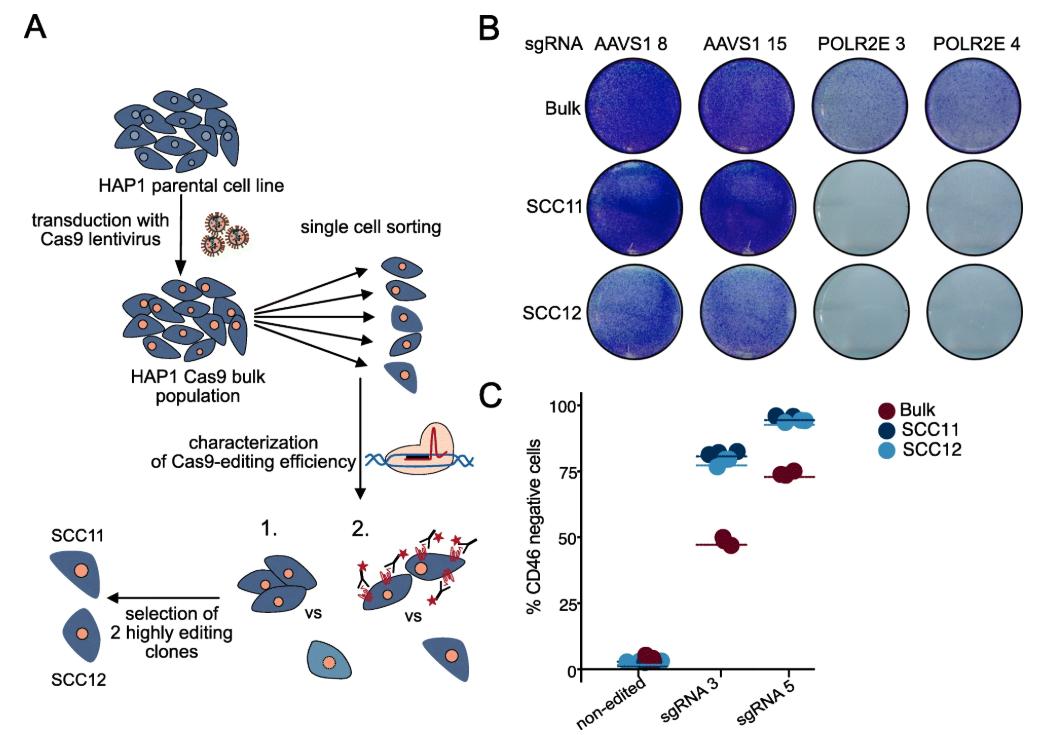 Fig.1 Single-cell Cas9 clones achieve markedly higher editing efficiency than mixed bulk populations.1
Customer Reviews
- "Identified immunosuppressive regulators. Using Creative Biolabs' mammalian CRISPR screening service, we pinpointed regulators of PD-L1 expression in human dendritic cells that had evaded traditional in vitro approaches." Dr. S**n
- "Rapid validation of resistance pathways. We leveraged their platform to uncover novel resistance genes in EGFR-mutant lung cancer cells under TKI treatment. The workflow was smooth and yielded highly actionable data." Dr. A**g
- "Excellent support and analytics. Their team helped us customize a synthetic lethality screen in glioblastoma-derived iPSCs, followed by single-cell RNA-seq. The insights accelerated our manuscript submission significantly." Dr. F**z
FAQs
Q: Can this platform support rare or slow-growing mammalian cells?
A: Yes. Our protocols are optimized for both high-throughput immortalized lines and sensitive primary or iPSC-derived cells with slower growth kinetics.
Q: Can CRISPRa or CRISPRi be used instead of knockout libraries?
A: Absolutely. We offer activation (CRISPRa) and inhibition (CRISPRi) libraries for gene overexpression or transcriptional suppression studies in mammalian cells.
Q: How do you handle off-target effects?
A: Our sgRNA libraries are designed with validated on-target efficiency scores and minimal predicted off-targets. We also offer hit validation using individual sgRNAs.
Q: What follow-up validation options are available?
A: We offer arrayed screens, individual knockout lines, transcriptomic profiling, and functional assays to confirm screen hits.
Extended Services
Reporter Cell Line Generation
Custom-engineered lines for pathway-specific or phenotypic reporters.
Arrayed CRISPR Screening
Individual sgRNA per well for high-content imaging or detailed phenotypic analysis.
Dual-sgRNA Screens
Assess gene–gene interactions or synthetic lethality using combinatorial perturbation.
Omics Integration
Merge CRISPR screen results with transcriptomic, proteomic, or metabolomic data for a systems biology perspective.
Creative Biolabs' genome-scale in vivo screening service provides an advanced, mammalian-cell-based solution for high-throughput gene function discovery. Whether you're mapping signaling pathways, identifying druggable targets, or decoding resistance mechanisms, our platform delivers robust, biologically relevant insights without animal models. Flexible, scalable, and data-rich, it's the new standard for functional genomics.
Contact Our Team for More Information and to Discuss Your Project – We're Ready to Help!
Reference
- Henkel, Luisa, et al. "Genome-scale CRISPR screening at high sensitivity with an empirically designed sgRNA library." BMC biology 18 (2020): 1-21. DOI: 10.1186/s12915-020-00905-1. Distributed under Open Access license CC BY 4.0, without modification.
 Download our brochure
Loading case studies...
Online Inquiry