Human Lymphoma Cell H33HJ-JA1 based Proliferation Assay Service
H33HJ-JA1 Cell Line
H33HJ-JA1 is a cell clone derived from the Jurkat cell line, which belongs to the human T-cell leukemia cell line Jurkat. This cell line generally grows in specific culture media and requires appropriate temperature and carbon dioxide levels.
The H33HJ-JA1 cell line exhibits high proliferative capability and can respond to various stimuli, including the activation of cytokines and growth factors. This cell line is commonly used to study signal transduction and immune responses for T lymphocytes. H33HJ-JA1 cells are commonly employed in experiments to investigate the mechanisms of cell proliferation dysregulation and oncogenesis induced by a specific protein or compound.
H33HJ-JA1-based Proliferation Assay
Creative Biolabs offers an H33HJ-JA1-based proliferation assay to meet your needs. Luminescence is measured with a microplate reader following a 72-hour incubation period. H33HJ-JA1-based proliferation assay uses staurosporine as the control inhibitor. Staurosporine, as a relatively specific inhibitor of PKC, significantly inhibits the proliferation of H33HJ-JA1 cells. Staurosporine reduces IL2 production when H33HJ-JA1 cells are stimulated with PHA and TPA, and this inhibitory effect is dose-dependent. Additionally, staurosporine is used to investigate the role of PKC in IL2 gene expression and secretion, with results showing that staurosporine has a significant inhibitory effect on IL2 production and secretion.
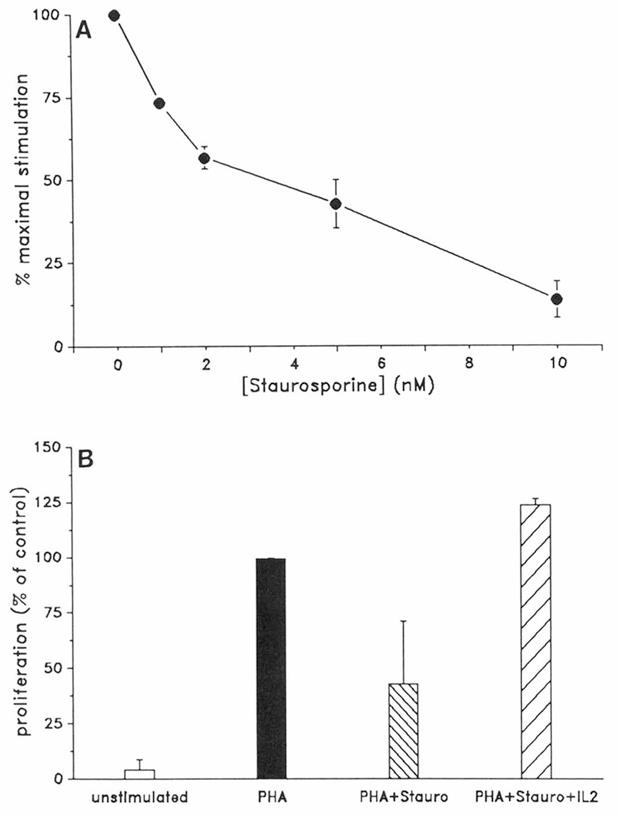 Fig. 1 The impact of staurosporine on the proliferation of peripheral blood lymphocytes stimulated by PHA (phytohemagglutinin).1
For more details about cell proliferation assay services for other cell types, please click here to know more, and feel free to contact us. You might also want to explore the following services:
- Human Lymphocyte Cell RAMOS-based Proliferation Assay
- Human Lymphoma Cell U937-based Proliferation Assay
- Human Melanoma Cell SK-MEL-5-based Proliferation Assay
Reference
- Modiano, J. F., et al. " Protein kinase C regulates both production and secretion of interleukin 2." The Journal of Biological Chemistry 266.16 (1991): 10552-10561. Distributed under Open Access license CC BY 4.0, without modification.
 Download our brochure