- Western blot analysis is fundamental for assessing mTOR activation/deactivation. This technique employs phospho-specific antibodies targeting the phosphorylated form of mTOR, typically at Serine 2448, alongside antibodies against total mTOR. The dual probing allows for the comparative analysis of signal intensities, revealing the "activation ratio" of mTOR. Lysates from cells or tissues are run on SDS-PAGE gels, transferred to membranes, and probed with specific antibodies. Densitometry software quantifies band intensities to provide precise data.
mTOR Quantification Service
Introduction
The mammalian target of rapamycin (mTOR) is a pivotal serine/threonine kinase that regulates cell growth, proliferation, metabolism, and survival by sensing and integrating diverse environmental stimuli, including nutrient availability, growth factors, and cellular energy status. Dysregulation of mTOR signaling is a common denominator in various pathologies such as cancer, type II diabetes, obesity, and cardiovascular diseases. As such, accurately assessing mTOR activation and deactivation is critical for understanding cellular processes and developing targeted therapeutics. Creative Biolabs offers specialized mTOR Activation/Deactivation Assessment services designed to provide precise and comprehensive analysis of mTOR signaling dynamics.
mTOR Activation/Deactivation Assessment Service
Creative Biolabs specializes in providing high-precision assays for evaluating mTOR activation and deactivation. Our service leverages advanced techniques, such as Western blot analysis, mass spectrometry, and phospho-specific antibody assays, to deliver accurate and reproducible data on mTOR signaling. Utilizing cutting-edge technology, our assessments can quantify phosphorylated (activated) mTOR and distinguish it from total mTOR within biological samples.
Advanced Assays for mTOR Phosphorylation Assessment
Our service employs a variety of high-precision assays to evaluate mTOR activity:
Western Blot Analysis
Innovative ELISA-Based Assay
- These assays offer a highly sensitive and homogeneous alternative to ELISA. They are used to quantify phosphorylated mTOR levels in comparison to total mTOR, thereby enabling high-throughput and reproducible analysis of mTOR activation states.
Immunofluorescence Analysis
- For visualizing the localization of phosphorylated mTOR within cells, immunofluorescence techniques are employed. Although less commonly used for quantification, they offer valuable spatial information about mTOR signaling.
Scientific Backing
| Summary | Researchers have discovered that prolyl 4-hydroxylase alpha-2 (P4HA2) directly interacts with mTOR, hydroxylating Proline 2341. This modification stabilizes mTOR, facilitating its accurate substrate recognition and promoting cell growth. These insights provide a deeper understanding of mTOR regulation and underscore the importance of precise and reliable assessment techniques. |
| Result |
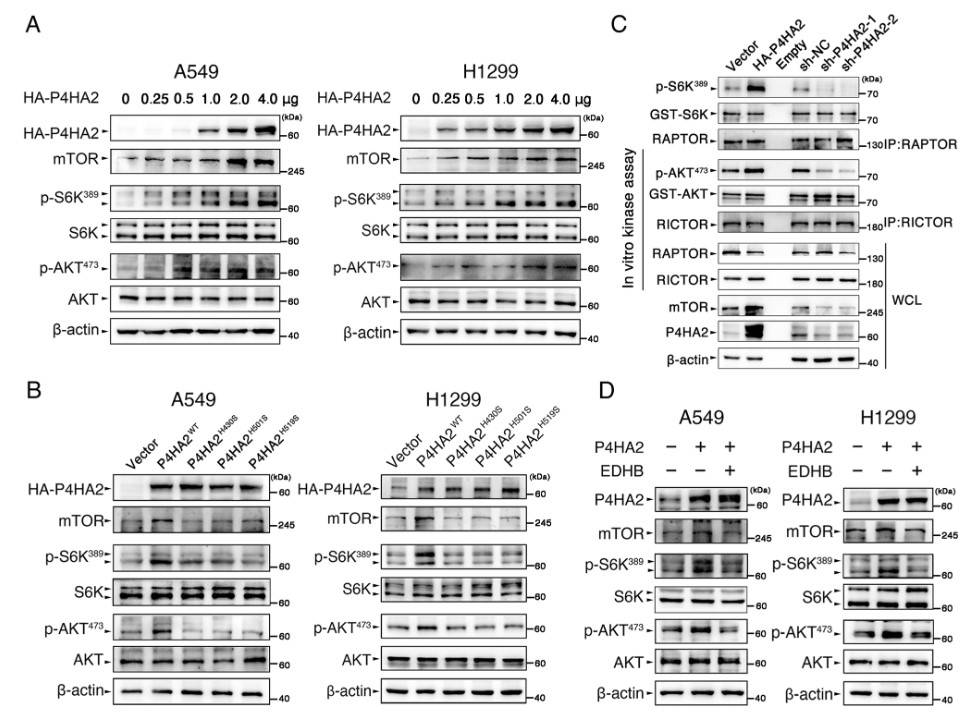 Fig.1 P4HA2 activates mTOR signaling detected by immunoblot analysis.1 |
Frequently Asked Questions
Q1: What types of samples can be used for mTOR activation/deactivation assessment?
A1: Our assays support a wide range of sample types, including cell lysates, tissue extracts, and biopsies.
Q2: What Are the Key Applications of mTOR Activation/Deactivation Assessments?
A2: This service is vital for research into cancer, metabolic disorders, and neurodegenerative diseases, where mTOR dysregulation plays a critical role. By accurately assessing mTOR activity, researchers can better understand disease mechanisms and evaluate therapeutic interventions' efficacy.
Related Services
Creative Biolabs also offers a suite of complementary services to support your research on mTOR and related pathways. These include:
- Protein Interaction Studies: Investigate the interactions between mTOR and other proteins in your pathway of interest.
- Custom Antibody Development: Obtain high-quality, specific antibodies tailored to your target of interest.
Creative Biolabs leads the forefront in mTOR signaling assessment, delivering cutting-edge tools and services that enable precise analysis of mTOR activation and deactivation. By leveraging sophisticated assays such as ELISA and Western blotting, combined with advanced scientific insights into mTOR phosphorylation dynamics, we empower researchers to decode the complexities of mTOR signaling and its implications in health and disease.
Reference
- Jin, Ersuo, et al. "P4HA2 activates mTOR via hydroxylation and targeting P4HA2-mTOR inhibits lung adenocarcinoma cell growth." Oncogene (2024): 1-11. Distributed under Open Access License CC BY 4.0, without modification.
 Download our brochure
Loading case studies...
Online Inquiry