Human Liver Cell PLC/PRF/5 based Proliferation Assay Service
Introduction
Liver cancer, particularly hepatocellular carcinoma (HCC), remains a significant cause of cancer mortality worldwide. The research community is increasingly focusing on molecular mechanisms behind this malignancy to develop diagnostic markers and therapeutic targets. One of the forefront methodologies in cell biology to assess cellular behavior under different treatments is the proliferation assay. Specifically, human liver cells, such as PLC/PRF/5, are increasingly used for these assays due to their relevance in hepatocellular carcinoma research.
PLC/PRF/5-based Proliferation Assay at Creative Biolabs
At Creative Biolabs, we provide advanced PLC/PRF/5-based proliferation assays to support HCC research and drug development. Our expertise in this domain ensures high-quality results, allowing researchers to gain deep insights into cellular mechanisms. Here are some of our available proliferation assay types, including but not limited to these:
- Luminescence ATP Assays
Our luminescence-based ATP assays offer a reliable and sensitive measurement of cell viability, utilizing the natural luciferase reaction to quantify ATP levels. These assays are ideal for high-throughput screening applications, ensuring minimal interference and ease of use.
- DNA Synthesis Assays
DNA synthesis assays, utilizing radioactively labeled 3H-thymine or non-radioactive bromodeoxyuridine (BrdU), offer highly sensitive and accurate detection of proliferating cells. These methods are particularly useful for detailed cell cycle analysis and single-cell resolution studies.
- Cell Proliferation Marker Assays
Utilizing specific monoclonal antibodies, our marker assays target surface antigens unique to proliferating cells. These are particularly valuable in cancer research, where identifying rapidly dividing malignant cells is crucial for determining the effectiveness of therapeutic interventions.
- Metabolic Activity Assays
Our metabolic assays rely on bioluminescent dyes, such as Alamar Blue, to measure enzymatic activities indicative of cell health and proliferation. These assays are compatible with various high-throughput technologies, making them versatile tools for diverse research needs.
PLC/PRF/5-based Proliferation Assay Application Scenarios
Our PLC/PRF/5-based proliferation assays are designed for a multitude of applications, including but not limited to:
- Cancer Research: Evaluating tumor aggressiveness and metastasis through proliferation and migration studies.
- Drug Discovery: Screening potential cytotoxic agents or growth inhibitors for their efficacy in reducing cell proliferation.
- Disease Mechanism Studies: Elucidating molecular pathways and gene functions involved in cell cycle regulation and proliferation.
- Toxicology: Assessing the cytotoxic effects of various compounds on liver cells to predict potential hepatotoxicity.
Sample Requirements
To ensure the precision and reproducibility of our assays, we stipulate specific sample requirements.
- For a typical screen, we require a minimum of 25 μl of a 10 mM stock solution or 1 mg of pre-weighed compound.
- For dose-response studies, 60 μl of a 10 mM stock or 1 mg of pre-weighed material is necessary. These conditions facilitate accurate and reliable assay results, critical for downstream analyses.
Highlights of Our Proliferation Assay
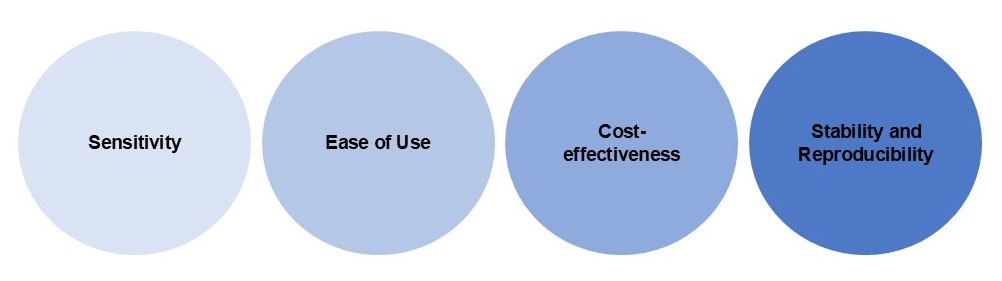
Scientific Backing
| Summary | Recent studies underscore the importance of PLC/PRF/5 cell-based assay in HCC progression. A study has shown that miR-520f mediates HCC aggressiveness by regulating key genes like FGF16. The ability of miR-520f to enhance proliferation and metastasis in HCC cells (such as PLC/PRF/5 cells) highlights the need for reliable proliferation assays to elucidate these molecular mechanisms. |
| Result |
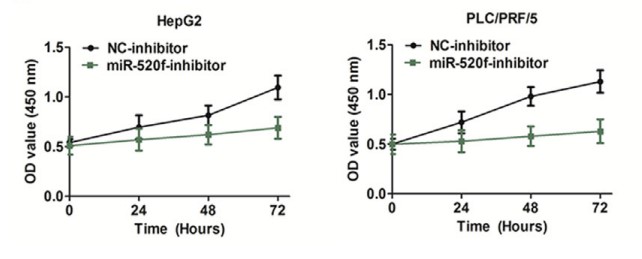 Fig.1 Proliferation Effect of miR-26 in HepG2 and PLC/PRF/5 cells.1 |
Frequently Asked Questions
Q1: Are your assays compatible with 3D cell culture models?
A1: Yes, our luminescence ATP assays are available in 3D formats, facilitating the study of cell proliferation and cytotoxicity in more physiologically relevant 3D spheroid cultures.
Q2: What are the benefits of using luminescence-based detection methods?
A2: Luminescence-based detection methods provide high sensitivity, wide dynamic range, and reduced background noise compared to other methods, ensuring precise and reliable quantification of cell viability and proliferation.
Creative Biolabs is dedicated to advancing cellular biology research by providing state-of-the-art assays tailored to the needs of modern scientific investigation. Our PLC/PRF/5-based proliferation assays are a testament to our commitment to quality, reliability, and innovation in the field of biotechnology.
Reference
- Xu, Feng Feng, et al. "MiR-520f promotes cell aggressiveness by regulating fibroblast growth factor 16 in hepatocellular carcinoma." Oncotarget 8.65 (2017): 109546. Distributed under Open Access License CC BY 4.0, without modification.
 Download our brochure