VCAM-1 mediated Cell Adhesion Assay Service
Precision Adhesion Insights for Effective Anti-Inflammatory Discovery
Vascular cell adhesion molecule-1 (VCAM-1) is a vital protein in endothelial cells that plays a key role in inflammation by facilitating the adhesion of monocytes to the blood vessel lining. While normally expressed at low levels, VCAM-1 is significantly upregulated in response to inflammatory mediators like TNF, IL-1, and LPS. This increased expression enhances the adhesion process, making VCAM-1 a critical target for developing anti-inflammatory drugs. Creative Biolabs offers the VCAM-1-mediated cell adhesion assay to study and screen potential inhibitors that could disrupt this essential interaction.
Technical Methods
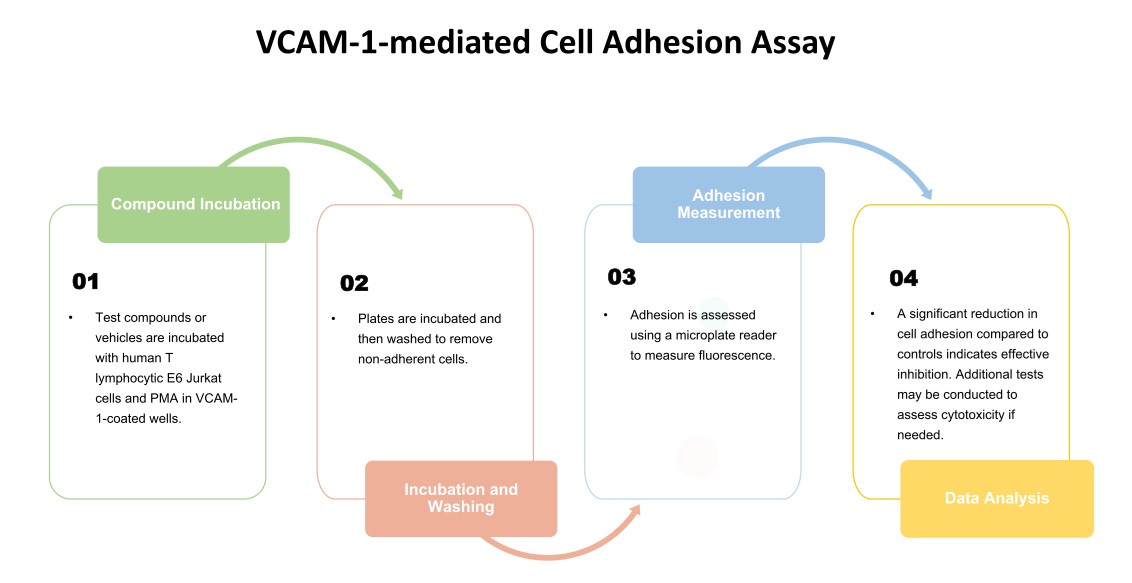
Our VCAM-1-mediated cell adhesion assay is a functional, cell-based test that uses spectrofluorimetry to measure fluorescence and evaluate antagonist activity. Test compounds or vehicles are incubated with human T lymphocytic E6 Jurkat cells and PMA in VCAM-1-coated wells, followed by washing to remove non-adherent cells. Adhesion is measured via fluorescence using a microplate reader, with a significant reduction in adhesion indicating effective inhibition. Cytotoxicity tests can be performed if necessary.
Advantages
Creative Biolabs' VCAM-1-mediated cell adhesion assay offers precise and reliable insights into cell adhesion mechanisms critical for inflammation. Utilizing advanced spectrofluorimetry, the assay ensures accurate and sensitive measurement of adhesion levels. The use of VCAM-1-coated wells and calcein AM-labeled cells allows for robust evaluation of test compounds, aiding in the discovery of effective anti-inflammatory agents and supporting drug development.
Publication Sharing
This study highlights the critical role of VCAM-1 in mediating cell adhesion processes that are fundamental to both immunological disorders and cancer progression. VCAM-1, an immunoglobulin-like molecule, is essential for promoting the adhesion of leukocytes to endothelial cells, facilitating their migration across the endothelium to sites of inflammation. In the context of cancer, VCAM-1 plays a pivotal role in promoting tumor cell survival, proliferation, and metastasis by aiding in the adhesion of cancer cells to the vasculature and their subsequent extravasation into surrounding tissues. This study emphasizes VCAM-1's multifaceted involvement in pathological immune responses and tumorigenesis.
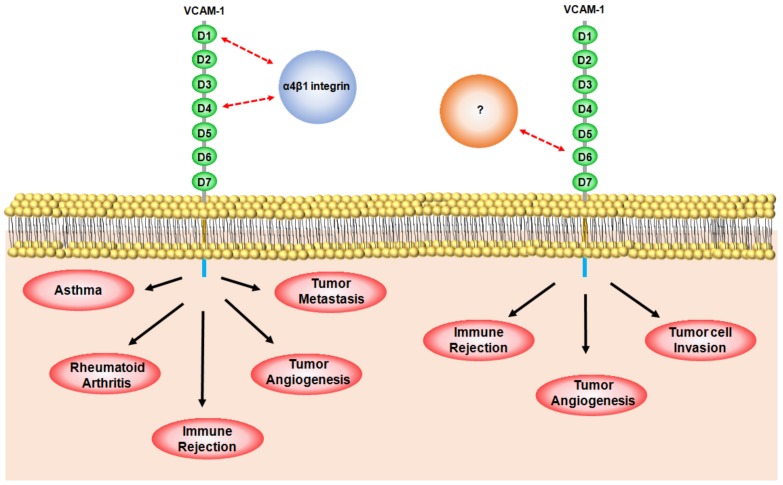 Fig.1 Schematic representation of the specific role of each VCAM-1 immunoglobulin (Ig)-like domain in immunological disorders and cancer.1
Frequently Asked Questions
Q1: What types of compounds can be tested with the VCAM-1-mediated cell adhesion assay?
A1: The assay is suitable for testing various compounds, including potential anti-inflammatory agents, small molecules, and biologics.
Q2: How is the VCAM-1-coated plate prepared?
A2: Human recombinant VCAM-1 is coated onto the wells of the microplate to ensure proper binding and functionality for the assay.
Q3: Can the assay detect both competitive and non-competitive inhibitors?
A3: Yes, the assay can detect both types of inhibitors, providing insights into their effects on VCAM-1/VLA-4 interactions.
Q4: What does the fluorescence measurement indicate in the assay?
A4: Fluorescence measurement reflects the level of cell adhesion to the VCAM-1-coated surface, allowing for the assessment of compound efficacy.
Q5: How do you assess potential cytotoxicity in the assay?
A5: If significant inhibition is observed, additional tests are performed to check for cytotoxic effects to ensure that the inhibition is specific to VCAM-1 interaction.
At Creative Biolabs, we are dedicated to providing cutting-edge tools for your research in inflammation and drug development. Our VCAM-1-mediated cell adhesion assay is designed to offer precise data on cell adhesion dynamics and assist in the identification of novel anti-inflammatory compounds. Contact us today to learn how our assay can advance your research and contribute to new therapeutic solutions.
Reference
- Kong, Deok-Hoon, et al. "Emerging roles of vascular cell adhesion molecule-1 (VCAM-1) in immunological disorders and cancer." International Journal of Molecular Sciences 19.4 (2018): 1057. Distributed under Open Access license CC BY 4.0, without modification.
 Download our brochure