Human Pancreas Cell HPAC based Proliferation Assay Service
Human Pancreas Cancer Cell Lines
Human pancreatic cancer cell lines are established cell cultures derived from pancreatic tumors, widely used in cancer research to study the biology of pancreatic cancer, its progression, and potential treatments. The importance of evaluating pancreatic cancer cell proliferation mainly lies in the following aspects:
- Drug Screening: In drug development, measuring cell proliferation aids in screening effective anti-cancer agents, determining their mechanisms of action, and identifying optimal dosages.
- Prognostic Assessment: Tumor prognosis is closely associated with the rate of cell proliferation and tumor aggressiveness. Higher proliferation rates often correlate with poorer outcomes, thus monitoring proliferation can provide prognostic information.
- Studying Cell Signaling Pathways: The regulation of cell proliferation involves multiple signaling pathways (such as the mTORC1 pathway). By assessing proliferation, researchers can investigate the roles of these pathways in pancreatic cancer and their relationship with treatment.
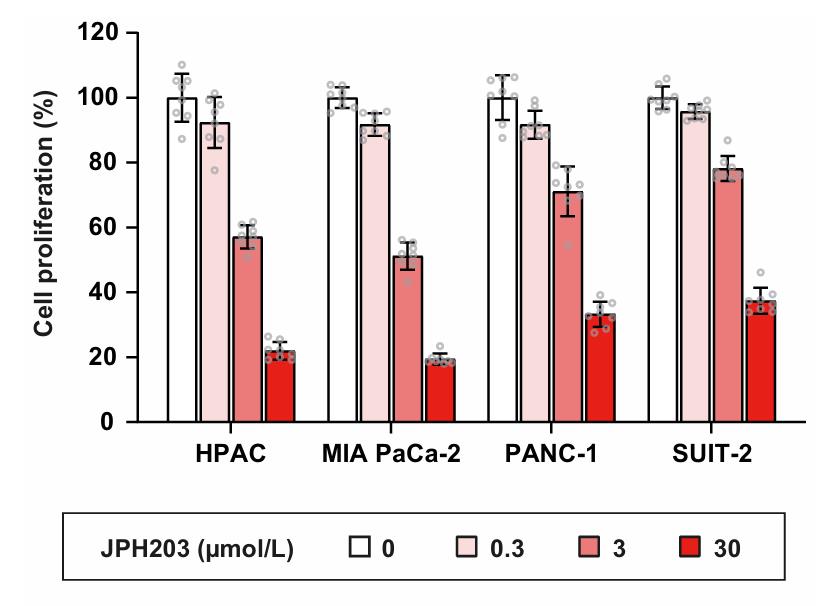 Fig. 1 Several pancreatic cell line models were inhibited in proliferation by JPH203.1
HPAC-based Proliferation Assay
HPAC is a human tumor cell line that originates from pancreatic ductal adenocarcinoma. This cell line was created through xenografting into nude mice. In culture, HPAC cells exhibit a heterogeneous morphology typical of polarized epithelial cells and produce various tumor markers, including carcinoembryonic antigen (CEA) and CA 19-9, while lacking chromogranin A and vimentin, which are indicative of pancreatic ductal epithelial characteristics. The proliferation of HPAC cells is stimulated by growth factors such as insulin, IGF-I, EGF, and TGF-α, but is inhibited by glucocorticoids. The inhibitory effects of glucocorticoids are mediated through a functional glucocorticoid receptor (GR) present in the cells. The HPAC cell line serves as a valuable model for studying the biology of pancreatic cancer and the role of compounds in tumor growth regulation.
Creative Biolabs offers HPAC-based proliferation assay services to meet your needs. You might also be interested in another proliferation assay involving a different pancreas cell line MIA PaCa-2. If you are also interested in other cell proliferation assay services, you can click here to make a selection or contact us for more related information.
Reference
- Nishikubo, K., et al. " Pharmacologic inhibition of LAT1 predominantly suppresses transport of large neutral amino acids and downregulates global translation in cancer cells." Journal of Cellular and Molecular Medicine 26.20 (2022): 5246–5256. Distributed under Open Access license CC BY 4.0, without modification.
 Download our brochure