In bioengineering, scaffold proteins are increasingly used to recruit molecules to certain parts of cells, or enhance the efficacy of biosynthesis or signal transduction pathways. For example, scaffolds can be used to make small molecules with weak or non-immunogenic produce immunogenicity by adhering to scaffolds, which is called carrier. Creative Biolabs provides keyhole limpet hemocyanin (KLH) and other carrier proteins, which can induce specific antibodies against almost any molecule through thiol, amino, or carboxyl binding peptide and hapten.
Introduction of Carrier Protein
The carrier protein itself is an antigen that can be easily detected. The immune system will quickly produce antibodies against these proteins, so they may be targeted by macrophages as foreign particles. By binding the small target antigen to the carrier protein, most of the antibodies produced by the host will target the carrier, but enough antibodies will also target the binding antigen, which successfully improves the immunogenicity of the target and allows the production of antibodies. The excess antibody against the carrier protein can be washed away by affinity purification, and the antibody against the target protein can be successfully isolated.
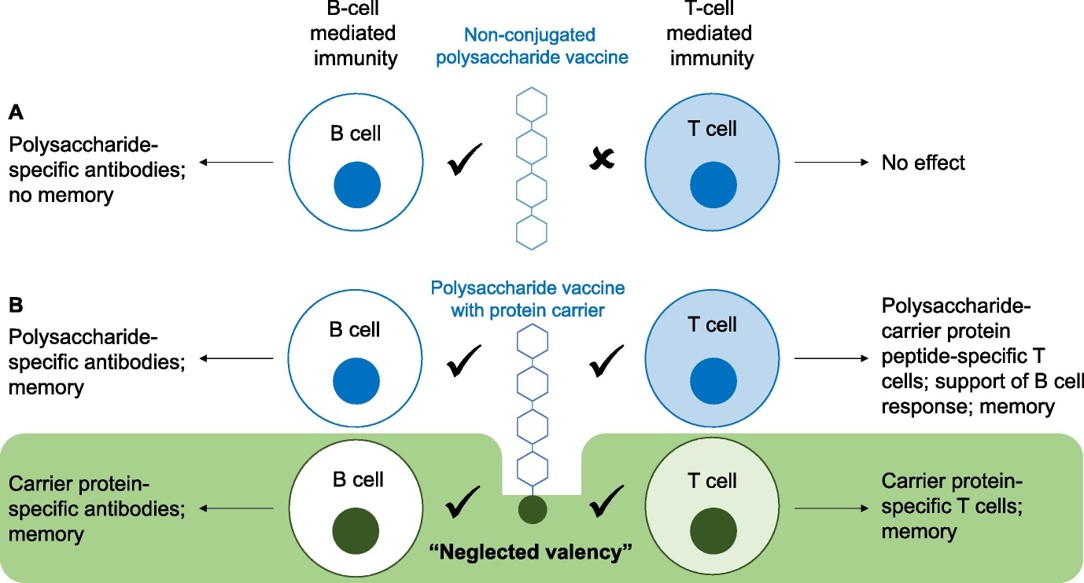 Fig.1 Comparison of the immune responses induced by non-conjugated polysaccharide and polysaccharide conjugated to a protein carrier.1
Basic Consideration of Carrier Protein Choice
In order to be suitable as carriers, proteins need to meet a series of requirements. Depending on the practical use, a variety of properties of the protein may be important; for example, particle size, attainable purity, expression level, the robustness of folding/assembly, general stability, and immunogenicity. In addition, two key features are required. The carrier protein needs to form a stable water-soluble structure, which is the least sensitive to the attached cargos, and should further allow the cargos to be tightly packed in the same and ideally also in a heterovalent fashion.
Services
The correct selection of carrier protein depends on the nature of the antigen of interest, the host used to produce the antibodies, and the final application of the antibody. At present, Creative Biolabs provides several carrier proteins for selection.
-
Keyhole limpet hemocyanin (KLH)
KLH is a copper oxygen carrier in the Keyhole Limpet sea snail, which is about 390 kDa. This huge mollusk protein is effective as an immunogen because of its complex structure and massive size. KLH is a well-tested and real carrier protein.
-
Bovine serum albumin (BSA)
BSA is a carrier protein in bovine serum, about 66 kDa. It is highly abundant and huge in inducing an immune response. BSA can be manipulated to carry many positive charges, which is helpful in the process of binding antigen to it.
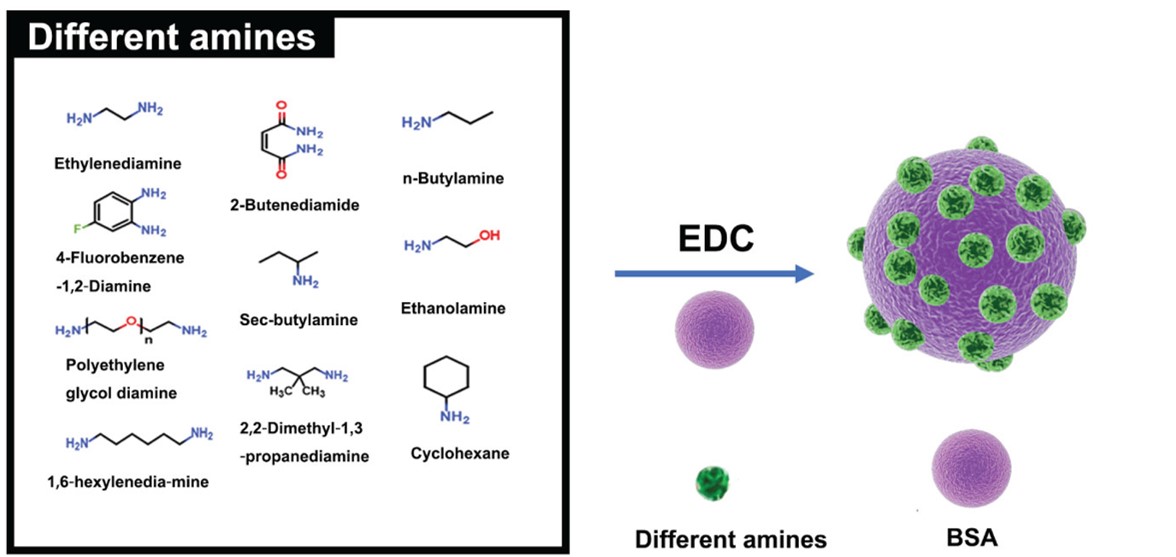 Fig.2 Structures of BSA modified with different amines.2
OVA is the main protein in egg white and is the smallest carrier protein, about 45 kDa. The advantage of OVA over other immunogens is that it is soluble in dimethyl sulfoxide (DMSO), a polar solvent.
Creative Biolabs' professional and experienced staff are looking forward to helping you choose the ideal immunogen in any aspect of your project, using our Native™ Antibody discovery platform provides a one-stop service for your customized antibody production project. If you are interested in our services, please feel free to contact us.
References
-
Bröker, Michael, et al. "Polysaccharide conjugate vaccine protein carriers as a “neglected valency”–potential and limitations." Vaccine 35.25 (2017): 3286-3294. Distributed under Open Access license CC BY 4.0, without modification.
-
Han, Xiangning, et al. "Amide-containing neoepitopes: the key factor in the preparation of hapten-specific antibodies and a strategy to overcome." Frontiers in Immunology 14 (2023): 1144020. Distributed under Open Access license CC BY 4.0. The image was modified by extracting and using only part of the original image.
For Research Use Only. Not For Clinical Use.
Related Sections:
ONLINE INQUIRY


