Ternary Complex Formation Evaluation Service
Creative Biolabs offers a comprehensive service package for in vitro evaluations of Protein Degraders. With skillful techniques and advanced statistical analysis platform, we perform top-quality assays to help our clients evaluate the ternary complex formation of Protein Degraders.
Background
Following target-Protein Degraders-E3 ligase ternary complex formation, the target will be ubiquitinated and degraded via Protein Degraders mediated proteasome degradation. It has already been validated by researchers that Protein Degraders mediated ubiquitination is dependent on the existence of ternary complex equilibria, also the dose-dependent degradation efficiency of Protein Degraders is consistent with ternary complex formation mediated machinery. The target protein is preferentially recruited in a stable and positively cooperative ternary complex with the E3 ligase.
To measure ternary complex formation, cooperativity is a metric used to describe favorable or repulsive interactions between target protein and E3 ligase in the ternary complex. It is calculated by the algorithm: α = KdA / KdT,A. If the cooperativity < 1, that means the interactions between target protein and E3 ligase diminish the amount of ternary complex. Conversely, if the cooperativity >1, that means interactions enhance the ternary complex formation.
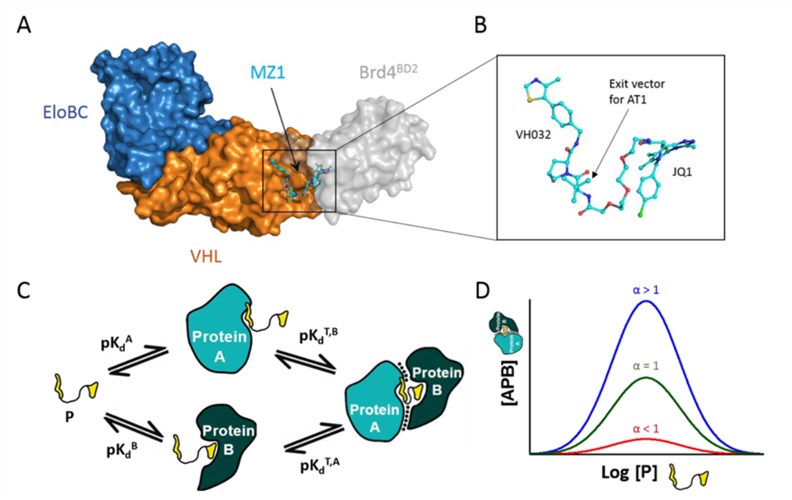 Fig.1 Protein Degraders-induced ternary complexes and their biophysical properties.1
Introduction of Ternary Complex Formation Assays
Ternary system thermodynamic and kinetic properties, including cooperativity, as well as identification for the ternary structure are essential steps during the Protein Degraders development. To explore the target-Protein Degraders-E3 ligase ternary formation for a designed Protein Degraders, Creative Biolabs has developed a wide range of in vitro assays including biophysical (see Table 1) and cell-based assays. Here are some available assays for your reference, but not limited to these. You are welcomed to contact us for any assays, or just let us know your needs and we will propose an assay plan for you.
-
Isothermal Titration Calorimetry (ITC): It’s one of the most reliable technique Creative Biolabs can provide to determine the cooperativity for ternary complex.
-
Fluorescence Resonance Energy Transfer (FRET): Creative Biolabs provides both TR-FRET and BiFC-FRET (bimolecular fluorescence complementation - FRET) assays which utilize fluorescent proteins based on FRET assay.
-
Nuclear Magnetic Resonance (NMR): Creative Biolabs offers superior NMR technique to explore the information on bound conformation of Protein Degraders in ternary complex.
-
Cell-free Proximity Assays: Creative Biolabs provides cell-free proximity assays to measure the target protein-E3 ligase interactions.
-
Bioluminescence Resonance Energy Transfer (BRET): Creative Biolabs offers the BRET assay to indicate the molecular approximation or interaction of target protein and E3 ligase.
-
Co-Immunoprecipitation (Co-IP): Except for biophysical assays, Creative Biolabs is also capable of this kind of cell-based assay. It can be used to identify the target protein-E3 ligase interaction by using specific antibodies.
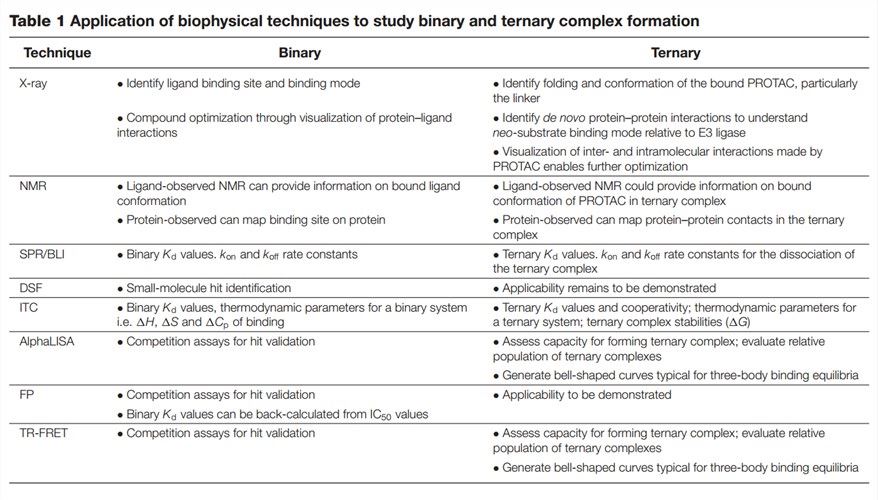 Table.1 Application of biophysical techniques to study ternary complex formation.1
Highlight Features of the Assays
-
Easy-of-use
-
Fast and high sensitivity
-
Compatible with many sample types
-
Competitive cost
With highly experienced scientists and mature assays, Creative Biolabs is committed to tailoring the best assay for our worldwide clients to evaluate the ternary complex formation of target protein-Protein Degraders-E3 ligase. Please contact us for more information and a detailed quote.
Reference
-
Hughes, Scott J., and Alessio Ciulli. "Molecular recognition of ternary complexes: a new dimension in the structure-guided design of chemical degraders." Essays in biochemistry 61.5 (2017): 505-516.