Creative Biolabs is a recognized service provider of novel drug discovery & development. For Native™ antibody discovery of various species, we provide custom antigen labeling services as well as numbers of labeled monoclonal antibodies for the fast isolation of target antigen-specific B cells.
Overview of Immunolabeling Technique
Immunolabeling is a biochemical technique that accurately detects and localizes target molecules based on antigen-antibody-specific immune reaction, which is an extremely important tool for target localization and immune research. Firstly, antibodies or antigens are labeled with luminescent agents (or tags), such as fluorescein, radioisotope, enzyme, ferritin, colloidal gold, and other chemiluminescence or bioluminescence. Then when the labeled antibodies/antigens are added to the tested sample, they can covalently link to the target molecules or cells. These targets are localized and visualized at the cellular, subcellular even molecular levels with the aid of instruments such as fluorescence microscopy, enzyme-labeled detectors, and electron microscopy. Target molecules also can be quantitatively detected by liquid and solid immunoassays.
With the advantages of rapid, easy localization, even qualitative and quantitative, the immunolabeling techniques, especially specific monoclonal antibody labeling, have been widely applied for the basic research of the immune system, immunodiagnosis, and immunotherapy. While antigen or protein labeling is also developed for tracing target antibody/ligand and monitoring biological processes.
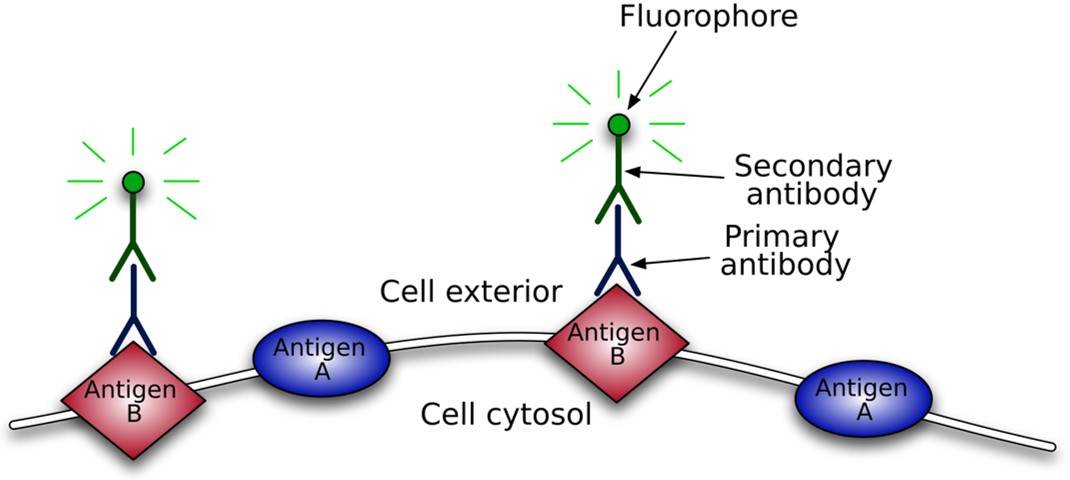 Fig.1 Antibody labeling to detect target antigen in tissue. (Wikipedia) Distributed under CC BY-SA 3.0, from Wikimedia, without modification.
Antigen Labeling for Antigen-Specific B Cell Isolation
The isolation of specific antibody-secreting B cells is challenging and crucial for Native™ antibody development. The purity of isolated B cells and the secreted antibody are directly related to the subsequent effort and success, and this is where the immunolabeling technique plays an important role.
-
For efficient antibody-secreting B cell random isolation, antibody labeling is necessary. Usually, labeled antibodies against B cell surface markers, or labeled secondary antibodies against immunoglobulins on the B cell surface, are utilized to isolate activated B cells in the samples. This B cell random isolation based on immunolabeling is faster and more targeted than directly blind isolation.
-
More importantly, the isolation of antigen-specific B cells requires antigen labeling. When the host is immunized with an antigen, the activated B lymphocytes or plasma cells immediately secret specific antigen-target antibodies. The targeting antibody-secreting B cell can be identified by tracing the labeled antigen. Then antigen-specific B cells can be harvested through cell sorting technologies.
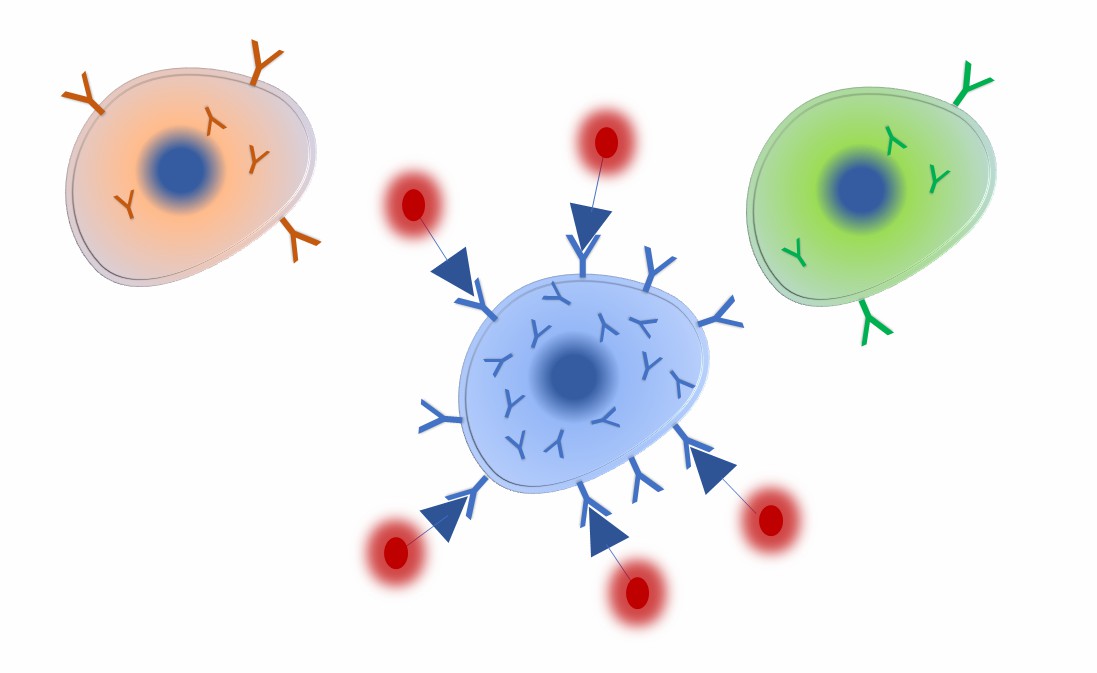 Fig.2 Antigen labeling for antigen-specific B cell isolation.
As a reputable CRO service provider focusing on new drug discovery, Creative Biolabs has accumulated profound expertise and extensive experience in antibody development. Owing to our knowledgeable scientists and advanced instrumentation systems, we have constructed a special B cell sorting platform to provide one-stop Native™ antibody discovery services. Please feel free to contact us and our experienced technicians will give you the most detailed answers to your questions.
For Research Use Only. Not For Clinical Use.
Related Sections:
ONLINE INQUIRY


