Creative Biolabs, a reputable CRO service provider focusing on new drug discovery, has accumulated profound expertise and extensive experience in antibody development. Our knowledgeable scientists and advanced instrumentation systems pull us a perfect service provider for rapid Native™ antibody discovery. Here, we offer a series of technical assays, including hemolytic plaque assay, to isolate antigen-specific antibody-secreting B cells.
Principle of Single B cell Antibody Technology
Single B cell antibody technology is a new technology developed for the rapid production of monoclonal antibodies (mAbs). Once the individual was challenged by an immunogen, the activated B lymphocytes or plasma cells immediately produce specific antibodies. In principle, one B cell forms heavy chain and light chain genes that encode only one antibody after VDJ rearrangement, isotype switch, and high-frequency mutation. Hence, isolating antigen-specific B cells from an immunized host, and amplifying the heavy chain and light chain variable region genes by single-cell polymerase chain reaction (PCR) from target B cells. Then express mAbs with biological activity can be obtained by expression in mammalian cells.
mAb produced by this B cell technology retains the natural pairing of heavy chain and light chain variable regions, exhibiting properties such as favorable gene diversity, high affinity, and all-natural origin. Currently, single B cell antibody technology has been developed into an important strategy for rapid antibody development, particularly antibodies against viral infectious diseases.
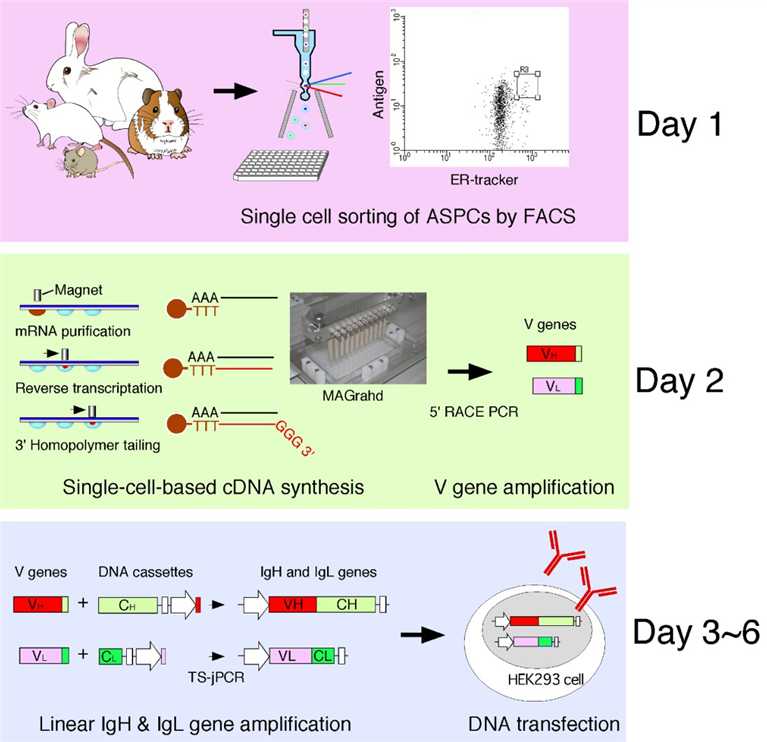 Fig.1 Rapid generation of antigen-specific monoclonal antibodies by B cell sorting.1
Antigen-Specific B Cell Isolation by Hemolytic Plaque Assay
Isolating antigen-specific antibody-secreting B cells is the core of rapid Native™ antibody development. An array of cell sorting technologies have been developed for high-throughput specific B cell isolation. Simply and basically, antigen-specific B cell isolating can be performed by hemolytic plaque assay.
Hemolytic plaque assay, also known as localized hemolysis in-gel assay, is a method that directly counts the antibody-producing cells. Mice were immunized with sheep erythrocytes (SRBC). Mouse lymphocyte suspension from peripheral blood or spleen then mixed with SRBC and cultured in agar medium. Once the complement system was added and reacted with the antigen-antibody complex, the SRBC were lysed forming a small round hemolytic plaque with the antibody-secreting cell as the center. The antigen-specific B cell then can be screened and isolated by microscopy. The advantages of this hemolytic plaque assay isolating B cells are that it is convenient, quick, and highly specific. However, the high sensitivity of red blood cells and the inability to achieve high throughput limit the application of this method.
Creative Biolabs is a recognized service provider of novel drug discovery & development. Based on solid technologies and abundant experience, we provide a broad spectrum of technical assays and solutions to isolate antigen-specific B cells for the Native™ antibody discovery of various species. Please feel free to contact us and our experienced technicians will give you the most detailed answers to your questions.
Reference
-
Kurosawa, Nobuyuki, et al. "Rapid production of antigen-specific monoclonal antibodies from a variety of animals." BMC biology 10 (2012): 1-15. Distributed under Open Access license CC BY 2.0, without modification.
For Research Use Only. Not For Clinical Use.
Related Sections:
ONLINE INQUIRY


