

Why Pluripotency Verification Matters
Pluripotency is the defining feature of iPSCs, empowering them with the capacity to give rise to all derivatives of the three primary germ layers: the ectoderm (giving rise to the nervous system and skin), the mesoderm (forming muscle, bone, and connective tissues), and the endoderm (developing into the lining of the gastrointestinal and respiratory tracts). This trilineage differentiation potential is the very reason iPSCs are invaluable for disease modeling, drug discovery, and regenerative medicine.
However, the reprogramming process that transforms somatic cells into iPSCs is not always perfect. Incomplete or aberrant reprogramming can lead to cell populations with limited differentiation capacity or, worse, a predisposition for malignant transformation.
Creative Biolabs' iPSC Pluripotency Marker Detection Services
We have meticulously designed our iPSC pluripotency marker detection services to be comprehensive, reliable, and tailored to the unique needs of your research.
Table 1 Our service portfolio at a glance
| Services | Technique(s) Used | Key Markers/Analytes |
|---|---|---|
| Surface Marker Profiling |
|
|
| Transcription Factor Analysis |
|
|
| Alkaline Phosphatase Staining |
|
|
| Genomic Integrity Analysis |
|
|
| Custom Assay Development |
|
|
We offer modular or bundled packages.
-
qPCR / RT-qPCR
- Use when: You need sensitive detection and relative quantification of core factors; comparing clones or passages.
- Output: ΔCt plots, reference gene normalization (e.g., GAPDH, ACTB), heatmaps, and threshold cycle tables.
- Strengths: Sensitive, scalable; excellent for trend lines across passages.
-
ICC/IF
- Use when: You need spatial context and cell-level morphology with high-quality images for reports or journals.
- Output: Confocal or widefield images (TIFF/PNG), staining intensity metrics, %-positive estimates.
- Strengths: Visual confirmation and morphology—ideal for figure-ready data.
-
Flow Cytometry (FACS)
- Use when: You require quantitative %-positive populations for surface antigens (TRA-1-60/81, SSEA-3/4).
- Output: Gated FCS files, compensation matrices, % positive, MFI, and QC plots.
- Strengths: Scalable, statistically robust; great for clone ranking and release criteria.
-
Western Blot
- Use when: You want protein-level confirmation with molecular-weight specificity for OCT4, SOX2, NANOG, etc.
- Output: Densitometry plots, normalized band intensities, raw image files.
- Strengths: Orthogonal evidence to qPCR.
Sample Planning Guide
At Creative Biolabs, we believe that reliable data comes from a meticulously controlled process. Our qPCR service is built on a foundation of quality assurance and technical excellence.
Table 2 Typical sample quantities
| Assay | Minimum input | Notes |
|---|---|---|
| qPCR | RNA from ~2–3 × 10⁵ cells | Provide reference gene preference if needed |
| ICC/IF | 1–2 coverslips/well (12-well) | Fixed or live; we can fix post-receipt |
| Flow | ≥5 × 10⁵ cells | Include unstained control if shipping live cells |
| Western | Lysate from ~5–10 × 10⁵ cells | RIPA or indicated buffer; we can prepare |
We routinely adjust inputs for high-efficiency workflows; tell us your constraints.
Why Choose Creative Biolabs?
- Unparalleled Expertise: Our team of seasoned scientists has over two decades of experience in stem cell biology and characterization.
- State-of-the-Art Technology: We utilize the latest and most advanced instrumentation to ensure the highest quality data.
- Comprehensive Services: From routine screening to the gold-standard teratoma assay, we offer a complete suite of services to meet all your pluripotency assessment needs.
- Customizable Solutions: We understand that every research project is unique. We work closely with you to design a characterization strategy that is tailored to your specific goals and budget.
- Rapid Turnaround Times: We are committed to providing you with the data you need, when you need it.
- Publication-Ready Data: We provide you with a comprehensive report that includes all the data, images, and analysis you need for your publications and regulatory submissions.
Published Data
To further validate the identity of the generated cell lines, gene expression of pluripotency markers was evaluated. RT-PCR analysis evidences that, in contrast to UDCs, iPSC colonies from BT patients and nonT patients had a robust expression of the key pluripotency genes OCT3/4, SOX2, NANOG and TERT. They also evaluated the expression of pluripotency markers at protein level by immunofluorescence, using the intracellular marker OCT3/4 and the surface markers SSEA4, TRA-1-60 and TRA-1-81. Cultured iPSCs stained positive for all the markers assessed, confirming their pluripotency.
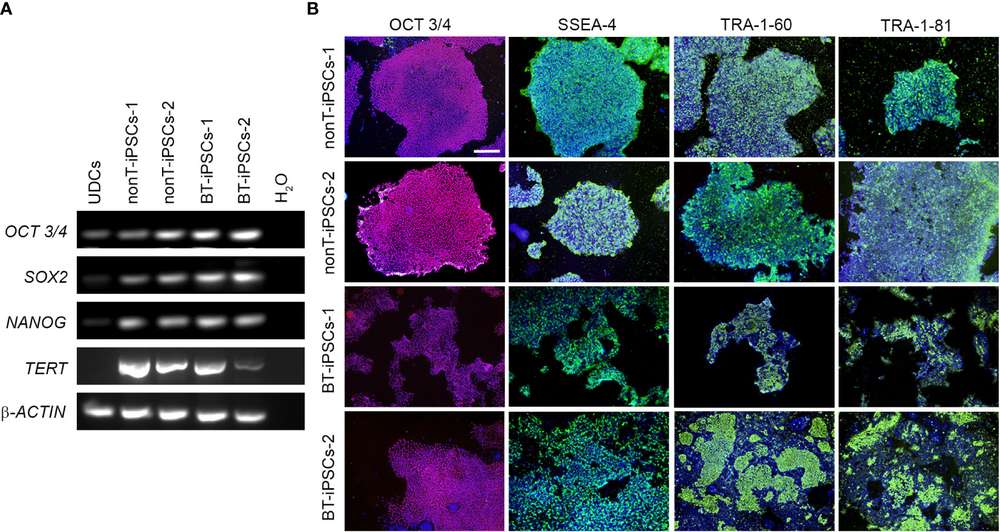 Fig. 1 Analysis of the pluripotency markers in the generated iPSC lines.1,3
The pluripotency of iPSC was assessed by the presence of the widely accepted stemness markers TRA-1-81, TRA-1-60, OCT3/4, SSEA-4, along with the human stemness negative marker SSEA-1. During protocol optimisation, consistency of the expression of TRA-1-81h on OCT3/4 positive cell population was observed by using panel 1. To simplify the screening process in-house, panel 2 of the combination of TRA-1-81 with other markers (SSEA-4 and TRA-1-60) was used instead of panel 1; iPSC colonies were more than 95% positive for these markers, and less than 2% positive for SSEA-1.
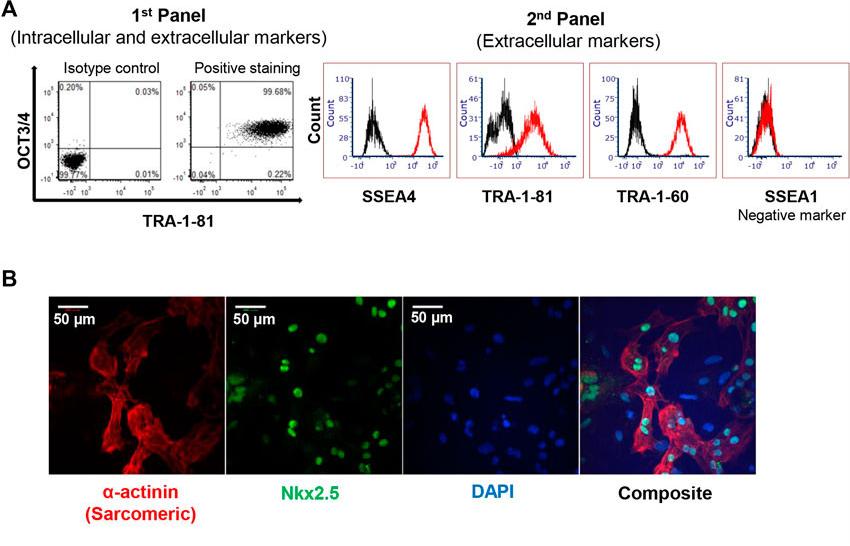 Fig. 2 Assessment of iPSC pluripotency.2,3
What Our Clients Say
"We had several iPSC clones showing inconsistent marker profiles, and the Creative Biolabs team helped us pinpoint which ones retained true pluripotency. Their side-by-side qPCR and flow cytometry data were clear and fully publication-ready."
— Dr. Elena Ruiz, Senior Scientist, Stem Cell Biology
"The data package we received was exceptionally organized. Each clone's pluripotency status was explained in a traffic-light system, making it easy to decide which lines to advance into differentiation. Highly recommend their pluripotency verification services."
— Dr. Yuki Sato, Project Manager
"We requested custom markers like DPPA4 and LEFTY1, and they seamlessly integrated them into our existing assay panel. It was one of the smoothest collaborations we've had."
— Dr. Ravi Chandran, Head of Cell Engineering
FAQs
Q: What are the minimal marker requirements to confirm pluripotency of human iPSCs?
A: Standard confirmation typically includes OCT4, SOX2, and NANOG for transcriptional expression, and TRA-1-60, TRA-1-81, SSEA-3, and SSEA-4 for surface antigens. Many clients also include DPPA4 or LIN28 for extended coverage.
Q: How much starting material do I need to provide?
A: For most assays, we require about 1 × 10⁶ cells per clone. If you plan multiple assays (qPCR, ICC, flow), we recommend sending 2–3 vials per clone to ensure sufficient material for repeats and validations.
Q: What if my iPSC clone shows partial loss of pluripotency markers?
A: Our scientists will analyze the trend across multiple markers to determine whether this reflects culture drift or transient variation. We'll provide a recommendation—such as passaging adjustments or re-evaluation after culture optimization—to help you recover stability.
Q: Can I request additional markers beyond the standard panel?
A: Yes. We routinely customize panels to include client-defined targets such as KLF4, ESRRB, UTF1, or LEFTY2. Our bioinformatics team will also advise on primer or antibody compatibility if needed.
Q: How do I initiate a new project with Creative Biolabs?
A: Simply contact our project manager via the inquiry form or email us with details such as number of clones, assay preferences, and timeline. We'll provide a tailored proposal, including price quotation, sample submission guidance, and expected delivery schedule.
Embark on Your Next Breakthrough with Confidence







1. Contact Us
via the Inquiry Form or Email
2. Define Your Needs
Cell Type, Function, Quantity, Modifications
3. Kickstart the Project
Our Expert Team Guiding Every Step
Whether you're lining up a differentiation run, building a cell bank, or preparing a manuscript, our iPSC pluripotency marker detection services give you clear evidence, clean figures, and confident decisions—on a timeline that respects your milestones.
Contact us today to discuss your iPSC pluripotency marker detection needs and discover how we can help you unlock the full potential of your stem cell research.
References
- Baliña-Sánchez, Carmen, et al. "Generation of mesenchymal stromal cells from urine-derived iPSCs of pediatric brain tumor patients." Frontiers in Immunology 14 (2023): 1022676. https://doi.org/10.3389/fimmu.2023.1022676
- Tian, Pei, et al. "Creation of GMP-compliant iPSCs from banked umbilical cord blood." Frontiers in Cell and Developmental Biology 10 (2022): 835321. https://doi.org/10.3389/fcell.2022.835321
- Distributed under Open Access license CC BY 4.0, without modification.
Created October 2025